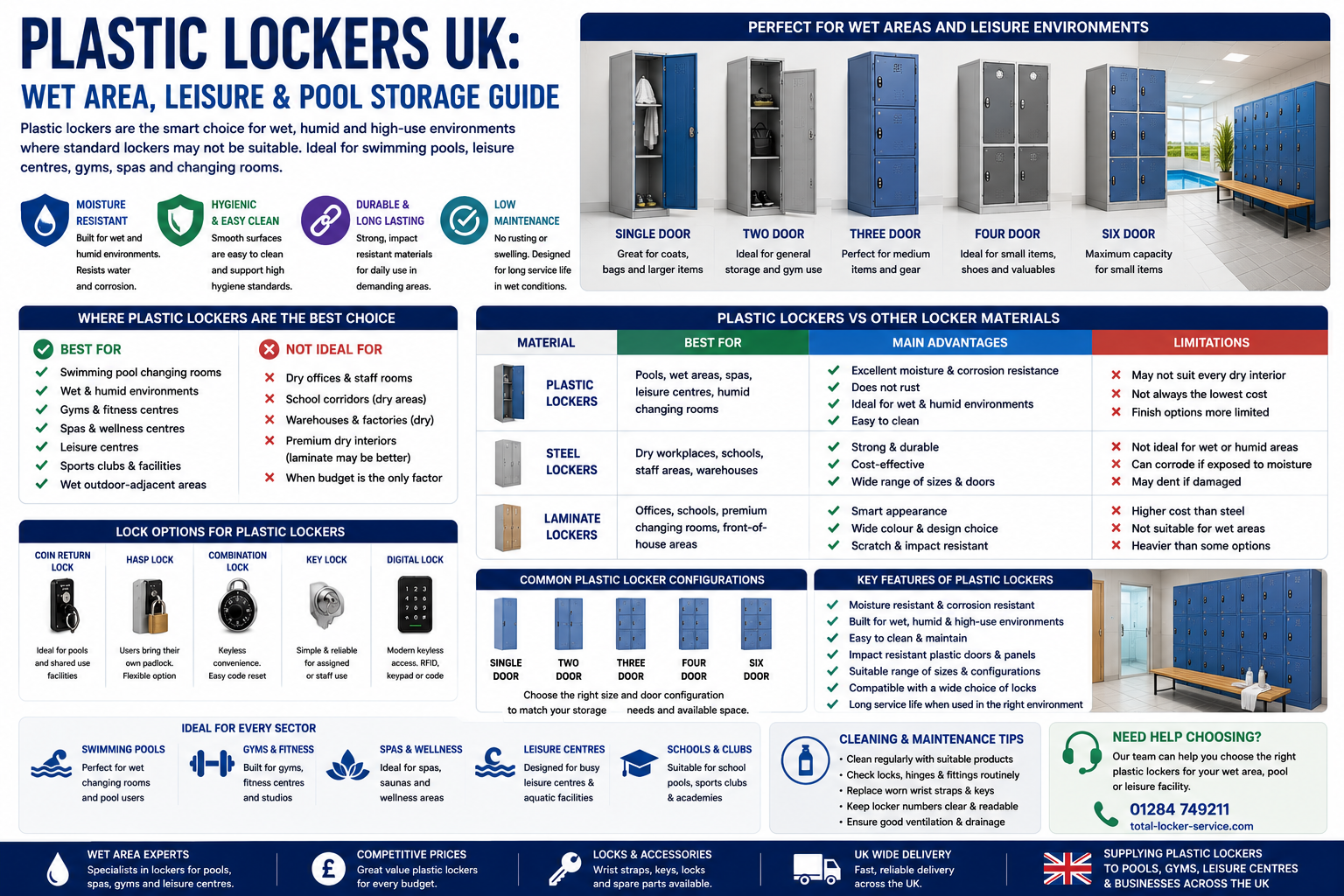
Plastic lockers are a strong choice for wet, humid and high-use environments where standard steel lockers may not be suitable. They are commonly used in swimming pools, leisure centres, gyms, spas, changing rooms, sports clubs and other areas where moisture resistance matters.
The main advantage of plastic lockers is that they resist water and corrosion. This makes them useful in places with wet floors, damp towels, wet swimwear, shower traffic, pool air and regular cleaning routines. In these environments, choosing the wrong locker material can lead to rust, swelling, failed fittings and early replacement.
This UK guide explains when plastic lockers are the best choice, how they compare with steel and laminate lockers, which environments suit them, and what to consider before ordering lockers for wet areas, gyms, pools and changing rooms.
Quick answer: when are plastic lockers the best choice?
Plastic lockers are usually the best choice for wet and humid environments such as swimming pools, spas, wet changing rooms, shower-adjacent areas and leisure centres. They resist moisture and do not have a steel body that can rust. They are also useful where lockers need frequent cleaning and long-term corrosion resistance.
Plastic lockers are not always necessary in dry offices, dry staff rooms or school corridors. In those areas, steel lockers may offer better value, while laminate lockers may provide a smarter finish for premium interiors. The right material depends on the environment, user group and maintenance routine.
| Use case | Are plastic lockers suitable? | Reason |
|---|---|---|
| Swimming pool changing rooms | Yes | Excellent moisture and corrosion resistance |
| Wet gym changing rooms | Yes | Suitable for damp towels, shower use and humidity |
| Spas and wellness centres | Yes | Good for humid environments and frequent cleaning |
| Dry office storage | Sometimes | Steel or laminate may be better depending on appearance and budget |
| School corridors | Sometimes | Steel lockers may be more cost-effective in dry areas |
| Premium dry changing rooms | Sometimes | Laminate may offer a more refined finish |
| Wet outdoor-adjacent areas | Yes | Useful where moisture exposure is likely |
For the broad locker route, see the complete lockers guide. For wet and leisure environments, see leisure lockers.
What are plastic lockers?
Plastic lockers are storage lockers made from moisture-resistant plastic materials. They are designed to provide secure storage in environments where water, humidity or cleaning routines may damage unsuitable locker materials. They are often used in leisure centres, swimming pools, gyms, spas, changing rooms and wet areas.
The term “plastic locker” can cover different product types and construction methods. Some lockers are designed for wet rooms and pool environments. Others may be used in damp staff areas, sports facilities or outdoor-adjacent storage zones. The important point is to check that the full locker system suits the environment, including the doors, body, locks, hinges and fixings.
Plastic lockers are often compared with steel lockers and laminate lockers. Steel is usually better for dry practical storage. Laminate is often better for smart interiors. Plastic is usually better for moisture resistance.
Why choose plastic lockers?
Plastic lockers are chosen because they can cope with conditions that cause problems for many standard dry-area lockers. In wet changing rooms, water and humidity are normal. Users bring wet swimwear, damp towels, toiletries and shower water through the space. The locker material must be able to handle that routine.
In the right environment, plastic lockers can reduce corrosion-related maintenance and replacement. They can also support better hygiene routines because they are suited to regular cleaning. This makes them particularly useful in wet leisure settings where the locker room is used heavily every day.
- Excellent moisture resistance.
- Strong choice for wet and humid environments.
- No steel body to rust in damp conditions.
- Suitable for swimming pools, spas and wet changing rooms.
- Useful where lockers are cleaned regularly.
- Good long-term option where corrosion is a concern.
- Suitable for many leisure and sports facilities.
Best environments for plastic lockers
Plastic lockers perform best where moisture resistance matters. They should be considered early whenever the locker area includes showers, pool users, wet floors, steam, damp towels or regular washdown routines.
Swimming pools
Swimming pool changing rooms are one of the strongest use cases for plastic lockers. Users bring wet swimwear, towels, bags and toiletries into the space. Floors may stay damp for long periods. Humidity can be high. Standard steel lockers may corrode in these conditions, especially if the finish is damaged or maintenance is poor.
Plastic lockers help reduce that risk. They are a practical choice for public pools, school pools, leisure centres, hotel pools, spa pools and sports facilities with regular wet use.
Gyms and leisure centres
Gyms may have both dry and wet zones. A dry gym floor or office area may not need plastic lockers. A shower-adjacent changing room may. A leisure centre may use plastic lockers in pool changing areas, laminate lockers in premium dry changing rooms and steel lockers in staff-only dry areas.
The best approach is to map the environment by moisture level. Do not use one locker material across the whole site unless every area has similar conditions.
Recommended route: leisure lockers.
Spas and wellness centres
Spas and wellness centres often have high humidity, towels, treatment areas, changing rooms and frequent cleaning. Plastic lockers can be useful where moisture exposure is common and long-term corrosion resistance is important.
Appearance also matters in these settings. Where a premium finish is required, compare plastic with suitable laminate options. The material should match both the environment and the brand experience.
Wet changing rooms
Wet changing rooms need lockers that can handle real changing-room behaviour. Users may place damp bags inside compartments, hang towels over doors, leave wet shoes on the floor and open lockers with wet hands. The locker system should be chosen with this daily use in mind.
Plastic lockers are often the safest starting point for wet changing rooms. They should still be planned with suitable locks, layout, ventilation, cleaning access and drainage.
When plastic lockers may not be best
Plastic lockers are excellent for wet areas, but they are not always the best choice for dry spaces. In a dry warehouse, factory or school corridor, steel lockers may provide better value. In a premium dry office or club changing room, laminate lockers may offer a more refined visual finish.
Plastic lockers should be chosen for a reason. If the space is dry and the main priority is cost-effective storage, steel lockers may be the stronger route. If the space is visible to clients, members or students and design finish matters, laminate may be worth comparing.
- Use steel lockers for many dry workplace and school installations.
- Use laminate lockers where a premium finish is important.
- Use charging lockers where devices need powered storage.
- Use plastic lockers where moisture, humidity or corrosion risk matters.
- Do not choose plastic only because it sounds more durable; match it to the room.
For dry workplace storage, see workplace lockers. For education settings, see school lockers. Powered device storage, see charging lockers.
Plastic vs steel vs laminate lockers
For plastic, steel and laminate lockers each serve different roles. Plastic is strongest where moisture resistance matters. Steel is strongest where practical dry storage and value matter. Laminate is strongest where appearance and impact-resistant doors matter in smart interior spaces.
| Material | Best for | Main advantage | Main limitation |
|---|---|---|---|
| Plastic lockers | Pools, wet areas, spas and humid changing rooms | Excellent moisture and corrosion resistance | May not suit every dry interior or budget |
| Steel lockers | Dry workplaces, schools, staff areas and warehouses | Strong, practical and cost-effective | Not ideal for wet or humid areas |
| Laminate lockers | Offices, schools, premium dry changing rooms and visible interiors | Smart finish and strong visual appeal | Usually higher cost than basic steel |
For the main comparison page, link this article to the locker materials guide. This plastic locker page should own the wet-area and plastic material intent, while the wider comparison page helps users decide between materials.
Plastic lockers for wet areas
Wet areas need more than a locker that looks suitable. They need a full storage system that resists moisture and supports cleaning. The locker body, door, lock, hinge, numbering, base and layout all affect long-term performance.
Plastic lockers are often used in wet areas because they reduce corrosion risk. However, the lock and fittings still need attention. A plastic locker with an unsuitable lock may still create maintenance problems. In pools and wet changing rooms, choose locks and accessories that suit damp conditions and frequent use.
- Use plastic lockers in wet and humid changing rooms.
- Keep lockers away from unnecessary standing water where possible.
- Allow cleaning access around locker bases.
- Choose locks and fittings suitable for wet use.
- Use clear numbering for easy management.
- Check ventilation and room airflow.
- Replace damaged wrist straps, keys and locks promptly.
For detailed wet area planning, use the wet area locker guide as the main support article.
Plastic locker sizes and compartments
Plastic lockers can be supplied in different sizes and compartment formats depending on the range. The right option depends on what users need to store. A pool user may need space for clothing, shoes, bag and towel. A gym user may need room for a kit bag and coat. A visitor may only need small-item storage.
Single-door and two-door lockers are often better for changing rooms because users need more space. Four-door and six-door lockers may be useful for valuables, phones, keys and small items. The more doors a locker has, the smaller each compartment becomes.
| Compartment format | Best for | Wet-area note |
|---|---|---|
| Single-door plastic locker | Clothing, bags, towels and larger items | Good for full changing room storage |
| Two-door plastic locker | General gym or leisure storage | Good balance of storage and capacity |
| Three-door plastic locker | Medium-small personal storage | Useful where users carry smaller bags |
| Four-door plastic locker | Shoes, small bags and valuables | Best for compact storage, not full changing use |
| Six-door plastic locker | Phones, wallets, keys and small items | Use for valuables, not clothes and towels |
For detailed size decisions, use the locker size guide. For door configuration decisions, use the locker door options guide.
Lock options for plastic lockers
Plastic lockers can use different lock types depending on the locker model and environment. In wet areas, lock choice matters because users may have wet hands and the room may be humid. The lock should be easy to operate, suitable for the conditions and manageable for staff.
Coin return locks are common in swimming pools and leisure centres. Hasp locks can work where users bring their own padlock. Combination locks can reduce key handling. Digital locks may suit premium facilities if the model is suitable and the site can manage maintenance.
| Lock type | Best use with plastic lockers | Management note |
|---|---|---|
| Coin return lock | Swimming pools, leisure centres and shared changing rooms | Check coin return, key return and wrist straps regularly |
| Hasp lock | Gyms and flexible-use lockers | Users bring padlocks; padlock quality varies |
| Combination lock | Keyless changing room or gym storage | Forgotten codes need reset support |
| Key lock | Assigned staff or controlled-use lockers | Spare keys and codes should be recorded |
| Digital lock | Premium shared-use or member facilities | Check wet-area suitability, batteries and override process |
For lock comparison, see locker locks by type. For pool and leisure keys, see locker key wrist straps and replacement locker keys.
Plastic locker cleaning and maintenance
Plastic lockers are often chosen because they are practical in wet environments, but they still need maintenance. Regular cleaning, lock checks and inspection help protect the locker system and keep the changing area presentable.
Cleaning should match the locker material and supplier guidance. Avoid harsh chemicals unless they are confirmed as suitable. Pay attention to doors, locks, hinges, bases, vents, numbering and any area where water or dirt may collect.
- Clean lockers regularly with suitable products.
- Check locks for smooth operation.
- Replace worn wrist straps and damaged keys.
- Check locker numbers remain clear.
- Keep bases and surrounding floors clean.
- Inspect for cracks, damaged fittings or loose parts.
- Check ventilation and odour issues in changing rooms.
For wider aftercare, link this article to the locker maintenance guide and the locker estate management guide. Wet-area lockers should be included in the site’s wider locker register and condition checks.
Best plastic locker use by sector
Plastic lockers are most useful in sectors where moisture, cleaning and shared use are common. The best specification depends on the user group and room layout.
Plastic lockers for swimming pools
Swimming pools are one of the best environments for plastic lockers. Pool users bring wet swimwear, towels and bags into the changing room. Plastic lockers help reduce corrosion risk and support regular cleaning.
Pool lockers should be planned with suitable locks, wrist straps, clear numbering, bench spacing, drainage and cleaning access. Coin return locks are common, but the best lock depends on how the facility manages users.
Plastic lockers for gyms
Gyms may need plastic lockers in shower-adjacent changing rooms or humid areas. Dry gym zones may use steel or laminate lockers instead. The locker material should follow the moisture level of the area.
For gym changing rooms, choose compartment size around bags, shoes, towels and clothing. Small lockers can work for valuables, but full changing-room storage usually needs larger compartments.
Plastic lockers for schools
Schools may use plastic lockers in pool areas, sports changing rooms or wet zones. For dry corridors, steel lockers may be more cost-effective. The site may therefore need a mixed locker system.
When choosing lockers for school changing rooms, consider user age, lock type, supervision, cleaning routine and whether the lockers need to withstand wet kit and heavy daily use.
Recommended route: school lockers.
Plastic lockers for leisure centres
Leisure centres often have the strongest need for plastic lockers because they combine public use, wet changing areas, pool access and daily cleaning. Plastic lockers can help extend service life in these demanding conditions.
Leisure centres should also plan spare keys, wrist straps, lock replacement and regular condition audits. The locker estate should be managed as part of the wider facility maintenance plan.
Common plastic locker mistakes
Plastic lockers are often chosen for the right reason, but problems can still appear if the site ignores size, layout, lock type or cleaning access.
- Choosing compartments that are too small for bags, towels and clothing.
- Forgetting that locks and fittings must also suit wet areas.
- Using small valuables lockers for full changing-room storage.
- Not planning door swing, benches and wet user routes.
- Installing lockers where cleaning access is poor.
- Not replacing worn wrist straps or damaged keys.
- Using one locker type across wet and dry zones without checking suitability.
- Ignoring ventilation and odour control.
- Choosing only by price instead of long-term environmental suitability.
- Not keeping locker numbers, lock codes and spare parts recorded.
The strongest approach is to choose plastic lockers where moisture resistance is needed, then plan the size, lock type and layout around daily use.
How to choose plastic lockers
Use this process before choosing plastic lockers for a wet area, gym, pool or leisure site.
- Check the moisture level. Decide whether the area is dry, damp, wet, humid or poolside.
- Map the user route. Check how people move between entry, showers, benches, lockers and exits.
- List the stored items. Include bags, towels, shoes, clothing, toiletries and valuables.
- Choose the compartment size. Use larger compartments for changing-room storage and smaller ones for valuables.
- Select the lock type. Match locks to shared use, assigned use or member use.
- Check cleaning access. Make sure the layout supports regular cleaning around locker bases.
- Plan ventilation. Avoid trapped moisture and odour problems.
- Record parts and keys. Keep lock types, key numbers and replacement parts in a register.
If the environment is wet or humid, plastic lockers are often the best starting point. If the room is dry, compare plastic with steel and laminate before deciding.
Final recommendation
Plastic lockers are usually the best choice when moisture resistance is the main priority. They are especially useful for swimming pools, spas, wet changing rooms, shower-adjacent areas, gyms and leisure centres. Plastic lockers help reduce corrosion risk and support regular cleaning in demanding environments.
They are not always the best choice for every dry area. Steel lockers may offer better value in workplaces and schools, while laminate lockers may offer a more premium finish in dry interiors. The right decision depends on the room, the users and the storage requirement.
Total Locker Service supplies plastic lockers, leisure lockers, commercial lockers, locker locks, replacement keys, wrist straps and accessories for UK gyms, pools, schools, workplaces and leisure centres. Browse leisure lockers, view commercial lockers, or call 01284 749211 for help choosing the right plastic lockers for your site.
Plastic locker FAQs
What are plastic lockers best used for?
Plastic lockers are best used in wet, humid or moisture-prone environments such as swimming pools, wet changing rooms, spas, gyms and leisure centres.
Are plastic lockers waterproof?
Plastic lockers are moisture-resistant and suitable for many wet-area environments, but suitability depends on the full locker system, including the body, doors, locks, hinges and fittings. Always check the specification for the intended use.
Are plastic lockers better than steel lockers?
Plastic lockers are usually better for wet and humid areas. Steel lockers are often better value for dry workplaces, schools and staff rooms. The best choice depends on the environment.
Are plastic lockers good for swimming pools?
Yes. Plastic lockers are often a strong choice for swimming pool changing rooms because they resist moisture and do not have a steel body that can rust.
Are plastic lockers suitable for gyms?
Plastic lockers are suitable for wet or shower-adjacent gym changing rooms. Dry gym areas may also use steel or laminate lockers, depending on appearance, budget and storage needs.
Do plastic lockers rust?
Plastic locker bodies do not rust like steel. However, locks, hinges and fittings should still be suitable for the environment and checked during maintenance.
What lock types can plastic lockers use?
Plastic lockers may use coin return locks, hasp locks, key locks, combination locks or digital locks depending on the model. Wet-area suitability should be checked for the lock and fittings.
Are plastic lockers easy to clean?
Plastic lockers are generally practical for wet-area cleaning routines, but cleaning methods should match the locker material and supplier guidance. Avoid unsuitable harsh chemicals.
Can plastic lockers be used in schools?
Yes. Plastic lockers can be useful for school pool areas, sports changing rooms and wet zones. For dry school corridors, steel lockers may be more cost-effective.
Who supplies plastic lockers in the UK?
Total Locker Service supplies lockers for gyms, pools, leisure centres, schools, workplaces and commercial buildings across the UK, with options for wet, dry and mixed-use environments.