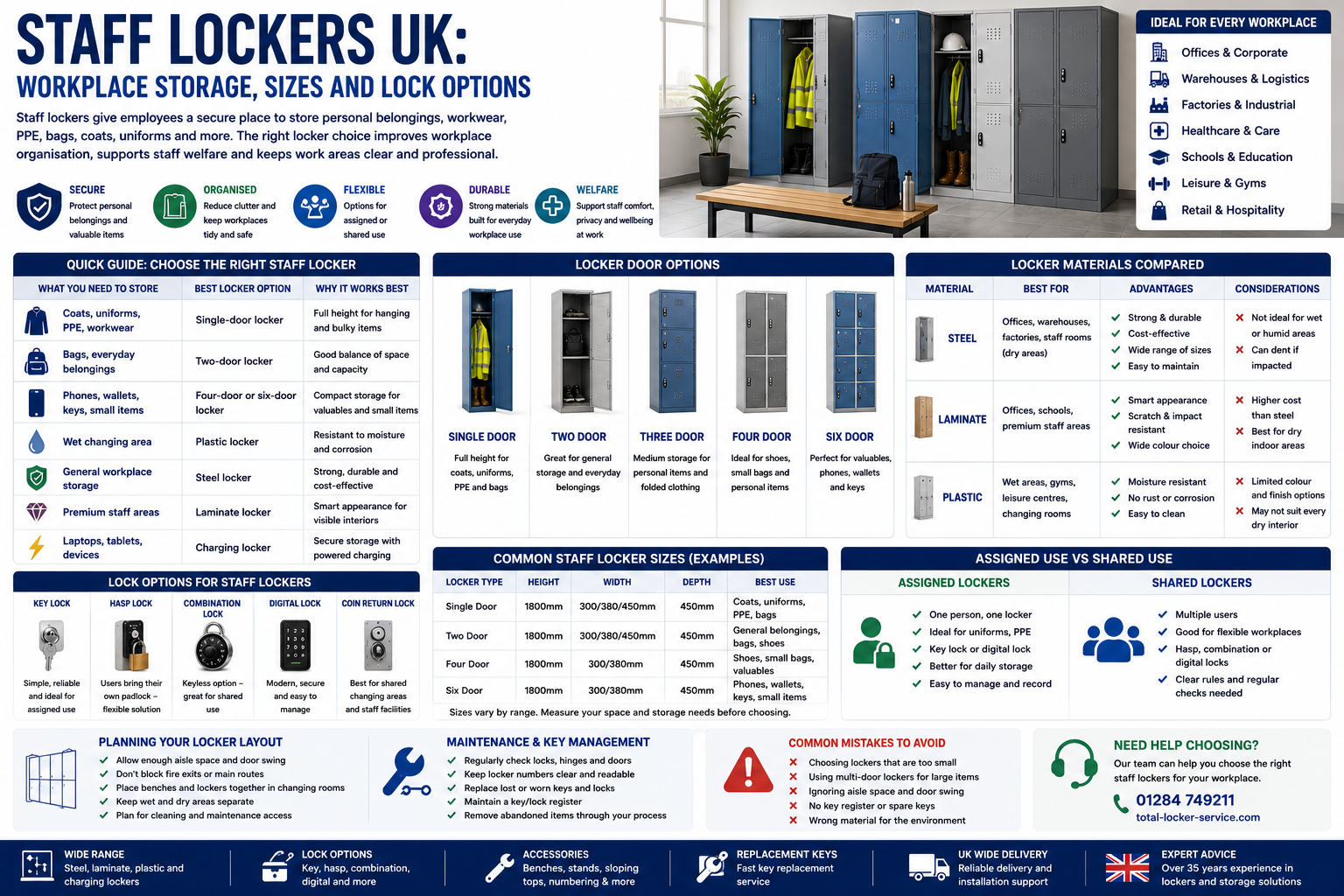
Staff lockers give employees a secure and organised place to store personal belongings, workwear, bags, coats, uniforms, PPE, tools and workplace equipment. They are used in offices, warehouses, factories, schools, healthcare sites, leisure centres, retail sites, hospitality buildings and shared commercial workplaces.
A range of lockers for schools, workplaces and leisure facilities is available with different sizes, compartment layouts and locking options.
The right staff locker system improves workplace storage, supports staff welfare and helps keep work areas clear. However, staff lockers should not be chosen by price or door count alone. The best option depends on what staff need to store, how often lockers are used, where they are installed, what lock type is required and whether the site needs assigned or shared use.
This UK guide explains how to choose staff lockers by workplace type, locker size, compartment layout, material, lock option and maintenance need. It also shows how staff lockers fit into the wider locker planning structure for commercial and workplace sites.
Quick answer: what staff lockers do you need?
For most workplaces, staff lockers should be large enough for bags, coats, workwear and personal belongings. Single-door staff lockers are best when employees need full-height storage for coats, uniforms, PPE or bulky bags. Two-door staff lockers are a good balance when users need everyday personal storage but not full-height hanging space. Four-door and six-door lockers are best for small items, valuables, phones or visitor storage, not full staff changing storage.
Steel staff lockers are usually the best value for dry indoor workplaces. Laminate lockers are useful where appearance matters. Plastic lockers are better for wet or humid changing rooms. Key locks are simple for assigned staff lockers, while hasp, combination or digital locks may suit shared or flexible workplace storage.
| Staff locker need | Best starting option | Why |
|---|---|---|
| Coats, uniforms and PPE | Single-door locker | Full-height storage gives the most usable space |
| General staff belongings | Two-door locker | Good balance of storage and user capacity |
| Phones, wallets and keys | Four-door or six-door locker | Compact storage for small valuables |
| Wet changing area | Plastic or wet-area locker | Better resistance to moisture and corrosion |
| Dry workplace storage | Steel locker | Strong, practical and cost-effective |
| Premium staff area | Laminate locker | Smarter finish for visible interiors |
| Device storage | Charging locker | Secure storage with powered charging |
This staff locker guide should link upwards to the main locker buying guide and sideways to the size, lock, material and maintenance guides. It should act as the workplace-specific route within the wider lockers canister.
What are staff lockers?
Staff lockers are secure storage lockers used by employees, workers, contractors or site teams. They provide a defined place for personal belongings and work-related items during the working day. Depending on the site, they may be installed in staff rooms, changing rooms, welfare areas, offices, warehouses, workshops, corridors, break rooms or back-of-house storage areas.
Staff lockers can be assigned to one person or used flexibly by different users. They can be fitted with key locks, hasp locks, combination locks, coin locks or digital locks. They can also be supplied in several door options, including single-door, two-door and multi-door formats.
The phrase “staff lockers” can cover many workplace storage needs. In an office, a staff locker may hold a laptop bag and personal items. A warehouse, it may hold PPE, boots and workwear. In a gym or leisure centre, it may hold uniforms, towels and staff belongings. In a factory, it may be part of a wider changing and welfare system.
Why staff lockers matter
Staff lockers help keep workplaces organised. Without suitable storage, personal items often end up under desks, in corridors, on shelves, in changing rooms, in vehicles or around workstations. This can create clutter, reduce professionalism and make it harder for staff to separate personal belongings from work equipment.
Lockers also support staff welfare. Employees need somewhere to store coats, bags, uniforms, phones, wallets, keys and other belongings during work. In workplaces with uniforms, PPE or shift work, the locker system becomes part of the daily routine.
A good staff locker system can also improve site control. It gives managers a clearer way to manage storage, issue keys, plan replacement parts, allocate compartments and reduce lost belongings. It also supports better housekeeping because every user has a defined place for their items.
- Improves workplace organisation.
- Gives staff secure personal storage.
- Supports changing rooms and welfare areas.
- Helps manage uniforms, PPE and workwear.
- Reduces clutter around desks and workstations.
- Supports key control, lock control and maintenance planning.
- Improves the professional appearance of staff areas.
Workplace storage needs
Before choosing staff lockers, list what staff need to store. This is the most important step. Consider a locker that is suitable for office staff may be too small for warehouse staff. A locker that works in a dry staff room may fail in a wet changing room. A locker that suits assigned users may not suit shared shift workers.
Workplace storage needs can include personal belongings, clothing, uniforms, PPE, tools, footwear, laptops, tablets, phones, radios, scanners and documents. Each item affects the required locker size, depth, lock type and location.
| Stored item | Locker requirement | Planning note |
|---|---|---|
| Coats and uniforms | Full-height or larger compartments | Single-door lockers are often best |
| Bags and personal items | Medium compartments | Two-door lockers may be suitable |
| PPE and workwear | Larger and deeper storage | Check boots, helmets and hi-vis storage needs |
| Phones and wallets | Small secure compartments | Four-door or six-door lockers may work |
| Laptops and devices | Device-sized or powered storage | Consider charging lockers where needed |
| Tools or equipment | Robust storage with suitable depth | Consider tool charging or specialist storage |
Once the stored items are clear, the locker decision becomes easier. Size, door option, material and lock type should all follow the real storage requirement.
Staff locker sizes
Staff locker size should be based on what employees need to store each day. The main dimensions are height, width and depth. A full-height locker gives the most storage. A wider locker gives more room for bags and equipment. A deeper locker gives more practical space for coats, PPE, boots and larger personal items.
For many workplaces, full-height lockers around 1780mm to 1800mm high are a common starting point. Widths and depths vary by range, but common depths include around 300mm, 380mm and 450mm. A 300mm deep locker can work for compact storage. A 450mm deep locker is often better for bulky bags, coats, PPE and workwear.
| Locker depth | Best staff use | Watch point |
|---|---|---|
| 300mm | Compact staff storage and smaller items | May be too shallow for bulky bags or PPE |
| 380mm | General staff storage | Good balance for many workplaces |
| 450mm | Coats, bags, PPE, boots and workwear | Needs more room depth and aisle clearance |
For detailed dimensions, link this page to the locker size guide. Staff locker buyers often need size advice before they are ready to choose a product.
Staff locker door and compartment options
Door configuration controls how much space each staff member gets. A single-door locker gives one user the full locker column. A two-door locker splits the same column between two users. Four-door and six-door lockers create compact compartments for small items.
Staff changing rooms usually need larger compartments than visitor or valuables storage. Employees may need to store coats, shoes, uniforms, lunch bags and personal belongings for a full shift. Small compartments can cause overfilling, damaged doors and user frustration if they are used for the wrong purpose.
| Door option | Best staff use | Not ideal for |
|---|---|---|
| Single-door staff locker | Coats, uniforms, PPE, boots, bags and workwear | High-density small-item storage |
| Two-door staff locker | General belongings, bags, shoes and folded clothing | Long coats or bulky PPE |
| Three-door locker | Medium-small personal storage | Large bags or hanging garments |
| Four-door locker | Small staff items, shoes, phones and valuables | Full staff changing storage |
| Six-door locker | Phones, wallets, keys and compact valuables | Bags, coats, uniforms and PPE |
For detailed compartment comparison, link this article to the locker door options guide. That page should handle the wider single-door, two-door and multi-door decision.
Best materials for staff lockers
Staff lockers can be made from different materials. Steel, laminate and plastic all have a role. The right material depends on the room conditions, appearance requirement and budget.
Steel lockers are usually the best starting point for dry staff rooms, warehouses, factories and general workplace storage. Laminate lockers can be a stronger choice where appearance matters, such as offices or premium staff areas. Plastic lockers are better for wet or humid changing rooms where moisture resistance is important.
| Material | Best staff use | Main advantage |
|---|---|---|
| Steel staff lockers | Dry workplaces, factories, warehouses and staff rooms | Strong, practical and cost-effective |
| Laminate staff lockers | Offices, smart staff areas and premium interiors | Better appearance and strong visual finish |
| Plastic staff lockers | Wet changing rooms, pool areas and humid spaces | Moisture and corrosion resistance |
For material comparison, link this page to the locker materials guide. For material-specific pages, link to steel lockers, plastic lockers and laminate lockers where relevant.
Staff locker lock options
The lock type should match how staff use the locker. Assigned staff lockers often work well with key locks because one person uses the same locker regularly. Shared staff lockers may work better with hasp locks, combination locks or digital locks, depending on how the site manages access.
Key control is important. If the site uses key locks, keep a register of locker numbers, key codes, issued keys and spare keys. When the site uses combination locks, plan a reset process. If the site uses digital locks, plan battery checks and override access.
| Lock type | Best staff locker use | Management note |
|---|---|---|
| Key lock | Assigned staff lockers | Keep spare keys and key codes recorded |
| Hasp lock | Flexible staff storage where users bring padlocks | Padlock quality varies |
| Combination lock | Keyless staff storage | Forgotten codes need reset support |
| Digital lock | Modern offices and shared staff areas | Needs battery or access management |
| Coin return lock | Shared staff changing areas in some leisure settings | More common in public changing rooms than assigned staff areas |
For lock comparison, see locker locks by type. For lost or spare keys, see replacement locker keys.
Assigned staff lockers vs shared staff lockers
Staff lockers can be assigned or shared. Assigned lockers are used by the same person each day. Shared lockers are used by different people at different times. This choice affects lock type, size, labelling, key control and maintenance.
Assigned staff lockers are often better when employees need regular storage for workwear, PPE or personal items. Shared lockers can work in flexible offices, hot-desking environments, temporary staff areas or visitor-style staff storage. However, shared lockers need clear rules so items are not left inside permanently.
| Use model | Best for | Recommended lock options |
|---|---|---|
| Assigned staff locker | Permanent staff, uniforms, PPE and regular storage | Key lock, combination lock or digital lock |
| Shared staff locker | Flexible workspaces, hot desks and temporary use | Hasp lock, combination lock or digital lock |
| Department locker bank | Teams, shifts and shared equipment | Key lock or controlled digital lock |
| Valuables locker | Phones, wallets, keys and small items | Combination lock, digital lock or keyed lock |
Best staff lockers by workplace type
Different workplaces need different staff lockers. The right choice depends on daily use, clothing, equipment, shift patterns and room layout.
Office staff lockers
Office staff lockers often support hybrid working, hot desking, personal storage and visitor storage. Two-door lockers can work well for everyday bags and personal items. Four-door or six-door lockers can suit phones, wallets and small valuables. Laminate lockers may be preferred where the locker area is visible and appearance matters.
If staff need secure device charging, consider powered storage. Standard lockers may not be suitable where laptops, tablets or phones need to charge during the day.
Recommended route: charging lockers for powered device storage.
Warehouse and factory staff lockers
Warehouses and factories often need larger staff lockers because employees may store workwear, PPE, boots, coats, gloves and bags. Single-door lockers are often the best starting point. Deeper lockers may also be needed for bulky items.
Steel lockers are usually a strong option for dry industrial staff areas. The site should also plan key control, lock maintenance and replacement parts because shift-based use can create frequent wear.
Recommended route: workplace lockers.
Healthcare staff lockers
Healthcare staff lockers may be used for uniforms, personal items, footwear, bags and shift storage. The locker area should support clean, organised staff use. Materials and cleaning routines should match the room conditions.
Where lockers sit in dry staff areas, steel or laminate may be suitable. Where moisture or more demanding cleaning routines apply, material selection should be reviewed carefully.
Retail and hospitality staff lockers
Retail and hospitality sites often need compact staff storage in back-of-house areas. Staff may need to store coats, bags, phones, wallets and work clothing. Two-door lockers can be a good balance where space is limited, while single-door lockers are better for larger coats or uniforms.
In small staff rooms, layout is important. Lockers should not block exits, break areas, kitchen access or circulation routes.
Leisure centre and gym staff lockers
Leisure and gym staff may need storage for uniforms, personal items, towels, shoes and work equipment. In dry staff rooms, steel lockers may be suitable. In wet or shower-adjacent areas, plastic or wet-area lockers may be better.
Staff lockers should be separated from public member lockers where possible. Staff storage usually needs a more controlled and assigned-use system.
Recommended route: leisure lockers.
Staff locker layout and installation planning
Staff locker layout affects how easy the storage area is to use. A locker bank can be the right product but still fail if it is installed in a narrow, awkward or congested space.
Measure the room before choosing lockers. Check wall length, door swing, aisle width, bench positions, radiators, windows, sockets, fire exits and circulation routes. Staff need space to open doors, remove coats, change shoes, handle bags and move around colleagues.
- Allow enough aisle space for doors to open.
- Do not block exits or main routes.
- Plan benches and lockers together in changing rooms.
- Use deeper lockers only where the room can support the projection.
- Place lockers near the right staff route without creating congestion.
- Keep wet and dry zones separate where changing rooms are involved.
- Allow cleaning and maintenance access around the locker bank.
For wider layout planning, link this article to the locker planning guide. Lockers for staff should be planned as part of the room, not as a last-minute furniture item.
Staff locker maintenance and key management
Staff lockers need routine checks. Locks, keys, hinges, doors, number plates and compartments should be inspected regularly. This is especially important in large workplaces, shift-based sites and staff changing rooms where lockers are used every day.
Keyed staff lockers should have a key register. Record locker numbers, key numbers, spare keys and issued keys. Replacement keys should be ordered before missing keys become a daily access problem. Where combination or digital locks are used, keep reset or override processes clear.
- Check doors open and close correctly.
- Check locks secure properly.
- Replace lost, bent or worn keys.
- Keep locker numbers clear and readable.
- Inspect hinges and fixings.
- Remove abandoned items through the site process.
- Record repeated faults and plan repairs.
For aftercare, link this page to the locker maintenance guide and locker estate management guide. These pages help sites manage repairs, keys, locks and replacement planning over time.
Common staff locker mistakes
Most staff locker problems come from underestimating storage need. A site may install enough compartments numerically, but the compartments may be too small or in the wrong place.
- Choosing small lockers when staff need coats, bags or PPE storage.
- Using six-door lockers for full staff changing storage.
- Choosing shallow lockers for bulky workwear.
- Installing lockers without checking door swing and aisle space.
- Using key locks without a key register.
- Forgetting spare capacity for new staff.
- Using steel lockers in wet or humid changing areas.
- Not separating staff lockers from visitor or public lockers where control matters.
- Ignoring charging needs for laptops and devices.
- Not planning maintenance, replacement keys or lock repairs.
These problems can be avoided by planning staff lockers around users, stored items, room layout and long-term management.
How to choose staff lockers
Use this process before ordering staff lockers for a workplace, warehouse, office, factory, gym or commercial site.
- List the users. Count staff, shifts, departments and future growth.
- List stored items. Include bags, coats, uniforms, PPE, phones, laptops and shoes.
- Choose the compartment size. Use larger lockers for clothing and PPE, smaller lockers for valuables.
- Choose the material. Use steel for dry practical storage, laminate for appearance and plastic for wet areas.
- Choose the lock type. Match key, hasp, combination or digital locks to the management process.
- Plan the layout. Check aisle width, door swing, benches and user flow.
- Plan key and lock control. Keep registers for keys, codes and spare parts.
- Allow for maintenance. Build in routine checks and replacement planning.
If staff need full storage, start with single-door or two-door lockers. If the need is small-item storage only, consider four-door or six-door lockers. When staff need device charging, use charging lockers instead of standard storage.
Final recommendation
Staff lockers should be chosen around real workplace use. Start with what staff need to store, then choose the right size, door option, material and lock type. Single-door lockers are best for full staff storage. Two-door lockers are a strong general option. Four-door and six-door lockers are useful for small valuables but not full changing-room storage.
For most dry workplaces, steel staff lockers are practical and cost-effective. For smart offices and visible staff areas, laminate lockers may improve appearance. Wet changing rooms, plastic lockers or wet-area lockers are usually better. For laptops and phones, charging lockers may be the correct route.
Total Locker Service supplies staff lockers, workplace lockers, locker locks, replacement keys, charging lockers and accessories for UK offices, warehouses, factories, schools, gyms, healthcare sites and commercial buildings. Browse workplace lockers, view commercial lockers, or call 01284 749211 for help choosing staff lockers for your site.
Staff locker FAQs
What are staff lockers?
Staff lockers are secure storage lockers for employees, workers or contractors. They are used to store personal belongings, coats, bags, uniforms, PPE, phones, keys and workplace items during the working day.
What size staff lockers do I need?
The right size depends on what staff store. Single-door lockers are best for coats, uniforms, PPE and bulky bags. Two-door lockers work well for general personal storage. Four-door and six-door lockers are best for small valuables.
Are steel lockers good for staff storage?
Yes. Steel lockers are a practical and cost-effective choice for dry staff rooms, workplaces, factories, warehouses and offices. They are less suitable for wet or humid changing rooms.
What lock type is best for staff lockers?
Key locks are often best for assigned staff lockers. Hasp locks, combination locks and digital locks may suit shared or flexible staff storage. The best choice depends on how the site manages access.
Should staff lockers be assigned or shared?
Assigned lockers are better where staff need regular storage for workwear, uniforms or PPE. Shared lockers can work in flexible offices, hot-desking areas and temporary staff storage zones.
Are four-door lockers suitable for staff?
Four-door lockers are suitable for small staff items such as phones, wallets, keys and shoes. They are usually too small for full staff storage if employees need to store coats, bags, uniforms or PPE.
Do staff lockers need key management?
Yes. If staff lockers use key locks, the site should keep a key register with locker numbers, key codes, issued keys and spare keys. This helps reduce lockouts and replacement delays.
Can staff lockers be used for laptops?
Standard staff lockers can store laptops if the compartment is large enough, but charging lockers are better when devices need to charge securely during the day.
Where should staff lockers be installed?
Staff lockers should be installed where staff can access them easily without blocking corridors, exits, work areas or changing routes. In changing rooms, plan lockers with benches, door swing and aisle width.
Who supplies staff lockers in the UK?
Total Locker Service supplies staff lockers, workplace lockers, locker locks, replacement keys, charging lockers and accessories for UK workplaces, offices, warehouses, factories, schools, gyms and commercial buildings.