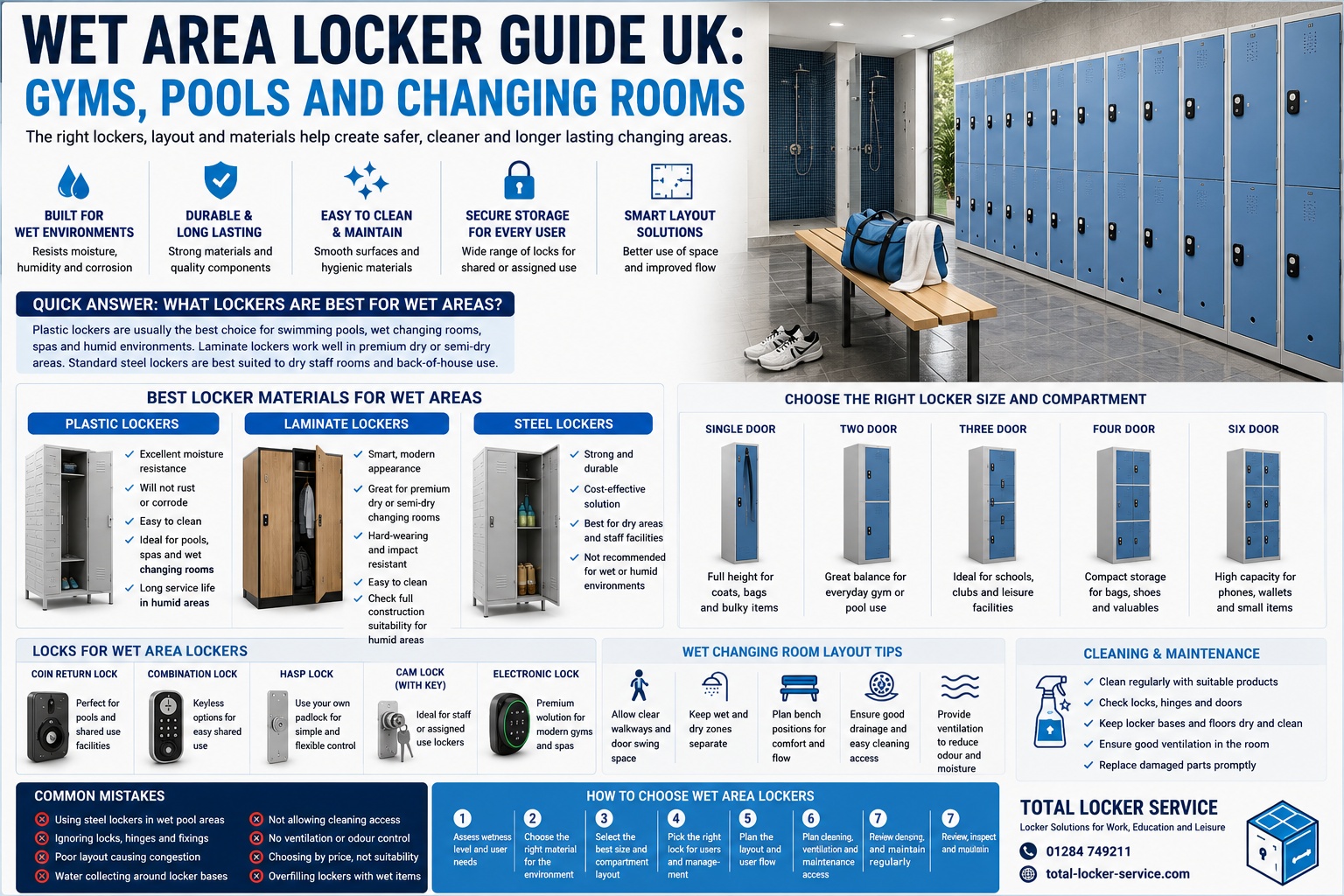
Wet area lockers are designed for changing rooms, swimming pools, gyms, spas, leisure centres and other damp or humid spaces. These environments are harder on lockers than dry offices, staff rooms or school corridors. Water, steam, damp clothing, towels, cleaning routines and high daily use can all shorten the life of the wrong locker system.
The right wet area locker should resist moisture, support easy cleaning, provide secure storage and fit the changing room layout. It should also use suitable locks, hinges and fittings. Choosing only by size or price can lead to corrosion, swelling, broken doors, poor hygiene and higher replacement costs.
This UK guide explains how to choose lockers for wet changing rooms, swimming pools, gyms, spas, sports clubs and leisure facilities. It compares materials, lock types, layouts, ventilation, cleaning and common planning mistakes.
Quick answer: what lockers are best for wet areas?
Plastic lockers are usually the safest choice for swimming pools, wet changing rooms, spas and humid leisure environments because they resist water and corrosion. Laminate lockers can work well in premium dry or semi-dry changing areas if the full construction is suitable. Standard steel lockers are normally best kept for dry staff areas, dry gyms, offices and back-of-house storage, not wet poolside spaces.
For wet areas, the whole locker matters. The body, door, hinges, locks, fixings and ventilation must all suit the environment. A locker with a moisture-resistant door but unsuitable hinges or locks can still fail early. The best choice depends on how wet the area is, how often the lockers are used, who uses them and how the room is cleaned.
| Environment | Best locker route | Reason |
|---|---|---|
| Swimming pool changing room | Plastic or wet-area lockers | Strong moisture and corrosion resistance |
| Spa or wellness changing room | Plastic or suitable premium wet-area system | Handles humidity, towels and cleaning routines |
| Dry gym changing room | Laminate or steel lockers | Good appearance and practical daily storage |
| Wet gym changing room | Plastic or wet-area lockers | Better resistance to damp clothing and shower traffic |
| Staff-only dry changing area | Steel lockers | Cost-effective and practical where moisture is limited |
| Premium changing suite | Laminate lockers, if suitable for the conditions | Smart finish with strong user appeal |
If the locker will be exposed to wet towels, wet floors, shower steam, pool air or frequent washdown, treat it as a wet-area specification. Do not choose a standard dry-area locker and hope the finish will cope.
What are wet area lockers?
Wet area lockers are lockers chosen or designed for damp, humid or water-exposed environments. They are used in places where normal dry-area lockers may corrode, swell, rust, stain or deteriorate. Typical locations include swimming pools, gym changing rooms, sports clubs, spas, shower areas, leisure centres and wet staff facilities.
A wet area locker is not defined only by its door colour or style. It should be suitable for the whole environment. The material should resist moisture. The fittings should not fail quickly. The locks should work despite damp conditions. The layout should allow cleaning, drying and air movement. The locker should also suit the way users move through the changing room.
Many wet area locker projects fail because the site treats the locker room like a normal dry storage area. A changing room is different. Users bring in wet clothes, towels, shoes, swimwear, bags and toiletries. The floor may be wet for long periods. Cleaning may be frequent. Steam and humidity can affect metal parts and boards. That is why material and layout choices matter.
Why wet areas need special planning
Wet areas put lockers under more pressure than dry environments. In a dry office, a locker may only need to store bags, coats and personal items. In a wet changing room, lockers may face humidity, dripping swimwear, damp towels, chemical cleaning products, changing room congestion and heavy daily use.
This creates several risks. Steel can corrode. Unsuitable board materials can swell. Hinges and locks can seize or become difficult to operate. Poor ventilation can trap odours. Standing water can damage bases. Poor layouts can create bottlenecks at showers, benches and locker doors.
Wet area locker planning should consider the full room, not just the locker bank. Think about shower exits, pool exits, dry changing zones, wet changing zones, benches, drainage, cleaning access, user routes and door clearance. A good locker system makes the changing area easier to use and easier to maintain.
Best locker materials for wet areas
The material choice is the main difference between dry-area lockers and wet-area lockers. Steel, laminate and plastic all have useful roles, but they are not equally suitable for every wet or humid environment.
Plastic lockers for wet areas
Plastic lockers are often the strongest starting point for true wet areas. They resist moisture and do not have a steel body that can rust. This makes them useful for swimming pools, spas, shower areas, wet changing rooms and humid leisure environments.
Plastic lockers are also practical where cleaning is frequent. They can be a good long-term choice when the area regularly contains wet towels, damp clothing, pool users or high humidity. They may cost more than basic steel lockers, but they can reduce replacement problems in wet settings.
- Best for swimming pools and wet leisure areas.
- Strong moisture resistance.
- No steel body to rust in wet conditions.
- Useful where humidity is part of normal daily use.
- Suitable for many gym, spa and pool changing rooms.
Laminate lockers in changing rooms
Laminate lockers can be a good choice for smart changing rooms, premium gym areas, sports clubs and dry or semi-dry leisure environments. They offer a more refined appearance than many basic locker types and can improve the feel of a changing room.
However, laminate must be specified carefully. The full construction matters, including the carcass, edges, hinges, fixings and locks. A laminate door alone does not make a locker suitable for wet areas. If the room is heavily humid, close to showers or exposed to regular wet use, confirm that the locker system is appropriate before choosing it.
- Best for dry or semi-dry premium changing areas.
- Good visual finish for gyms and clubs.
- Useful where appearance matters.
- May not be suitable for all poolside or high-humidity spaces.
- Needs suitable construction, edges, locks and fittings.
For more detail on this material route, see laminate lockers.
Steel lockers in wet areas
Steel lockers are strong, practical and cost-effective in dry areas. They are widely used in workplaces, schools and staff rooms. However, standard steel lockers are not usually the best choice for wet, humid or poolside environments because corrosion can become a problem.
Steel may still be suitable for dry gym areas, staff-only dry changing rooms or back-of-house facilities where moisture is controlled. It should not be treated as the default choice for swimming pool changing rooms, shower-adjacent areas or high-humidity rooms.
- Best for dry changing rooms and staff areas.
- Strong and cost-effective where moisture is controlled.
- Not usually suitable for true wet or humid poolside conditions.
- Can corrode if used in the wrong environment.
- Useful as part of a mixed-material site.
For a wider material comparison, link this article to the locker material guide. Material choice should be based on actual room conditions, not only the purchase price.
| Material | Wet-area suitability | Best use | Watch point |
|---|---|---|---|
| Plastic | High | Pools, spas, wet changing rooms and humid areas | Check lock and hinge suitability as well as body material |
| Laminate | Medium, depending on construction | Premium dry or semi-dry changing areas | Edges, carcass and fittings must suit the room |
| Steel | Low in true wet areas | Dry staff areas, dry gyms and back-of-house storage | Can corrode in damp or humid conditions |
Gym lockers
Gym lockers need to support fast daily use. Members arrive with bags, phones, coats, shoes, training kit and towels. Some users need short-term storage during a workout. Others need changing room storage before and after showers. Staff may also need separate lockers for uniforms and personal items.
The right gym locker depends on the area. A dry gym floor may need small valuables lockers or phone lockers. A changing room may need larger compartments for bags and clothing. A shower-adjacent wet area may need plastic or moisture-resistant lockers. A premium gym may choose laminate lockers for appearance in dry or controlled changing spaces.
Gym locker size
Gym users often need more space than visitors in a reception area. A changing room locker should hold a gym bag, shoes, clothing and a towel. Single-door and two-door lockers are often more practical for changing rooms than small multi-door lockers. Four-door or six-door lockers may work better for phones, wallets and small personal items.
Depth matters. A shallow locker can be frustrating when users bring sports bags or winter coats. A deeper locker may be more practical, but it needs enough aisle space and door clearance. For gym changing rooms, size and layout should be planned together.
Gym locker locks
Shared-use gym lockers often need locks that are easy for changing users. Coin return locks, hasp locks, combination locks and electronic locks can all be suitable depending on the site. Keyed locks may work for staff areas or assigned-use lockers, but they can create key management problems in public member areas.
For gyms, the lock should be easy to reset, easy to manage and suitable for damp hands. Staff should have an override process for lost keys, forgotten codes and abandoned lockers.
For wider leisure storage, see leisure lockers.
Swimming pool lockers
Swimming pool lockers face some of the toughest locker conditions. Users bring wet swimwear, towels, toiletries, bags and shoes. Floors are often wet. Air humidity can be high. Cleaning may be frequent. Pool environments may also expose lockers and fittings to conditions that are harsher than normal dry indoor use.
For this reason, plastic lockers are often the most practical option for pool changing rooms. They resist moisture and avoid the corrosion problems associated with standard steel lockers in wet areas. The lock, hinge and fixing choices should also be suitable for the environment.
Pool locker planning points
- Choose materials that can cope with wet swimwear and damp towels.
- Avoid standard steel lockers in high-humidity areas unless suitability is confirmed.
- Use locks and fittings that are appropriate for damp conditions.
- Allow enough drainage and cleaning access around locker bases.
- Keep changing routes clear between pool, shower, bench and locker areas.
- Plan compartments for bags, shoes, clothes and towels.
- Use clear numbering so users can find lockers easily.
Pool changing rooms also need strong user flow. People move between wet and dry zones. Lockers should not block routes between showers, benches and exits. Door swing should not create pinch points in busy family or public changing areas.
Changing room lockers
Changing rooms need lockers that match the way people actually use the space. Users may arrive with bags and outdoor clothing, change into sportswear or swimwear, use showers, return wet, then retrieve clean clothes. The locker must support this flow without creating congestion.
There are three broad changing room types: dry changing rooms, wet changing rooms and mixed changing rooms. Each needs different locker planning.
| Changing room type | Typical conditions | Recommended locker approach |
|---|---|---|
| Dry changing room | Low moisture, staff or gym use, limited shower exposure | Steel or laminate lockers may be suitable |
| Wet changing room | Showers, pool users, wet towels and high humidity | Plastic or wet-area lockers recommended |
| Mixed changing room | Dry areas near wet areas, varied user behaviour | Use material zoning; plastic near wet zones, laminate or steel in controlled dry zones |
Changing room lockers should also be matched to the user group. A staff changing room may need full-height lockers for uniforms and coats. A gym changing room may need medium-large lockers for bags and towels. A pool changing room may need wet-area lockers with good cleaning access. A school changing room may need durable lockers and simple lock management.
Locks for wet area lockers
Lock choice is especially important in wet areas. Users may have wet hands. The room may be humid. Locks may be used many times per day. The lock should suit the environment, the user routine and the level of staff management available.
For public leisure and gym changing rooms, shared-use locks are often preferred. With staff changing rooms, assigned-use locks may be better. In schools, master access and replacement key control may be important. For premium leisure settings, electronic or code-based systems may improve user experience if the site can manage them properly.
| Lock type | Best for wet-area use | Management note |
|---|---|---|
| Coin return lock | Leisure centres, pools and public changing rooms | Encourages temporary use and key return |
| Hasp lock | Gyms where users bring their own padlock | Simple, but padlock quality varies |
| Mechanical combination lock | Keyless use in gyms, schools and clubs | Codes must be reset and managed |
| Cam lock with key | Assigned staff or controlled-use lockers | Keys must be tracked and replaced when lost |
| Electronic or RFID lock | Premium gyms, modern leisure sites and controlled facilities | Needs a suitable management process and wet-area suitability check |
For lock options, see locker locks by type. Lost or replacement keys, see replacement locker keys.
Wet changing room layout
Wet area locker layout affects safety, comfort and cleaning. A locker can be made from the correct material but still perform badly if the layout is cramped. Users need space to open doors, sit on benches, dry off, change clothes and move around others.
Start by mapping the wet and dry routes through the changing room. First, identify the entrance, shoe-changing area, showers, benches, locker banks and exit route. Then check how wet users and dry users move through the space. Lockers should support that flow, not fight it.
Keep wet and dry zones clear
Changing rooms often work better when wet and dry zones are clearly separated. Pool users should not have to carry wet towels through crowded dry areas if the layout can avoid it. Dry users should not have to stand in the main wet route to reach a locker. The locker position should support sensible movement from entry to changing, showering and exit.
Allow door swing and aisle space
Locker doors need enough space to open without blocking the whole route. In wet areas, users often carry towels, bags and toiletries, so the room needs more practical movement space than a simple storage corridor. Door swing, bench position and aisle width should be planned together.
Back-to-back locker rows can work in larger changing rooms, but they need enough aisle width on both sides. Lockers facing benches also need enough clearance so seated users do not block locker access.
Plan locker bases and cleaning access
Wet changing rooms need regular cleaning. Locker bases should not trap water, dirt or hair in areas that cannot be reached. Plinths, legs, sloping tops and accessible floor areas can all affect cleaning. The best option depends on the room and cleaning routine.
When planning the layout, ask how the room will be cleaned every day. If cleaners cannot reach around the lockers, the system may look good on installation but deteriorate quickly in use.
Cleaning and maintenance
Wet area lockers need a clear cleaning and maintenance routine. Moisture, body oils, toiletries, hair products, towels and general changing room use can all affect the storage area. Regular cleaning protects hygiene, appearance and lifespan.
The cleaning routine should match the locker material. Avoid harsh chemicals unless the locker supplier confirms they are suitable. Pay attention to doors, handles, locks, vents, hinges, bases, corners and any area where moisture can collect.
Maintenance should include checks for loose locks, damaged hinges, cracked components, swollen materials, corroded fittings, blocked ventilation and signs of misuse. Problems should be fixed early before they affect many users.
| Check | What to look for | Why it matters |
|---|---|---|
| Locker body | Cracks, swelling, rust or damage | Shows whether material is coping with the room |
| Locks | Sticking, corrosion, missing keys or failed codes | Prevents lockouts and poor user experience |
| Hinges | Loose, stiff or damaged hinges | Keeps doors operating safely |
| Ventilation | Blocked vents or trapped damp smells | Supports drying and reduces odour issues |
| Bases | Standing water, dirt or poor cleaning access | Prevents hygiene and durability problems |
| Numbering | Missing or unclear locker numbers | Helps users find and manage lockers quickly |
Ventilation and odour control
Wet changing rooms can develop odour problems if moisture is trapped. Locker ventilation helps, but it cannot solve poor room ventilation alone. The changing room should allow damp air to leave and drier air to circulate. Lockers should not be overfilled with wet towels, clothing and bags for long periods.
Ventilated doors, suitable compartment design and good room airflow all support better drying. Sites should also have clear rules about abandoned clothing and long-term storage of damp items. A locker is not a drying room unless it has been specifically designed for that purpose.
Common wet area locker mistakes
Many wet area locker problems are avoidable. They usually come from choosing lockers as if the room were dry, or from focusing only on purchase price.
- Using standard steel lockers in wet or humid pool changing rooms.
- Choosing laminate doors without checking the full construction.
- Forgetting that locks, hinges and fixings must also suit moisture.
- Installing lockers too close to showers without considering splash and humidity.
- Choosing lockers that are too shallow for sports bags and towels.
- Creating narrow aisles where doors and benches block movement.
- Failing to separate wet and dry user routes.
- Allowing water to collect around locker bases.
- Using cleaning products that damage finishes or fittings.
- Providing no override process for lost keys or forgotten codes.
- Not inspecting locks and hinges regularly.
- Choosing one locker material for the whole facility when different rooms need different materials.
The safest approach is to plan the locker around the real room conditions. If users come from showers or pools, the locker must be suitable for wet use. If the area is dry and controlled, a different material may offer better value.
How to choose wet area lockers
Use this process before ordering lockers for a gym, pool, spa or changing room.
- Define the wetness level. Is the area dry, damp, wet, shower-adjacent, poolside or high humidity?
- Choose the material first. Use plastic or wet-area lockers for true wet spaces.
- Check the fittings. Hinges, locks, fixings and numbering should suit the environment.
- Decide the locker size. Make sure compartments fit bags, towels, shoes and clothing.
- Select the lock type. Choose a lock that matches shared or assigned use.
- Plan the layout. Allow door swing, bench space, aisle width and cleaning access.
- Separate wet and dry routes. Keep movement through the changing area clear.
- Plan cleaning access. Avoid layouts that trap water or dirt around locker bases.
- Check ventilation. Make sure lockers and the room can manage damp air.
- Allow for maintenance. Build in routine checks for locks, hinges and signs of damage.
For many leisure sites, the best solution is a mixed locker system. Plastic lockers can be used in wet pool areas. Laminate lockers can be used in premium dry changing rooms. Steel lockers can be used in staff-only dry spaces. This gives each area the right balance of durability, appearance and value.
Final recommendation
Wet area lockers should be chosen for the environment first. A locker that works well in a dry workplace may not last in a swimming pool changing room. Moisture, humidity, cleaning routines, wet towels and heavy daily use all change the specification.
For swimming pools, spas and wet changing rooms, plastic or dedicated wet-area lockers are usually the strongest starting point. Premium dry changing rooms, laminate lockers may be suitable. For dry staff rooms and back-of-house areas, steel lockers can still offer excellent value.
Total Locker Service supplies lockers for gyms, pools, leisure centres, workplaces, schools and commercial changing rooms across the UK. Browse leisure lockers, compare commercial lockers, or call 01284 749211 for help choosing the right wet area locker system for your site.
Wet area locker FAQs
What are wet area lockers?
Wet area lockers are lockers chosen or designed for damp, humid or water-exposed environments such as swimming pools, gyms, spas, leisure centres and changing rooms. They should resist moisture and suit the cleaning routine, lock use and room layout.
What lockers are best for swimming pools?
Plastic lockers are usually the best starting point for swimming pools because they resist water and do not have a steel body that can rust. Locks, hinges and fittings should also be suitable for damp or humid use.
Can steel lockers be used in changing rooms?
Steel lockers can be used in dry changing rooms and staff areas where moisture is controlled. They are not usually the best choice for wet, humid or poolside areas because corrosion can become a problem.
Are laminate lockers suitable for wet changing rooms?
Laminate lockers may be suitable for dry or semi-dry premium changing rooms if the full construction is appropriate. The door finish alone is not enough. The carcass, edges, hinges, locks and fixings also need to suit the conditions.
What lock type is best for gym lockers?
For shared gym lockers, coin return locks, combination locks, hasp locks or electronic locks can all work. The best option depends on how the gym manages users, lost access, abandoned lockers and staff override.
What size should changing room lockers be?
Changing room lockers should be large enough for bags, shoes, clothing and towels. Single-door or two-door lockers are often more practical than small multi-door lockers for full changing room use. Smaller compartments can work for valuables or phones.
Do wet area lockers need ventilation?
Yes. Ventilation helps reduce trapped moisture and odours. Locker ventilation should be supported by good room ventilation and clear rules about wet clothing, towels and abandoned items.
How should wet area lockers be cleaned?
Wet area lockers should be cleaned using methods suitable for the locker material. Avoid harsh chemicals unless the supplier confirms they are suitable. Pay attention to locks, hinges, vents, bases and areas where water can collect.
Can one locker material be used across a whole leisure centre?
It can be, but mixed materials often work better. Plastic lockers may suit wet pool areas, laminate lockers may suit premium dry changing areas and steel lockers may suit staff-only dry storage rooms.
Who supplies wet area lockers in the UK?
Total Locker Service supplies lockers for gyms, pools, leisure centres, changing rooms, workplaces, schools and commercial buildings across the UK, with options for wet, dry and mixed-use environments.