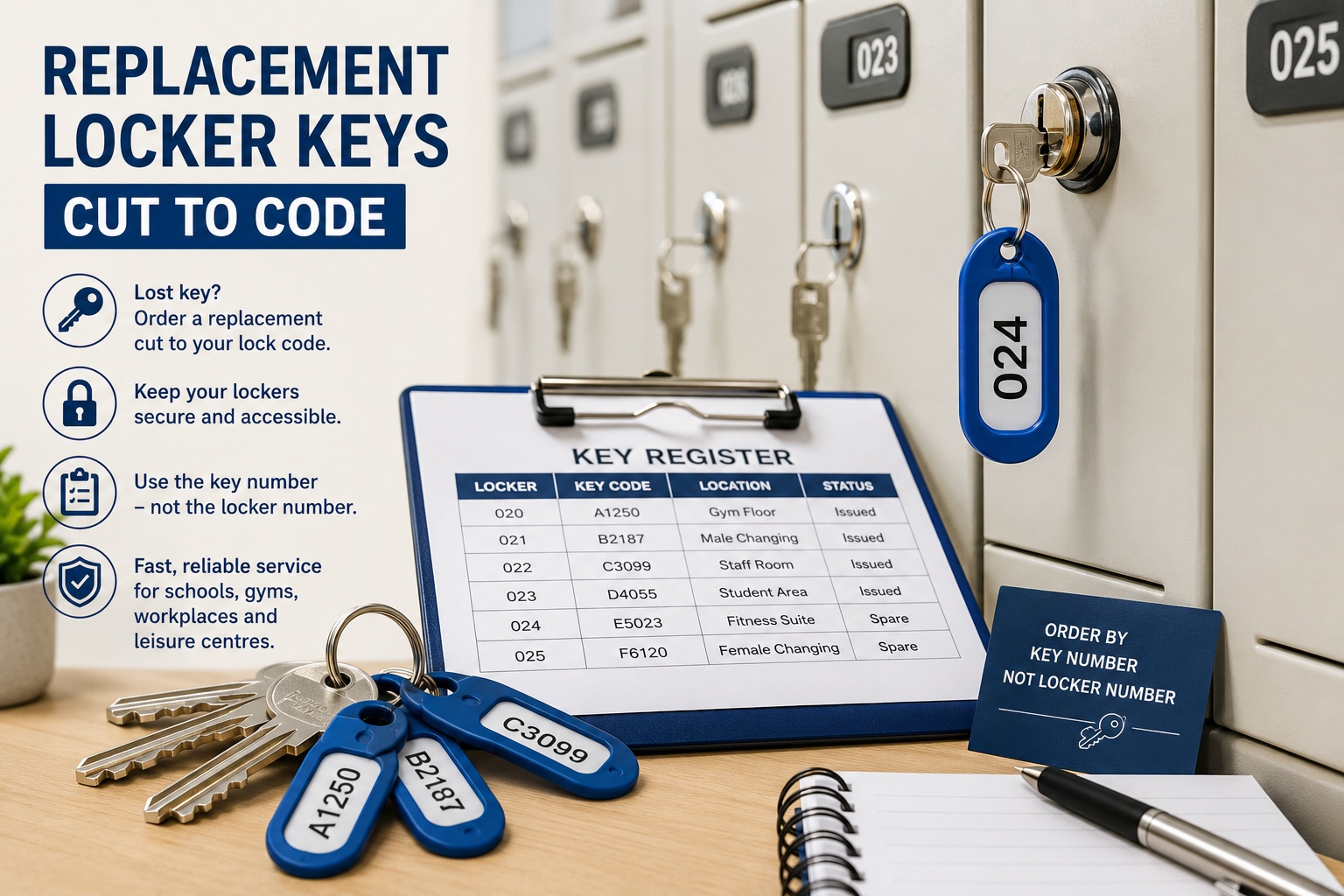
Replacement locker keys cut to code are useful when a locker key has been lost, damaged, snapped or taken away, but the lock itself still works. Instead of copying an existing key, the replacement key is made from the key number or lock code.
This guide explains what cut-to-code replacement means, where to find the correct code, when it is the right solution and when the full locker lock should be replaced instead.
This article supports our main Locker Keys UK replacement and key management guide. For direct ordering, use Total Locker Service for replacement locker keys cut to code.

Quick Answer: What Are Replacement Locker Keys Cut to Code?
Replacement locker keys cut to code are new keys made from a known key number, lock number or manufacturer code. The original key does not need to be available. The code tells the supplier which key blank and cutting pattern are required for the lock.
This is different from copying a key. Key copying needs an original key. Cut-to-code replacement uses the lock or key code instead. This makes it useful when a locker key has been lost, stolen, broken or taken home by mistake.
When the lock is still working and the correct code is known, cut-to-code replacement is often faster, cheaper and less disruptive than replacing the full locker lock.
What Does Cut to Code Mean?
Cut to code means that a key is produced from a recorded key pattern. Each suitable locker lock has a code linked to a specific key shape and cutting pattern. When the correct code is provided, a replacement key can be made to operate the existing lock.
This process is common in managed locker environments. Schools, gyms, workplaces, leisure centres and universities often need replacement keys, but they may not have the original key available. A cut-to-code service allows the site to order a new key without removing the lock from the door.
The key code may be a number, a letter-number combination or a manufacturer-specific reference. It must be recorded accurately. A single wrong digit may result in a key that does not work.
For a wider overview of how locker keys work, read the main Locker Keys UK guide.
Cut-to-Code Replacement vs Key Copying
Cut-to-code replacement and key copying are not the same process. Both can produce a replacement key, but they use different starting information.
| Method | What is needed? | Best used when |
|---|---|---|
| Key copying | The original working key | The key is available and in good condition |
| Cut-to-code replacement | The key number, lock number or code | The original key is lost, broken or unavailable |
Key copying can be useful when the original key is present. However, it may copy wear from an old or damaged key. Cut-to-code replacement uses the intended key pattern, provided the correct code is known.
For many locker sites, cut-to-code ordering is the better option because locker keys are often lost rather than simply duplicated.
Why the Locker Key Code Matters
The key code is the detail that connects the replacement key to the lock. Without the correct code, the supplier may not know which key profile and cut pattern are required.
A locker door number is not always the same as a key code. This is one of the most common mistakes when ordering replacement locker keys. The locker number helps users find their compartment. The key code identifies the lock.
For example, a locker door may show number 24, but the key code may be AB124, 62731 or another lock-series number. Ordering key 24 may not work unless 24 is also the key code.
Before placing an order, check whether the number is printed on the door, stamped on the key or marked on the lock. These are different things.
For more detail, read locker key numbers vs locker door numbers.
Where to Find the Locker Key Code
The locker key code may be found in several places. The easiest place is usually the original key, if it is still available. Many locker keys have a number stamped or engraved into the head of the key.
The next place to check is the lock face. Some locker locks show a number around the barrel or on the front of the lock. Use good lighting, as older lock markings can be worn or partly hidden.
The code may also be visible on the lock barrel, especially when the locker door is open. In some cases, the facilities team may need to inspect the lock from the inside of the door.
Site records can also help. A school, gym or workplace may have a key register, locker allocation sheet, old invoice or maintenance record that lists the key code.
Spare keys are another useful source. If a spare key is held in a secure key cabinet, check whether it has the code stamped on it or written on the tag.
For a step-by-step guide, read where to find a locker key number or lock code.
What Information Should You Collect Before Ordering?
The best replacement key orders include clear and accurate information. This reduces the risk of ordering the wrong key and helps the supplier identify the correct key range.
- The key number or lock code.
- The locker number, if different from the key code.
- The lock brand, where known.
- The locker brand, where known.
- The quantity of keys required.
- Clear photos of the key, lock face or locker if the code is unclear.
- Details of any master key system, if relevant.
Do not rely on memory if the code is unclear. Check the lock, key, register and spare key records before ordering. A short check can prevent delays later.
How to Order Replacement Locker Keys Cut to Code
The ordering process is straightforward when the correct code is available. Start by confirming the key code from the key, lock face, lock barrel or key register. Write it down exactly as shown, including letters, prefixes and leading zeros.
Next, check the lock or locker brand. This may be shown on the key, lock, locker door, old paperwork or invoice records. Common locker and lock names may include Probe, Helmsman, Lowe & Fletcher, Ojmar, ASSA, Link, Garran, Pure and other commercial locker systems.
Then decide how many keys are needed. A site may want one replacement key, a pair of keys or a small spare set for management use. For larger sites, a bulk list may be more efficient.
Finally, place the order with a specialist supplier. Total Locker Service provides replacement locker keys cut to code for many common locker systems.
After the replacement key arrives, test it carefully. Then update the key register so the site record stays accurate.
Why Cut-to-Code Ordering Helps Facilities Teams
Cut-to-code ordering helps facilities teams keep lockers in service. It avoids unnecessary lock changes when the lock is still working. It also reduces disruption for users who need access to personal storage.
For schools, this can reduce the amount of time caretakers spend dealing with lost pupil keys. For gyms and leisure centres, it helps reception teams and managers keep changing room lockers available. For workplaces, it helps staff lockers stay usable during shift changes and staff turnover.
The system works best when key records are accurate. A simple spreadsheet or key register can save hours of checking, especially on larger sites with many lockers.
For practical record keeping, read how to build a locker key register.
When Cut-to-Code Replacement Is the Right Solution
Cut-to-code replacement is usually the right solution when the lock is still working, the code is known and there is no security reason to change the lock.
It is useful when a key has been lost, taken home, damaged or snapped away from the lock. It is also useful when a site wants spare keys for management records or bulk replacement keys before a new term, season or staff change.
- The locker lock still turns correctly.
- The key code or lock code is known.
- The lock has not been damaged.
- The missing key does not create a wider security risk.
- The site wants to avoid unnecessary lock replacement.
This approach is especially helpful for schools, gyms, universities, workplaces, leisure centres and commercial buildings with many lockers.
For larger orders, read bulk replacement locker keys for schools and workplaces.
When Should the Locker Lock Be Replaced Instead?
A replacement key will not fix a faulty lock. If the lock is damaged, worn or insecure, replacing the full lock may be the better option.
Replace the lock if the keyway is damaged, the barrel is loose, the cam is bent or the lock does not turn smoothly. A stiff lock may damage new keys and create more problems later.
Lock replacement may also be sensible if the key has been stolen with identifying details, if the code cannot be found, or if the lock belongs to an obsolete system that is difficult to support.
In some cases, lock replacement is part of a wider upgrade. For example, a site may replace old mixed locks with a consistent system during a locker refurbishment.
For repair guidance, read broken locker key: what to do before replacing the lock and worn locker keys and stiff locks: repair or replace?.
Cut-to-Code Replacement in Schools
Schools often deal with regular lost locker keys. Pupils may misplace keys during the school day, leave them at home or fail to return them at the end of term. Replacing the full lock every time can become expensive and time-consuming.
Cut-to-code replacement helps schools manage these problems. If the key code is recorded, a replacement key can be ordered without removing the lock. This keeps lockers available and reduces pressure on site staff.
Schools should record the locker number, key code, pupil or year group, issue date and return status. They should also hold spare keys securely and carry out termly checks.
For more detail, read school locker keys: replacement and key control guide.
Cut-to-Code Replacement in Gyms and Leisure Centres
Gyms and leisure centres often have high locker turnover. Members and visitors may use lockers for short periods while they train, swim or attend classes. Keys may be attached to wrist straps, fobs or number discs.
When a key is lost, staff need a clear process. They may need to open the locker, confirm ownership of belongings and return the locker to service. If the key code is known, a replacement key can usually be ordered without changing the lock.
Leisure sites should use durable key tags and keep spare keys secure. Wet areas may need water-resistant wrist straps and clear numbering that remains readable after repeated use.
For more detail, read gym locker keys: replacement, wrist straps and member access and leisure centre locker keys: managing wet-area key loss.
Cut-to-Code Replacement in Workplaces
Workplace lockers are often assigned to staff. They may be used for clothing, PPE, bags, personal items or equipment. A lost key can delay an employee, especially when the locker contains items needed for work.
Cut-to-code replacement helps workplaces avoid unnecessary downtime. If the key code is held in the staff locker record, the facilities team can order a replacement without replacing the full lock.
Staff changes are also easier when the key register is accurate. When an employee leaves, the key should be returned, the locker checked and the record updated. If the key is missing, a replacement can be ordered by code.
For workplace-specific guidance, read workplace locker keys: staff storage and replacement process.
Common Mistakes When Ordering Replacement Locker Keys
The most common mistake is ordering from the locker door number instead of the key code. Always check whether the number is user-facing or lock-specific.
Another common mistake is misreading a worn number. Older keys and lock faces can be difficult to read. Take a photo if there is any doubt. Do not guess a number because one wrong character may produce the wrong key.
Some sites also assume that all lockers in one area use the same key range. This may not be true. Locks may have been replaced at different times, or several locker brands may be installed in the same building.
- Do not use the locker door number unless it is also the key code.
- Do not miss letters, prefixes or leading zeros.
- Do not ignore the lock brand.
- Do not assume all lockers on site use the same key range.
- Do not order from old records without checking whether the lock has been changed.
For a fuller checklist, read common mistakes when ordering locker keys.
How to Reduce Future Replacement Key Problems
The best way to reduce replacement key problems is to keep accurate records. A clear key register makes future ordering much easier. It also helps staff respond quickly when a key is lost.
- Record every locker number.
- Record every key code.
- Record the lock brand where known.
- Store spare keys securely.
- Control master key access.
- Use clear key tags or number discs.
- Replace worn keys before they snap.
- Update records when locks are changed.
- Audit locker keys regularly.
For a wider control process, read the locker key audit checklist for facilities managers.
Should You Move to Keyless Locker Locks?
Cut-to-code replacement is useful, but some sites may still consider keyless locker locks if key loss is frequent. Combination locks, coin locks, RFID locks and electronic locks can reduce the need for physical keys.
However, keyless systems have their own management needs. Combination codes can be forgotten. Electronic locks may need batteries. RFID systems need cards, fobs or wristbands. The best option depends on the site, users and budget.
For many schools, workplaces and managed locker areas, keyed locks remain practical because they are simple and easy to maintain. The key is to manage the records properly.
For comparison, read locker keys or combination locks: which is better? and locker keys or RFID locks: which is better for leisure sites?.
Related Locker Key Guides
This article is part of the locker keys canister. Use the related guides below to support identification, lost key procedures, key control and sector-specific locker key management.
- Locker Keys UK: Replacement, Cut-to-Code Ordering and Key Management Guide
- Lost Locker Key? What Schools, Gyms and Workplaces Should Do
- Where to Find a Locker Key Number or Lock Code
- Are Locker Keys Universal? Why Key Codes and Brands Matter
- Locker Key Numbers vs Locker Door Numbers
- School Locker Keys: Replacement and Key Control Guide
- Gym Locker Keys: Replacement, Wrist Straps and Member Access
- Workplace Locker Keys: Staff Storage and Replacement Process
- How to Build a Locker Key Register
- Bulk Replacement Locker Keys for Schools and Workplaces
- Common Mistakes When Ordering Locker Keys
- Locker Key Audit Checklist for Facilities Managers
Ordering Replacement Locker Keys
Replacement locker keys cut to code are a practical solution when the lock still works and the correct key code is known. They help reduce locker downtime and avoid unnecessary lock replacement.
Before ordering, check the key number, lock number, brand and quantity required. If the code is unclear, take photographs of the lock face, keyway and any markings before placing the order.
To order replacement keys, visit Total Locker Service: Locker Keys and Replacement Locker Keys.
Replacement Locker Keys Cut to Code FAQs
What does cut to code mean for locker keys?
Cut to code means the replacement locker key is made from a key number, lock number or manufacturer code rather than copied from the original key.
Can a locker key be replaced without the original key?
Yes. Many locker keys can be replaced without the original key when the correct key code or lock number is known.
Where do I find the code for a replacement locker key?
The code may be stamped on the key, shown on the lock face, marked on the lock barrel or recorded in a site key register.
Is the locker door number the same as the key code?
Not always. The locker door number identifies the locker for users. The key code identifies the lock and is used to cut the replacement key.
When should I replace the full locker lock instead of ordering a key?
Replace the full lock if the lock is damaged, worn, insecure, impossible to identify or if a stolen key creates a security risk.
Can schools and gyms order locker keys in bulk?
Yes. Schools, gyms, workplaces and leisure centres can order replacement locker keys in bulk when they have a clear list of key codes and quantities.