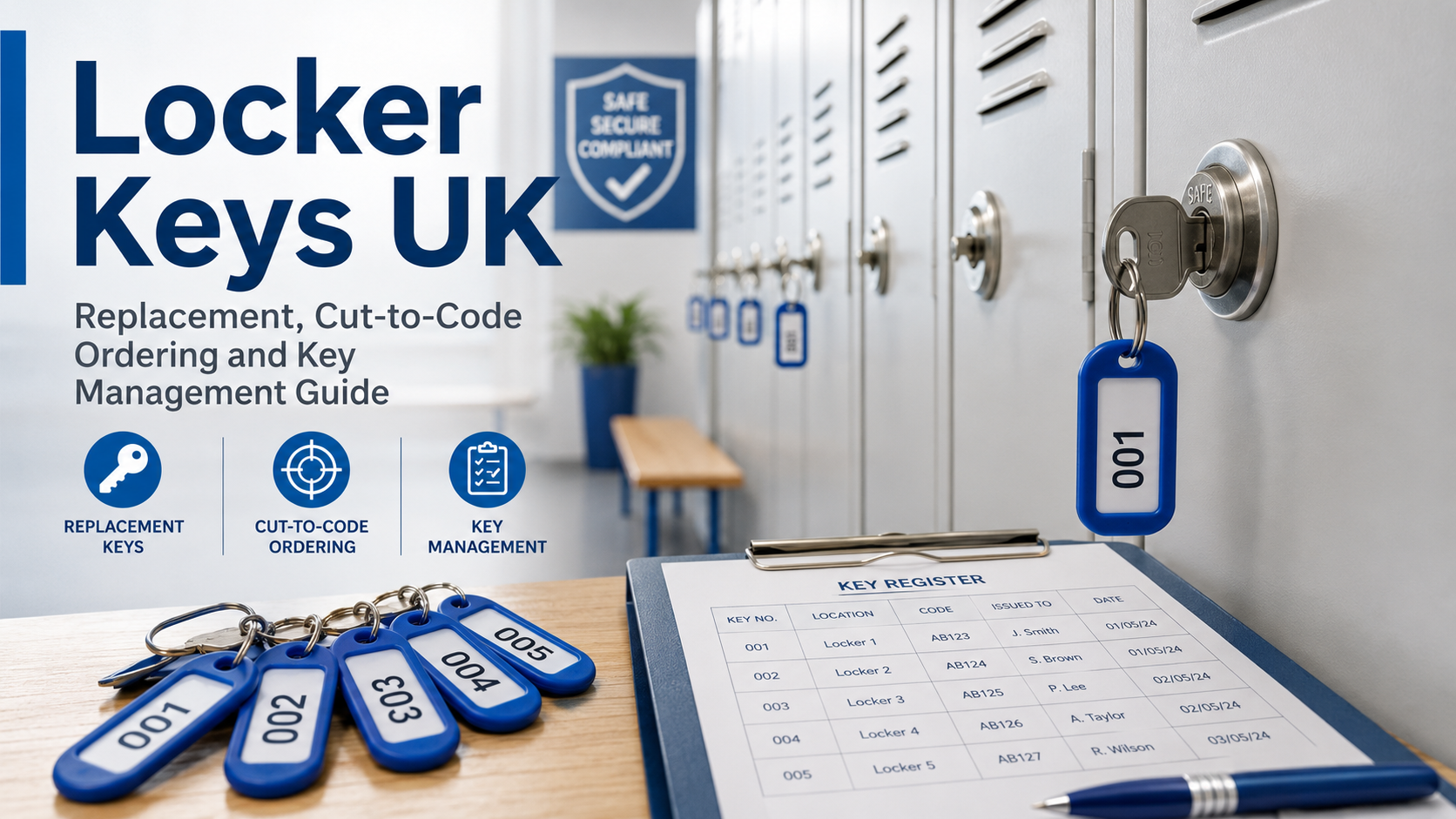
Locker Keys UK: Replacement, Cut-to-Code Ordering and Key Management Guide
The good news is that many locker key problems can be solved without replacing the whole lock. When the correct key number, lock number or code is available, a replacement locker key can often be cut to code. This means the new key is made from the lock code rather than copied from the original key.
This guide explains how locker keys work, where to find the key number, how replacement keys are ordered and how schools, gyms, workplaces and facilities teams can reduce lost key problems. For direct ordering support, visit Total Locker Service for replacement locker keys cut to code.
Quick answer: how do you replace locker keys?
Most locker keys can be replaced when the correct key number, lock number or manufacturer code is known. The code may be stamped on the original key, shown on the lock face, recorded on a spare key schedule or listed in a site key register. Once the code is confirmed, a replacement key can usually be cut to match the existing lock.
This is normally faster and cheaper than changing the full locker lock. It is especially useful for schools, gyms, leisure centres and workplaces that manage large numbers of lockers. If the lock still works and the code is known, replacing the key is usually the most practical solution.
For a deeper explanation of the process, read our supporting guide to replacement locker keys cut to code, or order directly from Total Locker Service using the replacement locker keys page.
What are locker keys?
Locker keys are cut to operate specific locker locks. Each key has a blade profile and cut pattern that matches a lock barrel. Many commercial locker locks use numbered key series, which allows replacement keys to be produced from a code.
A locker key is not always linked to the visible locker number on the door. The door number helps users find their compartment. The key number identifies the lock or key series. These two numbers can be the same, but they often are not. This is one of the most common causes of incorrect replacement key orders.
For example, a locker door may show number 42, but the key code may be 62731, A124 or another manufacturer-specific number. Ordering key 42 may not work unless 42 is also the key code. Before ordering, always confirm whether the number belongs to the door, the key or the lock.
If this is a common issue on your site, use our guide to locker key numbers vs locker door numbers. It explains how to separate user-facing locker numbers from the lock codes needed for replacement key cutting.
Why locker keys are still widely used
Keyed locker locks remain popular because they are simple. They do not need batteries, software, apps, Wi-Fi, cards or electronic programming. A user inserts the key, turns the lock and secures the door. For many sites, that simplicity is a major advantage.
Schools often choose keyed lockers because pupils can understand the system quickly. Workplaces use them because staff lockers are usually assigned to individual users. Gyms and leisure centres use them because traditional key systems are familiar and easy for reception teams to manage.
Keyed locks can also be cost-effective across large locker installations. A site with hundreds of lockers may not want to replace a complete lock every time a key is lost. If replacement locker keys can be ordered by code, the locker can usually return to service without a full repair.
That does not mean keyed locks are always the best option. In some busy shared-use areas, combination locks, coin locks, RFID locks or electronic locker locks may be better. However, where a site wants a simple, low-maintenance and familiar access method, locker keys still work well.
For comparison, read our guide to locker keys vs combination locks and our guide to locker keys vs RFID locks.
Where to find a locker key code
The locker key code is the most important detail when ordering a replacement key. It tells the supplier which cut pattern is required. Without the correct code, the wrong key may be produced, even if the locker number seems correct.
The first place to check is the original key. Many locker keys have a code stamped or engraved into the head of the key. This may be a number, a letter and number combination, or a code linked to a specific lock manufacturer.
The second place to check is the lock face. Some locker locks show the key number or lock number around the barrel. Use good lighting and inspect the lock carefully, as older numbers may be worn or partly hidden.
The third place to check is the lock barrel or cam area. In some cases, the number may only be visible when the locker door is open. Site maintenance teams may need to inspect the lock from the inside of the door.
The fourth place to check is the site key record. Schools, gyms and workplaces often hold a key schedule, locker allocation list or spreadsheet. This may show which key code belongs to each locker.
The fifth place to check is the spare key set. A key cabinet, spare key board or facilities office may hold labelled spare keys. These can help confirm the correct code before a replacement order is placed.
For a step-by-step identification guide, read where to find a locker key number or lock code.
What to do when the code is unclear
If the locker key code is unclear, do not guess. A worn number can easily be misread. A 6 can look like an 8. A 1 can look like a 7. The letter O can be mistaken for zero. Some key codes also include prefixes that must be included when ordering.
Take clear photos before ordering. Photograph the key, the lock face, the full locker door and any brand markings. If possible, photograph both sides of the key. Good images can help identify the lock range and reduce the chance of ordering the wrong replacement key.
If the key is missing and the lock face has no visible number, check old invoices, locker installation records and spare key schedules. A previous supplier record may show the original lock series or key range.
Where identification is not possible, the lock may need to be replaced. This is more likely with old, damaged or obsolete locker locks. However, it is still worth checking the code carefully before deciding that a full lock replacement is needed.
How cut-to-code replacement locker keys work
Cut-to-code replacement means the new locker key is made from the lock code rather than copied from the original key. This is useful when the original key has been lost, snapped, worn or taken away by a user.
With standard key duplication, the original key is placed into a cutting machine and copied. That process only works when the original key is available and in good condition. With cut-to-code key replacement, the supplier uses the code to identify the correct cut pattern.
This is why recording key codes is so valuable. A well-managed site can order replacements without removing locks, drilling doors or waiting for a major repair. The locker remains part of the existing system and can return to use quickly.
Cut-to-code replacement is particularly useful for large locker sites. A school with 500 pupil lockers, a gym with busy changing rooms or a workplace with several staff locker areas will save time if key codes are recorded properly.
Total Locker Service supplies replacement locker keys cut to code for many common locker and lock brands. The ordering process is simplest when the key code and lock brand are known.
Are locker keys universal?
No. Locker keys are not universal. Two keys may look similar but still belong to different key profiles, lock ranges or manufacturers. A key from one locker brand may not enter another lock, even when the visible code seems similar.
Commercial locker locks can vary by blade profile, keyway, length, cut depth and code series. Some locker manufacturers use locks made by separate lock suppliers. This means the locker brand and lock brand are not always the same.
For example, a locker may have been made by one manufacturer but fitted with a lock from another. In that case, the replacement key must match the lock and code series, not just the locker cabinet.
This matters when ordering replacement locker keys. Provide the key code, lock brand, locker brand and clear photos where possible. The more precise the information, the lower the risk of receiving a key that does not fit.
For more detail, read are locker keys universal?.
Common locker key and lock brands
Locker installations across the UK may include locks and keys from several manufacturers and ranges. Common names include Probe, Helmsman, Lowe & Fletcher, Ojmar, ASSA, Link, Garran, Pure, Ronis and other commercial locker lock systems.
Some names refer to locker manufacturers. Others refer to lock manufacturers. This can create confusion because the visible locker brand may not be the same as the lock brand. A site may describe the locker by the cabinet supplier, while the replacement key must match the lock barrel fitted to the door.
When a key is missing, record everything visible. Check the key head, lock face, locker frame, locker door, old invoices and maintenance notes. If the lock is part of a larger master-keyed system, make sure that is recorded too.
This is especially important for older installations. A site may have replaced some locks over time, leaving mixed lock ranges across the same changing room or corridor. A proper key audit can identify these differences before a bulk order is placed.
What to do when a locker key is lost
A lost locker key should be handled in a controlled way. Do not force the locker door unless there is an urgent safety or security reason. Forced entry can damage the door, bend the cam, mark the frame or turn a simple key issue into a larger repair.
First, confirm whether the locker is locked or open. If the door is open, keep it open and stop further use until the replacement key has been arranged. This avoids locking the locker again with no key available.
Second, check whether the user may still have the key. Many lost locker keys are later found in bags, coat pockets, changing areas, reception desks, vehicles or classrooms. A short search may avoid unnecessary action.
Third, check whether a spare key or master key is available. A master key may allow authorised staff to open the locker without damage. Spare keys should be kept securely and recorded when used.
Fourth, identify the key code. Check the lock face, key register, spare key schedule and any old records. If the code is clear, order a replacement key. If it is not clear, take photos and ask for identification support.
For a full process, read lost locker key: what schools, gyms and workplaces should do.
Replacement key or replacement lock?
A replacement key is usually the best option when the lock is working, the code is known and there is no security concern. It is faster, cheaper and less disruptive than replacing the complete lock. It also keeps the locker within the existing key system.
However, a replacement key is not always the correct solution. The lock should be replaced if the barrel is damaged, the cam is bent, the keyway is worn or the lock does not turn smoothly. A new key will not repair a faulty mechanism.
The lock should also be replaced if security has been compromised. If a key has been stolen with identifying information, or if there is a realistic risk of unauthorised access, changing the lock may be safer than simply replacing the missing key.
Replacement may also be sensible when the lock code cannot be identified, when the lock range is obsolete or when a refurbishment is already planned. In those cases, updating the lock system may improve future maintenance.
For maintenance guidance, read worn locker keys and stiff locks: repair or replace? and broken locker key: what to do before replacing the lock.
School locker keys
Schools often have high locker key turnover. Pupils move between classrooms, changing rooms, sports areas and buses. Keys can be lost, swapped, taken home, damaged or left in bags. Without a clear system, a small number of missing keys can quickly become a regular site-management problem.
A school locker key system should be simple and consistent. Each locker should have a clear door number. Each key should have a matching user-facing tag. The actual key code should be recorded separately in the site key register. Spare keys should be controlled by authorised staff.
At the start of term, keys should be issued with a record of the pupil, locker number, issue date and any deposit or return requirement. At the end of term or academic year, keys should be collected before lockers are reassigned.
Schools should avoid putting personal details on key tags. A locker number is usually enough. If a key is found, staff can match the locker number to the internal record without exposing pupil information.
For more detailed school guidance, read school locker keys: replacement and key control guide and how to reduce lost locker keys in schools.
Gym and leisure centre locker keys
Gyms and leisure centres have different locker key pressures from schools and workplaces. Many lockers are used for short periods by members, visitors or casual users. Keys may be attached to wrist straps, number discs or fobs. In wet areas, key accessories need to cope with water, chlorine, repeated handling and daily cleaning routines.
Lost keys can be disruptive in a busy leisure site. A locked locker may hold a visitor’s clothing, phone, wallet or car key. Staff need a quick and controlled process for opening the locker, confirming ownership and returning the locker to service.
Durable key tags and wrist straps help reduce loss. Clear numbering helps staff identify the correct locker quickly. Spare keys and master keys should be kept securely, not left in open drawers or unattended reception areas.
Where lost keys are a repeated issue, the site may consider deposits, stronger wrist straps, better signage, replacement key procedures or a move to coin, combination, RFID or electronic locks. However, keyed locks can still work well where the site has good records and a reliable replacement process.
For leisure-sector detail, read gym locker keys: replacement, wrist straps and member access, leisure centre locker keys: managing wet-area key loss and how to reduce lost locker keys in gyms.
Workplace locker keys
Workplace lockers are often assigned to individual members of staff. They may be used for clothing, bags, PPE, uniforms, tools, documents or personal items. A lost key can cause delays at the start or end of a shift, especially if workwear or equipment is locked inside.
Workplaces should treat locker keys as part of staff storage management. When a locker is issued, record the employee name, locker number, key code, issue date and return requirement. When an employee leaves, the key should be collected before the locker is reassigned.
Industrial and warehouse environments may place extra strain on locker keys. Keys can become bent, contaminated, worn or damaged through daily use. If a key becomes stiff, staff should report it rather than forcing it. A snapped key can be harder to resolve than an early replacement.
For sites with multiple departments, a shared key register helps prevent confusion. It should show which lockers are in use, which are spare, which locks have been changed and which key codes are confirmed.
For workplace guidance, read workplace locker keys: staff storage and replacement process.
University and healthcare locker keys
Universities and colleges often manage lockers across several buildings. Students may use lockers in libraries, sports centres, workshops, laboratories, accommodation areas and departmental spaces. The challenge is scale. A simple key issue becomes harder when lockers are spread across a large campus.
A central key record helps universities avoid repeated confusion. Each department should know which lockers it controls, which key codes are active and how replacements are ordered. End-of-term audits can identify missing keys before the next intake of students arrives.
Healthcare sites need controlled staff storage. Locker keys may be used for changing rooms, uniform storage, personal effects and department areas. Spare keys and master keys should be held securely, with access limited to authorised staff.
In healthcare and care settings, key records should be accurate because staff movement, shift patterns and department changes can quickly make old records unreliable. A key issued to one person may later be used by another unless the schedule is updated.
For sector-specific support, read university locker keys: managing large key schedules and healthcare locker keys: staff storage and secure control.
Locker master keys and spare keys
A master key allows authorised staff to open a group of lockers. This is useful for emergencies, inspections, lost key situations and locker reassignment. Master keys are common in schools, gyms, leisure centres, workplaces and other managed facilities.
However, master keys must be controlled carefully. A lost user key may affect one locker. A lost master key may affect many lockers. This makes master key security far more important.
Master keys should be stored in a secure key cabinet or controlled office. Access should be limited to authorised staff. Use should be recorded, especially when a locker is opened because a user has lost a key.
Spare keys also need control. They should be labelled clearly, stored securely and checked during audits. A spare key system is useful only if staff can find the correct key quickly and know when it has been removed.
For more detail, read locker master keys explained and key cabinets for managing locker keys.
How to build a locker key register
A locker key register is one of the simplest ways to reduce future problems. It does not need to be complex. A spreadsheet is enough for many sites, provided it is kept up to date.
The register should include the locker number, key code, lock brand, locker location, key holder, issue date, return date, spare key location and notes. If the lock is replaced, the register must be updated immediately. Old key codes should not remain attached to lockers that now have different locks.
Large sites may also record the locker block, floor, department, room, master key group and supplier details. This helps when several locker ranges are installed across different areas.
A good key register saves time. It allows staff to order replacement keys without searching through old paperwork or guessing from worn numbers. It also makes audits easier because missing keys, unused lockers and changed locks can be identified quickly.
For a practical structure, read how to build a locker key register and locker key audit checklist for facilities managers.
Bulk replacement locker keys
Bulk replacement is useful when many keys are missing, worn or unrecorded. Schools may order replacement keys before a new academic year. Gyms may refresh key sets during a changing room update. Workplaces may review staff locker keys after a site move or department restructure.
Before placing a bulk order, prepare a clean list. Include the key code, locker number, lock brand, quantity required and any uncertainty. Separate confirmed codes from unclear codes. Take photos of any locks where the code is difficult to read.
Bulk ordering is also a good moment to improve the key system. When the replacement keys arrive, update the register, relabel any unclear fobs and remove obsolete records. The aim is not only to replace missing keys, but to make the next order easier.
For larger sites, read bulk replacement locker keys for schools and workplaces, then order from Total Locker Service using the locker key replacement service.
Locker key tags, number discs and wrist straps
Locker keys are easier to manage when they are attached to the right accessories. Number discs help users and staff identify a key quickly. Key fobs provide a larger surface for numbering. Wrist straps are useful in leisure centres, gyms, swimming pools and wet changing areas.
The accessory should match the environment. Wet areas need materials that can cope with water and repeated handling. Schools need durable tags that can survive daily pupil use. Workplaces may need simple numbered fobs that match a staff locker record.
Avoid weak split rings, cracked tags and unclear numbering. A key that separates from its tag is harder to identify and easier to lose. A small accessory failure can create a larger access problem.
For accessory guidance, read locker key tags, number discs and wrist straps explained.
Common mistakes when ordering locker keys
The most common mistake is ordering from the locker door number instead of the key code. The door number helps users find their locker. The key code tells the supplier how to cut the replacement key. Always check which number you are using.
Another common mistake is misreading a worn code. Letters and numbers can be confused, especially on old keys or lock faces. If the marking is unclear, take a photo and check before ordering.
Some sites also assume all lockers in one room use the same key series. This may not be true. Locks may have been replaced over time, or several locker ranges may have been installed in the same building.
Master key compatibility is another issue. If your lockers form part of a master-keyed system, do not ignore that detail. Replacement keys need to work correctly with the existing lock arrangement.
For a full checklist, read common mistakes when ordering locker keys.
Locker key management checklist
- Record every locker number.
- Record every key code.
- Record the lock brand where known.
- Keep spare keys secure.
- Control master key access.
- Use clear number discs, fobs or wrist straps.
- Replace damaged tags early.
- Replace worn keys before they snap.
- Train staff on the lost key process.
- Audit keys regularly.
- Update records when locks are changed.
- Photograph unclear lock codes before ordering.
- Order replacement keys before lockers are urgently needed.
- Review whether high-loss areas need a different lock type.
Best approach by sector
| Sector | Main locker key issue | Recommended approach | Supporting guide |
|---|---|---|---|
| Schools | Lost pupil keys and end-of-year returns | Use a key register, secure spare keys and termly audits | School locker keys |
| Gyms | High user turnover and missing wrist straps | Use durable tags, clear numbering and fast replacement procedures | Gym locker keys |
| Leisure centres | Wet-area key loss and heavy daily use | Use water-resistant accessories and controlled spare keys | Leisure centre locker keys |
| Workplaces | Staff changes and assigned lockers | Record issue dates, returns and key codes | Workplace locker keys |
| Universities | Large multi-site locker systems | Use department-level records and yearly audits | University locker keys |
| Healthcare | Controlled staff access and secure storage | Limit spare key access and maintain accurate records | Healthcare locker keys |
Supporting locker key guides
The guides below explain specific locker key problems, including lost keys, key numbers, lock codes, school locker keys, gym locker keys, workplace key control and bulk replacement orders.
- Lost Locker Key? What Schools, Gyms and Workplaces Should Do
- Where to Find a Locker Key Number or Lock Code
- Are Locker Keys Universal? Why Key Codes and Brands Matter
- Locker Key Numbers vs Locker Door Numbers
- School Locker Keys: Replacement and Key Control Guide
- Gym Locker Keys: Replacement, Wrist Straps and Member Access
- Workplace Locker Keys: Staff Storage and Replacement Process
- Leisure Centre Locker Keys: Managing Wet-Area Key Loss
- University Locker Keys: Managing Large Key Schedules
- Healthcare Locker Keys: Staff Storage and Secure Control
- Locker Master Keys Explained
- How to Build a Locker Key Register
- Bulk Replacement Locker Keys for Schools and Workplaces
- Common Mistakes When Ordering Locker Keys
- Broken Locker Key: What to Do Before Replacing the Lock
- Worn Locker Keys and Stiff Locks: Repair or Replace?
- Locker Key Tags, Number Discs and Wrist Straps Explained
- Locker Keys or Combination Locks: Which Is Better?
- Locker Keys or RFID Locks: Which Is Better for Leisure Sites?
- Key Cabinets for Managing Locker Keys
- Locker Key Audit Checklist for Facilities Managers
When to order replacement locker keys
Order replacement locker keys when the lock still works, the key code is known and there is no reason to replace the full lock. This is the most efficient route for many lost-key situations. It keeps the locker in use, avoids unnecessary parts and reduces maintenance time.
You should also order spare keys before they are urgently needed. Waiting until a locker is locked shut can create pressure for staff and users. A small set of spare keys, stored securely and recorded properly, can prevent disruption.
For larger sites, review your key records at regular intervals. Schools may do this before the start of term. Leisure centres may do it before peak season. Workplaces may do it after staff changes, site moves or refurbishment work.
When ready to order, use the Total Locker Service page for replacement locker keys. Prepare the key code, lock brand, quantity and any supporting photos before ordering.
Conclusion
Locker keys remain one of the simplest and most practical ways to control locker access. They are familiar, cost-effective and easy to support when the correct records are kept. Most problems happen when key numbers are not recorded, door numbers are mistaken for key codes, spare keys are poorly controlled or worn keys are left until they fail.
A better locker key system does not need to be complicated. Record the key code, keep spare keys secure, use clear tags, control master keys and audit the system regularly. These steps reduce lost key problems and help keep lockers available for users.
For direct replacement support, visit Total Locker Service to order locker keys cut to code.
Frequently asked questions about locker keys
Can locker keys be replaced without the original key?
Yes. Many locker keys can be replaced without the original key when the correct key number, lock number or manufacturer code is known. The replacement key is cut to code rather than copied from the original.
Where is the locker key number?
The key number may be stamped on the key, shown on the lock face, marked on the lock barrel or recorded in the site key register. It is not always the same as the locker door number.
Are locker keys universal?
No. Locker keys are not universal. They vary by lock brand, key profile, cut pattern and code series. A key that looks similar may still not fit the lock.
Is the locker number the same as the key number?
Not always. The locker number usually identifies the door or compartment. The key number identifies the lock code needed to cut the replacement key.
What should I do if the locker key code is worn away?
Check the lock face, lock barrel, spare key records and old site paperwork. Take clear photos of the lock and key if available. A specialist supplier may be able to identify the correct range.
Is it cheaper to replace a locker key or the full lock?
Replacing the key is usually cheaper and faster when the lock is working and the code is known. Replace the lock when it is damaged, insecure, obsolete or impossible to identify.
How can schools reduce lost locker keys?
Schools can reduce lost locker keys by recording key codes, using clear number tags, holding spare keys securely, collecting keys at the end of term and auditing lockers before reassignment.
How can gyms reduce lost locker keys?
Gyms can reduce lost locker keys by using durable wrist straps, clear number discs, controlled spare keys, simple member procedures and fast replacement ordering when keys are missing.