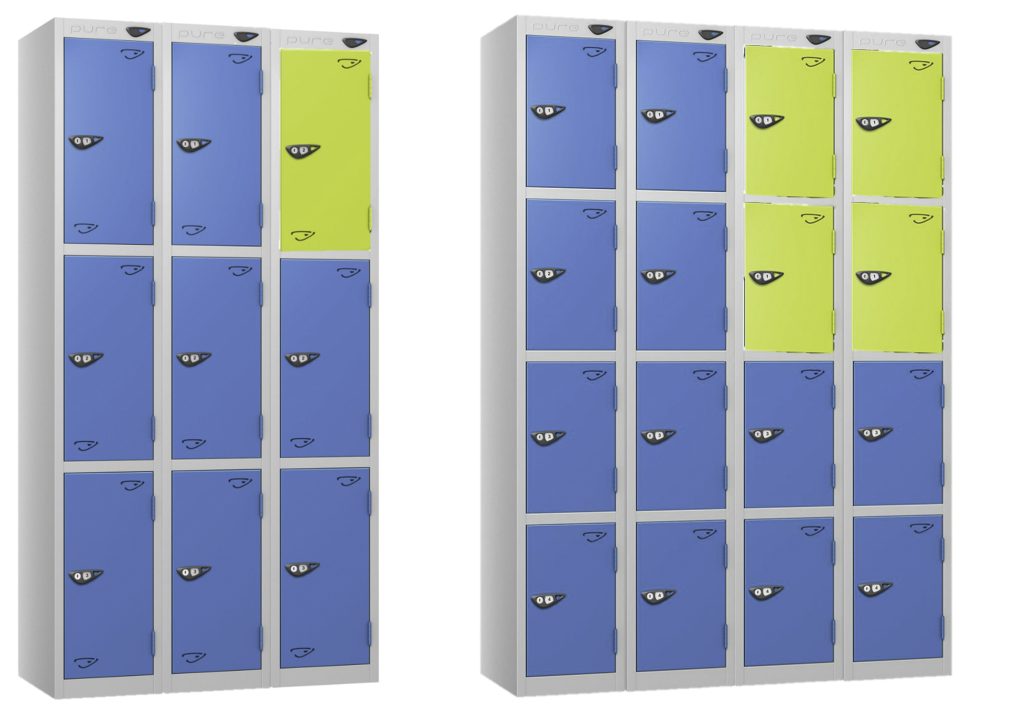
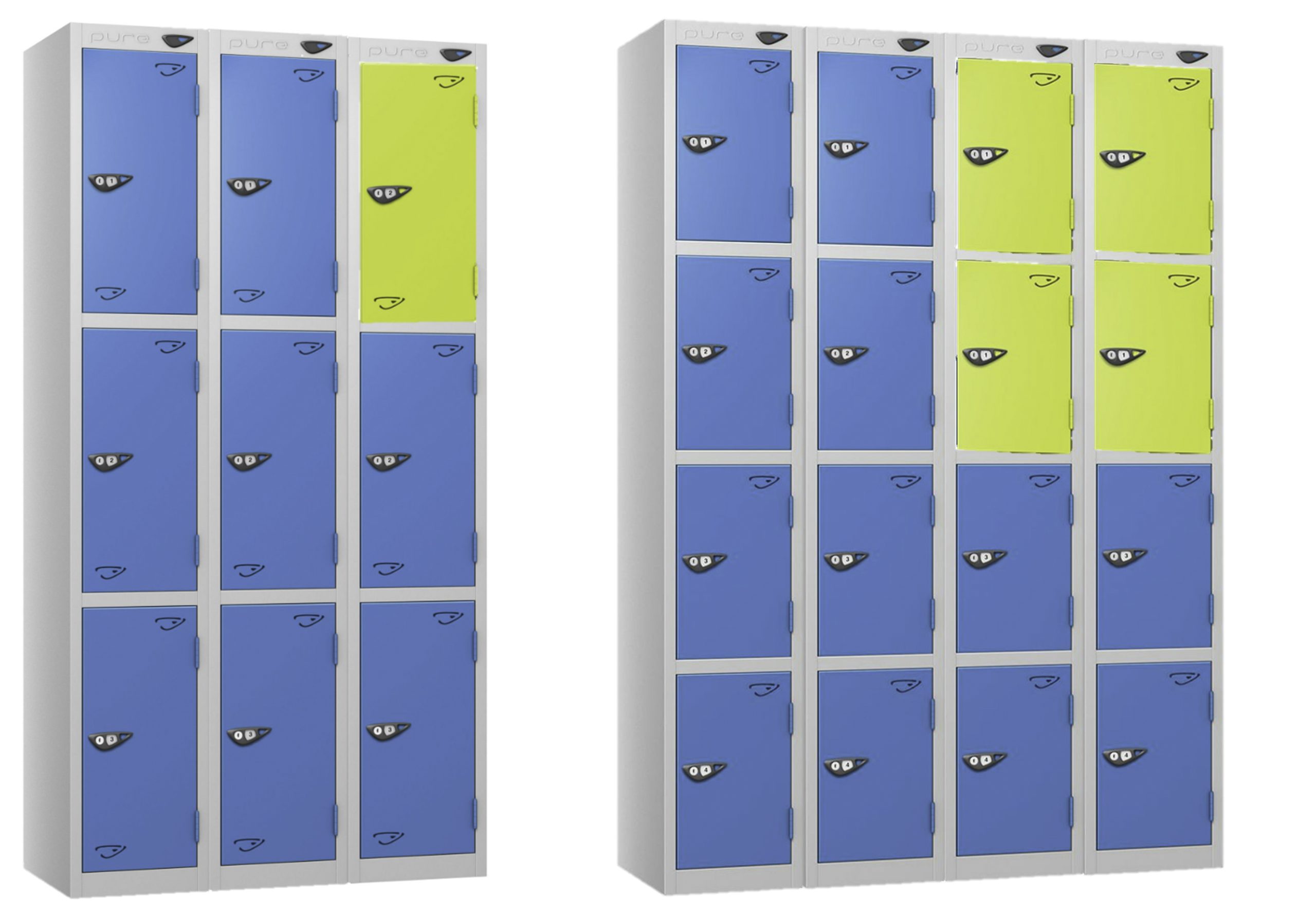
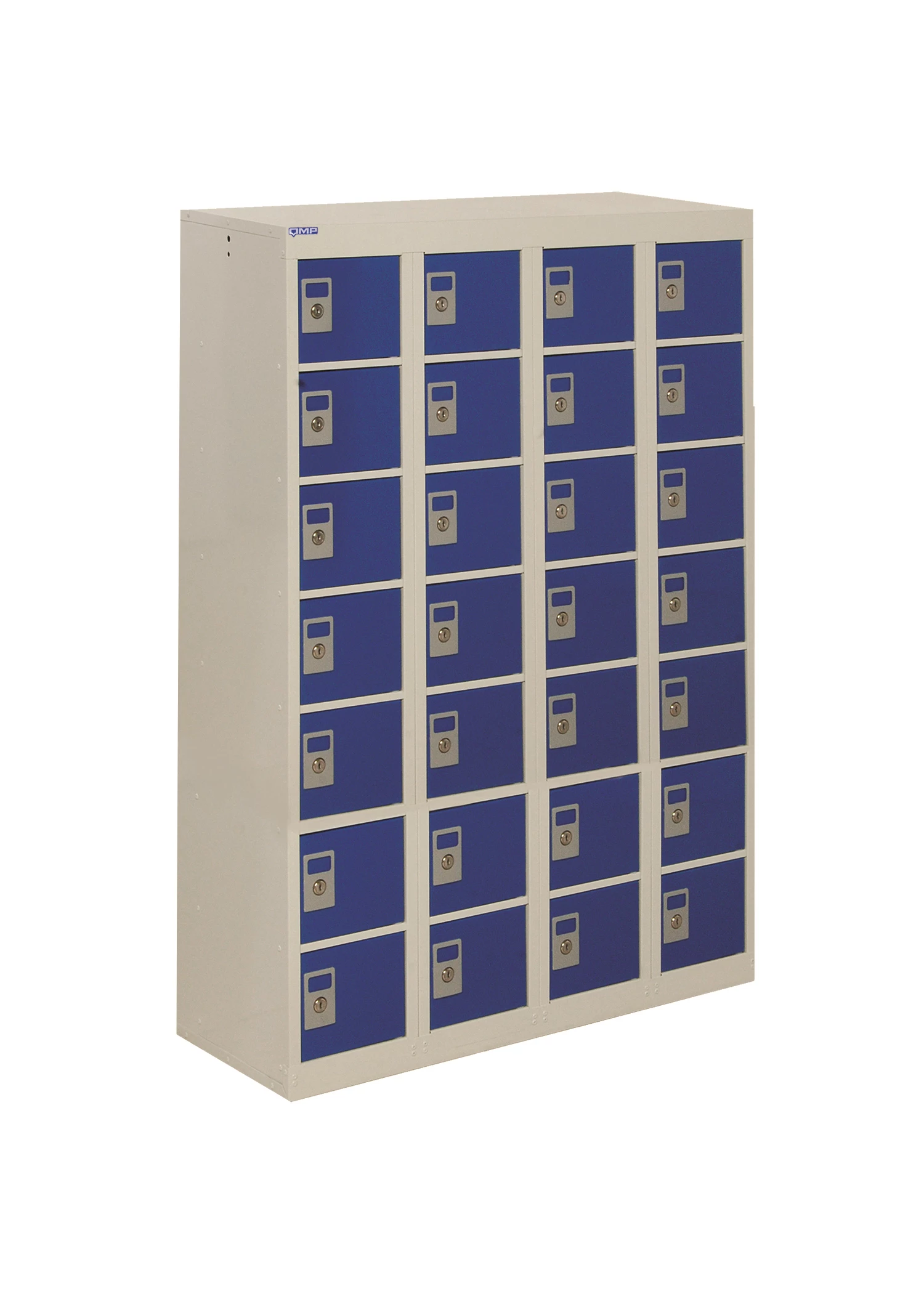
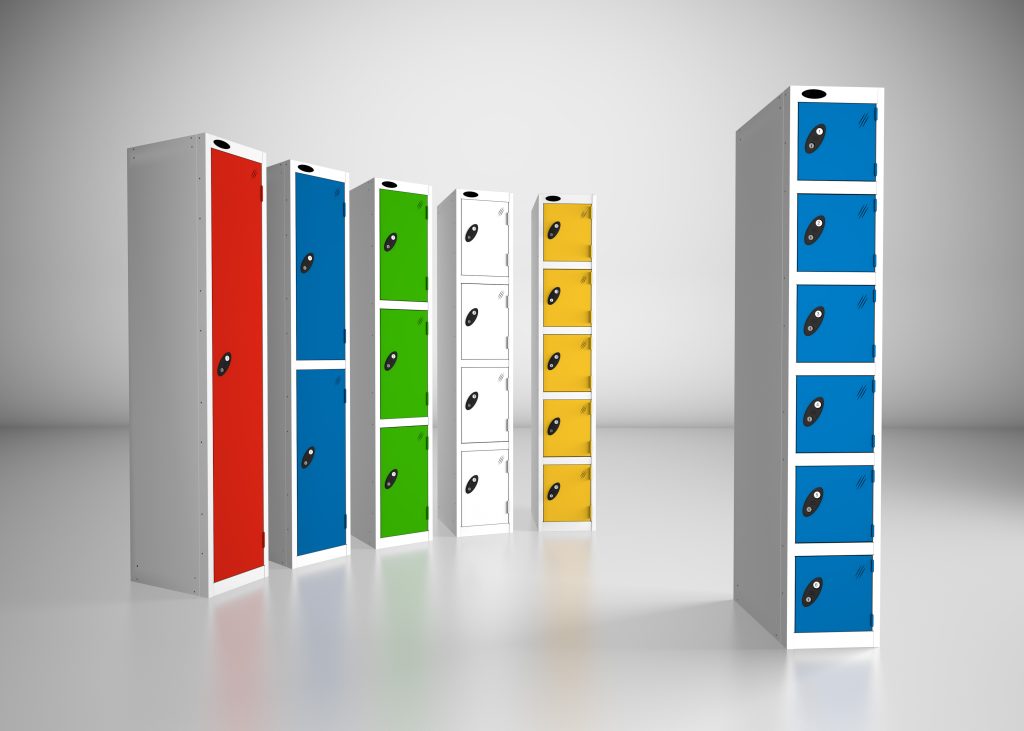
Locker planning is the difference between a storage area that works every day and a locker installation that causes queues, blocked walkways and user complaints. A locker may look simple when it is shown as a product. In a real building, it becomes part of a room layout, a movement route, a cleaning plan and a daily access system.
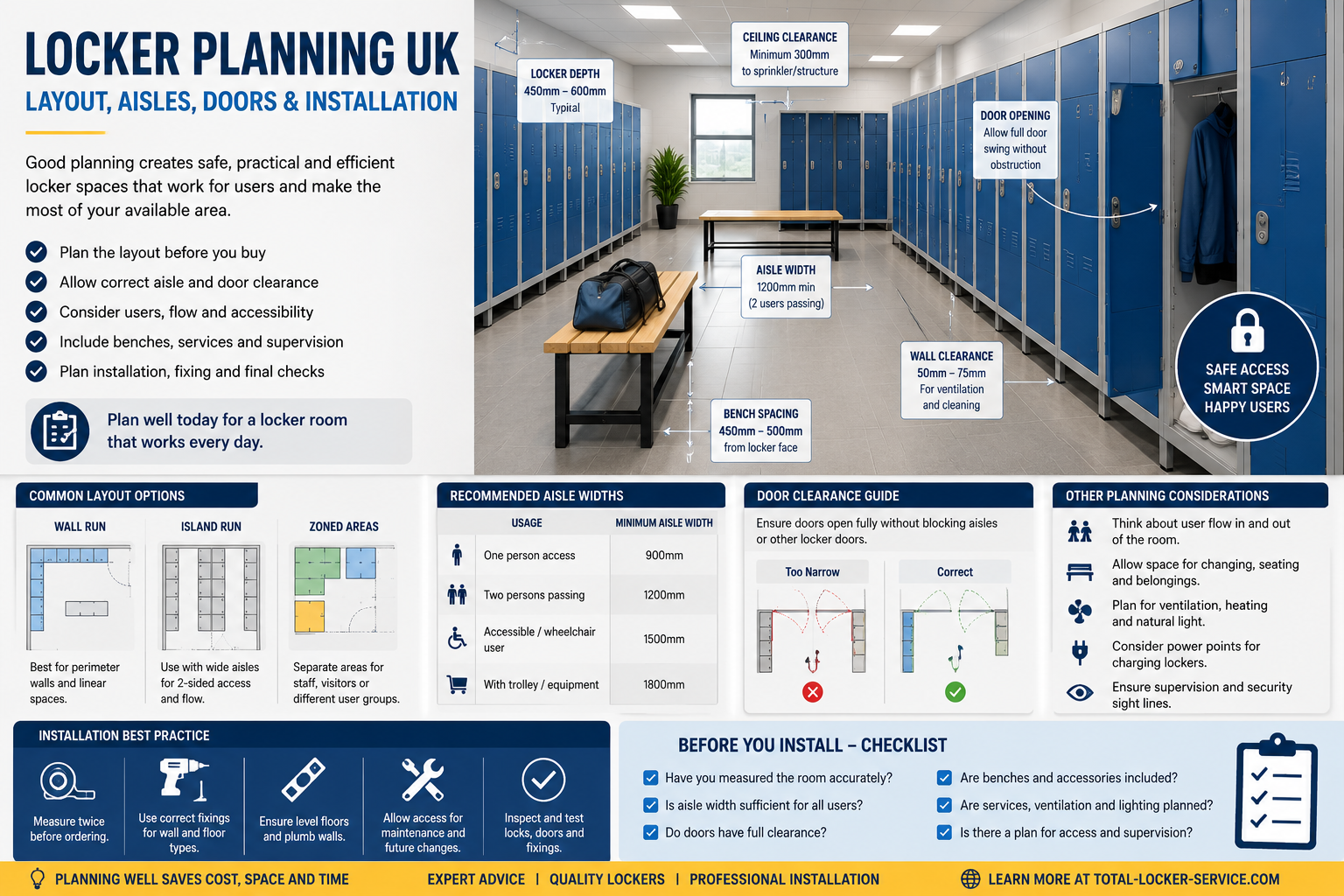
A good locker plan starts before lockers are ordered. It looks at the users, the items being stored, the space available, the depth of each locker, the way the doors open, the aisle width, the bench position, the floor condition, the fixing method and the access needs of the people using the area.
Bad planning often shows up after installation. Doors open into each other. Users block the aisle while collecting belongings. Benches sit too close to the locker doors. Deep lockers reduce circulation space. Staff cannot clean behind or underneath units. Replacement keys and lock access become difficult because lockers were not numbered logically.
This guide explains how to plan lockers for UK schools, workplaces, changing rooms, leisure facilities, healthcare buildings, warehouses and commercial sites. It is written as a practical layout guide for anyone choosing, specifying or managing lockers.
To plan a locker layout, start with the people using the lockers and the items they need to store. Then measure the room, choose the locker size and depth, allow for open doors, set a usable aisle width, position benches carefully, check access routes and confirm how the lockers will be fixed, numbered, cleaned and maintained.
A simple planning sequence is:
Identify the user group.
List the items that need storage.
Measure the available wall and floor space.
Choose locker height, width and depth.
Decide the number of tiers or compartments.
Plan the room with locker doors open, not only closed.
Allow enough aisle space for users to stand, turn and pass.
Position benches so they support use rather than block access.
Check fire routes, cleaning access and supervision lines.
Confirm floor, wall and fixing requirements before installation.
The most useful rule is simple: plan the locker area as it will be used at peak time. A row of closed lockers may fit neatly on a drawing, but the real test is what happens when several users open doors, remove bags, change shoes, collect coats or move through the room at the same time.
Lockers are often bought as products, but they are used as systems. They sit inside real spaces. They affect how people move, where people stop, where bags are placed, where benches fit and how staff manage the area.
In a school, poor locker planning can create corridor congestion at the start and end of the day. Within a workplace, it can slow shift changeovers. In a gym, it can make changing areas feel crowded. In a warehouse, it can block PPE flow. Within a healthcare site, it can interfere with clean and dirty routes.
The cost of poor planning is not limited to inconvenience. It can increase damage, reduce usable capacity and create maintenance problems. Doors are more likely to be bent if they open into narrow traffic routes. Locks are more likely to be forced if users feel rushed or crowded. Floors are harder to clean when lockers are squeezed into spaces without access. Staff time is wasted when users cannot find the right locker or when key records do not match the installed layout.
Good planning makes the system easier to use and easier to manage. It gives the site enough capacity without forcing too many lockers into the wrong space. It also makes future replacement, numbering, key control and estate management much simpler.
Start with the user, not the locker
The first planning question should not be “how many lockers fit?” The better question is “who is using these lockers and what do they need to do?”
A locker looks simple from the outside. It is a secure compartment with a door, a lock and enough space for belongings. However, a good locker system does much more than hold bags, coats, tools, uniforms or devices. It controls access. It organises shared space. Supports workplace welfare, school routines, leisure facilities, healthcare changing areas and commercial buildings.
A poor locker choice creates problems every day. Doors clash. Aisles become too narrow. Users cannot fit their belongings inside. Keys go missing. Combination codes are forgotten. Wet areas cause corrosion. Staff waste time dealing with avoidable access issues. In larger buildings, badly managed lockers become an estate problem rather than a storage solution.
A good locker system works quietly. Users know where to go. The locker is the right size. The lock suits the way the space is used. The material matches the environment. Spare keys, master keys and replacement parts are available when needed. The site team can maintain the system without replacing complete units unnecessarily.
That is why buying a locker should not start with the cheapest unit. It should start with the use case.
This guide explains how to choose, plan and manage a locker system in the UK. It also shows how a wider locker canister should work, so visitors can move from broad advice into detailed planning, security, key control and product selection.
Quick answer: what is the best locker system?
The best locker system is the one that matches the user, the environment, the items being stored and the way access must be controlled. A workplace locker may need to store uniforms, PPE and personal belongings. A school locker must cope with daily student use. A leisure locker may need wet-area resistance and short-term visitor access. A charging locker must protect and power devices safely.
A locker is a secure storage compartment used by one person, a shared group or a managed facility. It normally has a lockable door and is used to store personal belongings, uniforms, workwear, tools, sports equipment, books, bags, laptops, phones or other items that need controlled access.
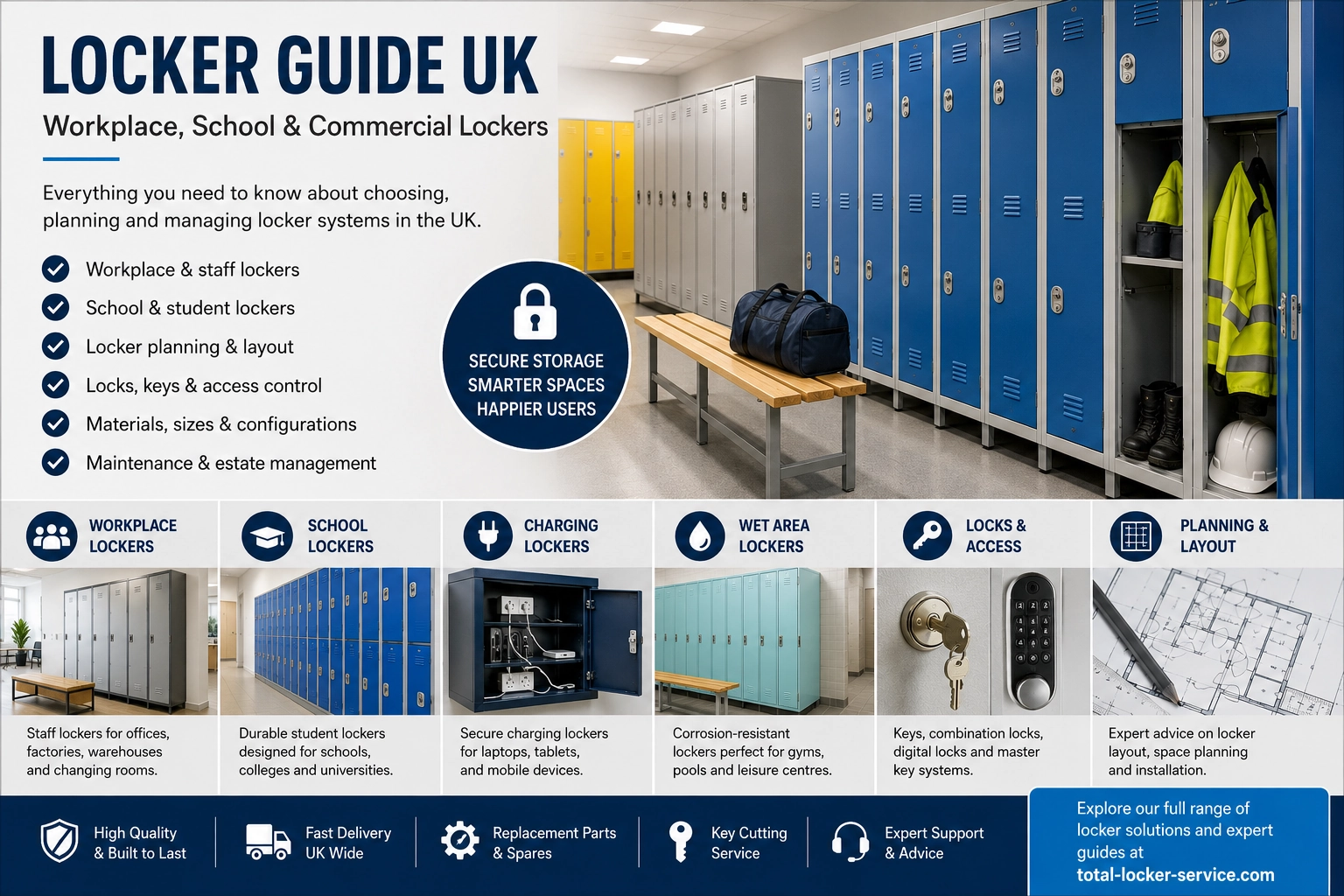
Lockers are common in schools, colleges, universities, offices, factories, warehouses, hospitals, gyms, leisure centres, swimming pools, sports clubs, public buildings, transport hubs, staff changing rooms and commercial facilities.
The word “locker” is broad. This is why a single product page cannot answer every possible question. Someone searching for “locker” may need a school locker, a workplace locker, a changing room locker, a laptop charging locker, a staff locker, a wet-area locker or a replacement part for an existing locker.
That is the reason for building a canister. The hub page handles the broad concept. Supporting pages answer the specific questions. The commercial home page then receives stronger, cleaner relevance from a full topic structure.
Why lockers matter in shared buildings
Shared buildings create shared storage problems. People bring bags, coats, phones, keys, laptops, tools, uniforms, PPE and personal belongings into spaces where they cannot always keep those items with them.
Without lockers, items often end up under desks, in corridors, in changing rooms, on benches, in cupboards, in classrooms, in staff rooms, inside vehicles, beside machinery, near wet areas or in unsecured rooms.
That creates clutter, loss risk and avoidable disruption. It can also create safety issues where items block walkways, contaminate work areas or interfere with cleaning.
A locker system gives each user a defined storage point. It also gives the organisation a method of control. The site can decide who receives access, how long they keep it, what happens when a key is lost, how spare keys are stored and how lockers are checked, cleaned and maintained.
This makes lockers part of the building’s operating system. They are not just furniture. They help the building run in a cleaner, safer and more organised way.
Main types of locker
The right locker type depends on the setting. A school does not need the same locker as a factory. A swimming pool does not need the same locker as an office. A charging locker solves a different problem from a standard personal storage locker.
Workplace lockers
Workplace lockers are used by employees to store personal belongings, uniforms, PPE, tools, bags and workwear. They are common in offices, warehouses, factories, workshops, staff rooms and changing areas.
A workplace locker system should be based on the number of users, shift patterns, peak attendance, welfare requirements and the items being stored. A site with fixed employees may use assigned lockers. A hybrid office may use day-use lockers. A factory may need separate clean and dirty storage. A warehouse may need larger compartments for boots, jackets and PPE.
School lockers are designed for pupils and students. They are used for bags, books, coats, PE kit, personal items and sometimes devices. They must be durable, easy to use and simple for staff to manage.
Schools need to think about more than the locker itself. They need to plan numbering, key issue, lost key procedures, spare keys, student allocation and end-of-year recovery. The best school locker system is one that reduces corridor clutter without creating constant admin problems.
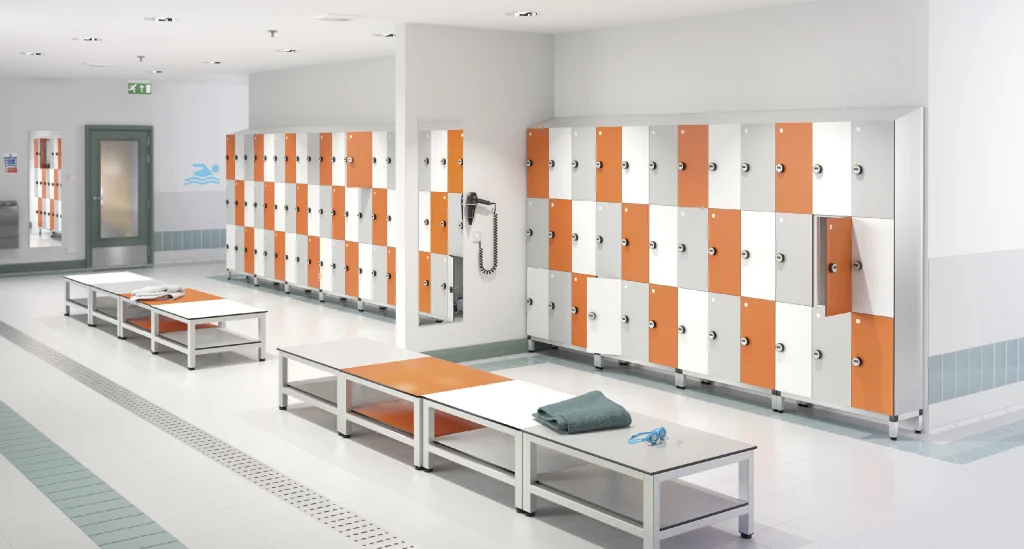
Leisure lockers are used in gyms, swimming pools, sports clubs, spas and changing rooms. They often need to handle short-term use by visitors. They may also be exposed to moisture, cleaning products and high traffic.
In these areas, material choice matters. Wet-area lockers often need plastic, aluminium or other corrosion-resistant materials. The lock type also matters because users may not be assigned a permanent locker. Coin locks, hasp locks, wrist straps, combination locks and digital locks may all be relevant.
Charging lockers
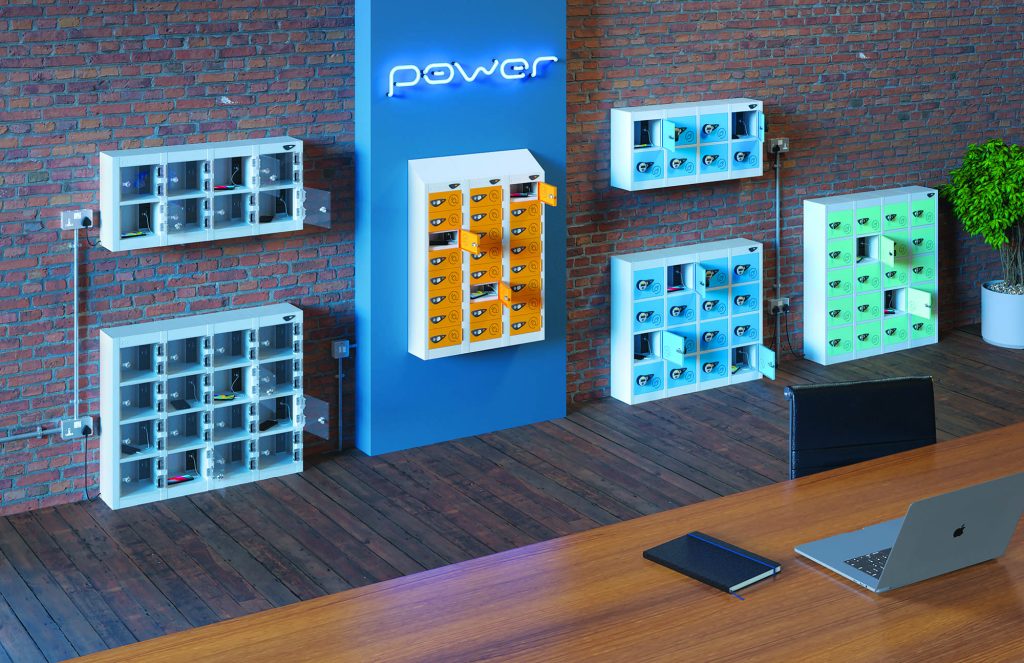
Charging lockers combine storage and power. They are used for laptops, tablets, phones, radios, scanners, handheld devices, tools and other rechargeable equipment.
A charging locker is not only a locker with a plug inside. The design must consider power supply, cable management, ventilation, user access, supervision and how devices are issued or returned. Schools, offices, warehouses, IT teams and facilities teams often use charging lockers to protect equipment while keeping it ready for use.
Wet-area lockers are designed for damp, humid or washdown environments. Swimming pools, gyms, spas, leisure centres and changing rooms often need lockers that resist corrosion and are easy to clean.
Steel may work well in dry internal areas, but it may not be the best long-term choice near showers or pools. Plastic lockers are often used where moisture is expected. Material selection should be based on the actual environment, not just the initial purchase price.
Outdoor lockers
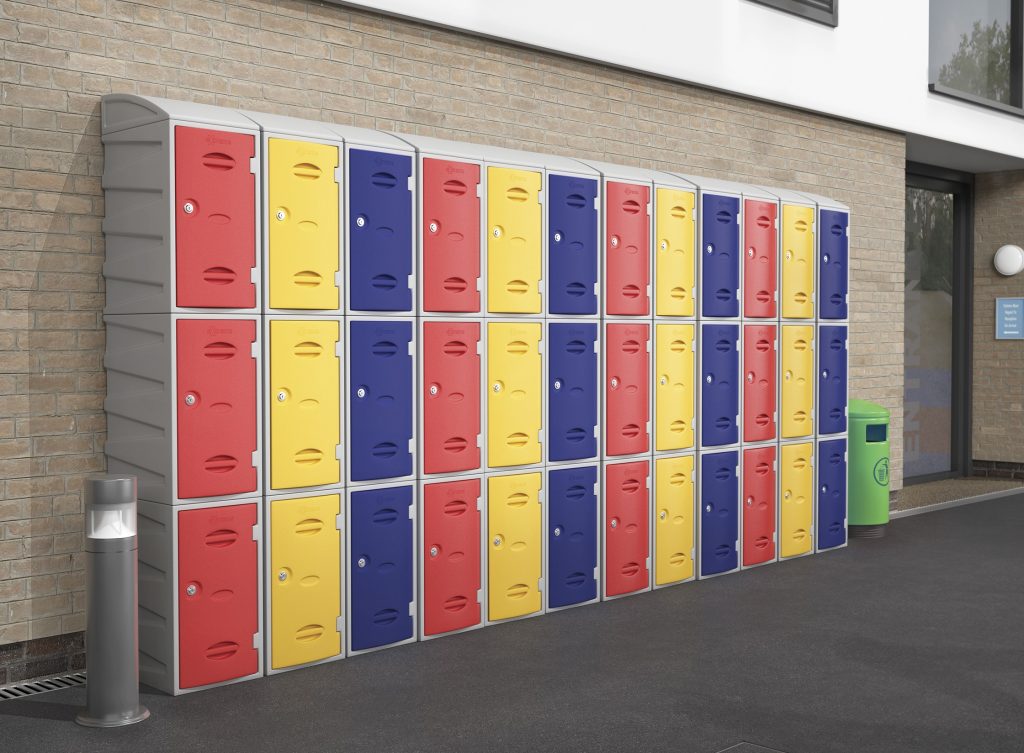
Outdoor lockers are used where storage is exposed to weather, changing temperatures or higher environmental stress. They may be used for equipment, staff storage, transport locations, public facilities or external site storage.
Outdoor lockers need suitable materials, weather resistance, drainage consideration, fixing methods and lock choices. They should be chosen carefully because a standard internal locker may fail quickly outside.
Locker materials: steel, laminate and plastic
Locker material affects appearance, strength, cleaning, maintenance and lifespan. The correct material is not the most expensive material. It is the material that suits the location and the expected use.
Steel lockers
Steel lockers are the standard choice for many workplaces, schools and commercial buildings. They are strong, cost-effective and available in many sizes and configurations.
Steel works best in dry internal spaces. It suits staff storage, school corridors, offices, warehouses and general commercial use. It can be supplied in different colours, door configurations and lock options.
Steel lockers are often the best starting point where the environment is not wet and the priority is durable everyday storage.
Laminate lockers
Laminate lockers are often chosen for higher-spec interiors. They suit offices, leisure centres, private clubs, reception areas and premium changing rooms.
Lockers offer a more designed appearance than standard steel. They can also be specified with strong doors and attractive finishes. However, they should be chosen with maintenance, moisture and budget in mind.
Laminate lockers work well where appearance and user experience are important.
Plastic lockers
Plastic lockers are useful in wet or corrosive environments. They are often chosen for swimming pools, gyms, spas, shower areas and washdown spaces.
Their main strength is moisture resistance. They can reduce long-term corrosion risk where steel would suffer. They may also be easier to clean in certain settings.
Plastic is not automatically the best choice everywhere. In a dry office or school corridor, steel may provide better value. In a poolside changing area, plastic may be the better long-term option.
Locker size and compartment choice
Locker size should be based on what the user needs to store. This sounds obvious, but it is one of the most common specification mistakes.
A small multi-tier locker may look efficient on paper, but it may fail if users need to store coats, bags, boots or PPE. A full-height locker may provide excellent storage, but it may waste capacity if users only need space for small personal items.
Single-door full-height lockers
Two-door lockers
Three-door lockers
Four-door lockers
Six-door lockers
Small compartment lockers
Laptop lockers
Charging lockers
Garment lockers
PPE lockers
Z-door lockers
Low-level lockers
Wall-mounted lockers
The right compartment count depends on the balance between storage volume and number of users.
A school may use two-door or three-door lockers to give enough space for books and bags. A workplace changing room may use full-height lockers for uniforms. A gym may use smaller day-use lockers for visitors. An office may use compact personal lockers for hybrid staff.
The safest approach is to list the largest item that must fit inside. Then specify from that point.
Locker planning and layout
A locker system must fit the room, not just the budget. Layout affects access, safety, cleaning and daily use.
Poor layout creates several problems. Doors can open into walkways. Users can block each other. Benches can sit too close to lockers. Aisles can become narrow. Cleaning access can suffer. Supervision may be poor. Lockers may be difficult to maintain, especially if they are tightly packed into awkward corners.
Locker layout should consider locker depth, door swing, aisle width, bench position, room entrance, fire routes, cleaning access, accessible use, sight lines, user flow and future expansion.
For detailed planning, use the locker layout planning guide. A safe-security-products article on locker planning should not try to replace that guide. It should summarise the issue and send planning-intent visitors to the stronger Total Locker Service planning page.
Locker locks and access control
The lock is one of the most important parts of the locker system. It affects user experience, security, admin time and maintenance.
Keyed cam locks
Hasp locks for padlocks
Coin return locks
Coin retain locks
Mechanical combination locks
Digital combination locks
RFID locks
Smart locks
Master-keyed systems
Replacement lock barrels
Key locks
Key locks are simple, familiar and widely used. They work well for assigned lockers in schools and workplaces. The main weakness is lost keys. This can be managed with clear records, spare keys and replacement keys cut to code.
Combination locks remove the physical key from the user. This can reduce lost key problems. However, users may forget codes, share codes or leave lockers locked at the end of use.
Combination locks can work well in offices, gyms, schools and staff areas when the site has a clear reset and override process.
Padlock fittings
Padlock hasps allow users to bring their own padlock or use a site-issued padlock. They are simple and flexible. However, they can look less consistent and may require staff to cut off locks when users forget keys or leave padlocks behind.
Coin locks
Coin locks are common in leisure centres and visitor changing rooms. They suit short-term use because the user takes the key and later returns it to recover the coin or complete the cycle.
They are less suited to permanent assigned storage unless the system is designed that way.
Digital and smart locks
Digital locks can improve control in managed sites. Some support codes, cards, RFID access or audit functions. They can reduce key handling but may introduce battery checks, programming and management tasks.
For higher-security or more complex sites, the locker security guide is the best supporting page.
Locker key management
Key management is a major part of locker management. A large locker system without a key process can quickly become disorganised.
Record key codes.
Link keys to locker numbers.
Hold spare keys securely.
Control master keys.
Record lost keys.
Order replacement keys by code.
Recover keys from leavers.
Audit keys at set intervals.
Identify locks before ordering replacements.
The key code is especially important. If the code is known, replacement is usually easier. If the code is missing, staff may need to inspect the lock face, find old records or replace the lock.
A supporting Safe & Security blog should be built around “Locker Key Management UK”. It should link into the Total Locker Service locker keys UK guide and the main Total Locker Service homepage where buyers can reach keys, locks and locker support.
Locker security
Locker security is not only about the strength of the door. It is about the full system.
Suitable material
Correct lock type
Controlled access
Good installation
Sensible location
Clear user rules
Spare key control
Master key control
Maintenance checks
Replacement procedures
User accountability
The security level should match the risk. A staff room locker for coats does not need the same system as a managed locker bank holding devices or valuable equipment.
Security also depends on behaviour. If users share keys, write codes on paper, leave doors open or force locks, the system weakens. The best lock choice can still fail if the management process is poor.
A dedicated Safe & Security post should cover this in detail and point readers to the locker security guide.
Locker maintenance and parts
A locker system is a long-term asset. It should be maintained rather than ignored until it fails.
Common maintenance issues include lost keys, stiff locks, damaged lock barrels, loose cams, bent doors, broken hinges, missing number plates, damaged shelves, worn wrist straps, failed coin locks, scratched panels, corrosion in wet areas, abandoned lockers and outdated access records.
Many problems can be solved with parts, locks or replacement keys. This is usually better than replacing complete locker units. A strong maintenance process extends the life of the installation and reduces waste.
A locker maintenance blog should link to Total Locker Service pages for keys, locks and locker parts. It should also connect to the locker estate management guide where larger sites need a more structured approach.
Locker estate management
Large sites should treat lockers as an estate, not as loose furniture.
A locker estate may include hundreds of lockers, several buildings, multiple lock types, different key ranges, old and new installations, school year-group areas, staff changing rooms, visitor lockers, device charging lockers, wet-area lockers, maintenance records and replacement cycles.
Without a register, nobody has a complete view of the system. That makes it harder to plan replacements, order parts, manage keys or decide which locker areas need investment.
Register field
Why it matters
Location
Shows where the locker bank is installed
Locker type
Separates workplace, school, charging, wet-area and visitor lockers
Quantity
Supports audits, capacity planning and replacement forecasting
Manufacturer
Helps with replacement parts and key orders
Material
Shows whether the locker suits the environment
Lock type
Supports maintenance and access control
Key code range
Speeds up replacement key orders
Condition
Identifies areas needing repair or renewal
Planned replacement date
Supports budget planning and phased upgrades
This is especially useful for councils, schools, hospitals, leisure trusts, factories, universities and multi-site organisations.
Offices often need personal storage for hybrid working, staff belongings, laptops, bags and visitor items. Day-use lockers can work well where desks are shared. Assigned lockers may be better where staff attend daily or need permanent storage.
Office lockers should be easy to use, visually suitable and matched to the access policy.
Schools and colleges
Schools need robust lockers that can withstand frequent daily use. Numbering, key control and corridor layout matter. Schools should avoid locker systems that create congestion or excessive admin.
Durability and simple management are usually more important than premium finishes.
Warehouses and factories
Industrial workplaces may need lockers for PPE, uniforms, boots, tools and personal items. Some sites need separate clean and dirty storage. Others need ventilated lockers or larger compartments.
Lockers should support the working process, not block it.
Gyms and leisure centres
Gyms and leisure centres need lockers that suit short-term users. Wet-area resistance, wrist straps, coin locks, combination locks and easy cleaning may all matter.
High turnover means the lock and material choice are critical.
Healthcare settings
Healthcare staff areas may need secure storage for uniforms, bags and personal belongings. Cleaning, infection control expectations, staff movement and shift patterns should all be considered.
Lockers should be practical, cleanable and suitable for the environment.
Public and commercial buildings
Public buildings may need visitor lockers, staff lockers or secure storage for contractors. These systems should be simple to supervise and easy to manage.
The access method is often more important than maximum storage volume.
Common locker buying mistakes
Starting with price only
Price matters, but the cheapest locker is not always the lowest-cost option. A poor fit can lead to broken locks, unusable compartments, corrosion, complaints and early replacement.
Ignoring the user
A locker must work for the person using it. If the compartment is too small or the lock system is frustrating, users will avoid it or misuse it.
Choosing the wrong material
Steel, laminate and plastic all have a place. The wrong material can cause maintenance problems, especially in wet or humid areas.
Forgetting door swing and aisle width
A locker may fit against a wall but still fail in use if doors open into tight spaces.
Not planning key control
Lost keys are normal. A site needs a procedure before the first key goes missing.
Ignoring future maintenance
Keys, locks, number plates and parts should be available. A locker system should not become unsupported after installation.
Using one specification everywhere
A school corridor, office, gym changing room and warehouse do not need the same locker specification. Standardisation helps, but it should not override the environment.
Locker specification checklist
Before buying lockers, answer these questions.
User
Who will use the locker?
Is use assigned or shared?
Is access daily or occasional?
Are users pupils, staff, visitors or contractors?
Are there accessibility needs?
Storage
What will be stored?
What is the largest item?
Are items wet, dirty, valuable or powered?
Are uniforms or PPE involved?
Are devices being charged?
Environment
Is the space dry, damp or wet?
Is the locker indoors or outdoors?
Is the area supervised?
Is the area high traffic?
Does the room need cleaning access?
Size
What height is needed?
What depth is needed?
How many compartments are required?
Will benches be used nearby?
Is there enough aisle space?
Locks
Will users have keys?
Will users use codes?
Is a master key needed?
Are spare keys required?
How will lost access be managed?
Management
Who allocates lockers?
Who maintains records?
Who orders replacement keys?
Who handles faults?
Who checks abandoned lockers?
Long-term support
Can replacement keys be ordered?
Can locks be replaced?
Are parts available?
Is there a maintenance plan?
Is replacement planning needed?
Where to start
For most buyers, the best starting point is the main Total Locker Service website:
From there, visitors can move into workplace lockers, school lockers, leisure lockers, metal lockers, charging lockers, wet-area lockers, fast delivery lockers, replacement keys, locks, parts and service support.
For research and planning, the best starting point is the Total Locker Service blog hub:
The best workplace locker depends on what staff need to store. Offices may need compact personal lockers. Factories may need full-height lockers for uniforms and PPE. Warehouses may need larger compartments for boots, coats and equipment. The lock type should match whether lockers are assigned, shared or used by shift workers.
What is the best locker for a school?
A school locker should be durable, easy to use and simple for staff to manage. Numbering, key issue, spare key control and corridor layout are important. Schools should choose lockers that fit bags, books, coats and PE kit without creating congestion.
Are steel lockers better than plastic lockers?
Steel lockers are strong and suitable for many dry internal spaces. Plastic lockers are better for wet or humid environments because they resist corrosion. The best material depends on where the locker will be installed.
What size locker do I need?
The right locker size depends on the largest item being stored and the number of users. Full-height lockers suit coats, uniforms and PPE. Multi-tier lockers suit smaller personal items. Charging lockers suit devices. Always plan around the user and the item, not just the available wall space.
Do lockers need master keys?
Some locker systems use master keys so authorised staff can access lockers when needed. This is useful for schools, workplaces and managed facilities. However, master keys must be stored securely and controlled carefully.
What should I do if a locker key is lost?
Check the key code on the lock, spare key or site records. If the code is known, a replacement key may be ordered. If the code is missing, the lock may need to be identified or replaced. A clear lost key process reduces disruption.
Are combination locks better than keys?
Combination locks remove the problem of lost physical keys, but users can forget or share codes. Key locks are simple and reliable when spare keys and replacement key records are managed properly. The best choice depends on the site.
Can lockers charge laptops and phones?
Yes. Charging lockers are designed to store and power devices such as laptops, tablets, phones, radios and tools. They should be selected with power, ventilation, cable management and access control in mind.
How long should lockers last?
A good locker system can last for many years when the correct material is chosen and the site maintains locks, keys, hinges, doors and number plates. Wet or high-use areas may need more frequent checks.
Why should a locker page link to a blog canister?
A broad locker page answers the main buying question. A blog canister answers the supporting questions around planning, security, sizing, materials, keys, maintenance and estate management. Together, they build stronger topical authority and guide visitors more clearly.
Conclusion
A locker is not just a metal box with a lock. It is part of the way a building manages people, belongings, equipment and access. The right locker system improves order, reduces clutter, protects items and supports daily routines.
The wrong locker system creates avoidable problems. It wastes space, causes access issues, increases maintenance and frustrates users.
For that reason, locker selection should always begin with the user, the environment and the management process. Once those are clear, the right material, size, lock and layout become much easier to choose.
Use this canister as the broad educational route on safe-security-products.co.uk. Then send visitors into the correct Total Locker Service guide or commercial page when they are ready to plan, compare or buy.
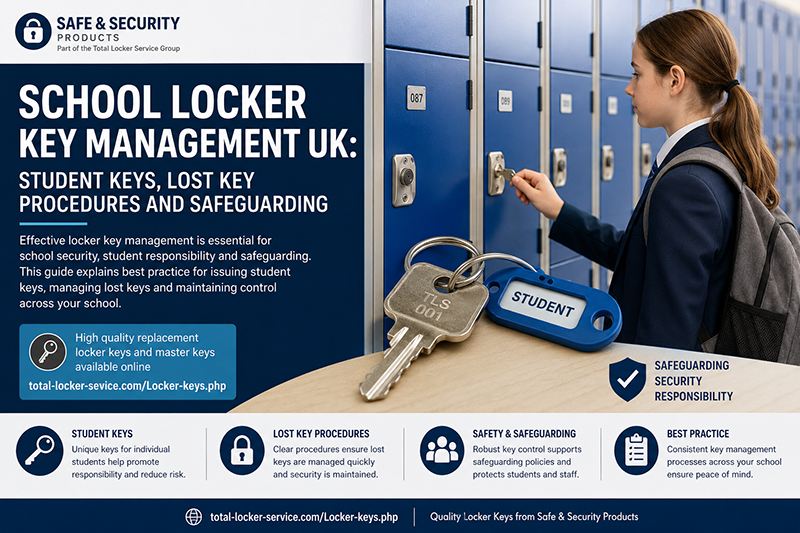
School lockers are simple to use, but they are not simple to manage. Once a school has hundreds of pupils using lockers every day, the key system becomes part of the wider storage, behaviour and safeguarding process.
A school locker gives pupils a safe place to store bags, books, PE kit, coats, lunch boxes and personal items during the school day. However, every locker also needs an access method. For many schools, that still means a key. That key must be issued, recorded, replaced when lost, recovered when a pupil leaves and controlled carefully when staff need emergency access.
Good key management prevents disruption. It reduces lost property. Helps site teams keep lockers in use. Also gives staff a clear procedure when a pupil cannot open a locker, when a key is missing or when there is a safeguarding concern.
If your school needs duplicate or replacement keys, Total Locker Service supplies replacement locker keys for schools, cut to code for many common locker brands and lock systems.
This guide explains how UK schools can manage student locker keys, reduce lost key problems, plan replacement procedures and keep access control aligned with safeguarding expectations.
Quick answer: how should schools manage locker keys?
Schools should manage locker keys through a clear issue, record, replacement and recovery process. Each locker should have a number. Each key should be linked to a locker number, pupil name or year group, and key code where available. Spare keys and master keys should be held securely by authorised staff only. Lost keys should be recorded, replaced quickly and reviewed if losses become repeated.
For replacement keys, schools should first check the number stamped on the existing key or lock face. If the number is clear, a replacement can often be ordered from the locker keys page without replacing the full lock.
Why school locker key management matters
A school locker system is only useful when pupils can access their lockers reliably. If keys are lost, damaged or poorly recorded, the locker system quickly becomes a daily problem for reception staff, form tutors, site teams and pastoral teams.
Poor key management can lead to:
pupils arriving late to lessons because they cannot access books or equipment
repeated interruptions at reception or the site office
lockers being forced open unnecessarily
unnecessary lock replacements
disputes over ownership of belongings
staff being unsure who is allowed to access a locker
spare keys being stored in unsafe places
master keys being used without a clear record
abandoned lockers at the end of term
increased costs from preventable replacement work
The aim is not to make locker use complicated. The aim is to make it predictable. When every key has a record, every locker has an allocation and every lost key follows the same process, the school can solve most locker issues quickly.
A simple system is usually best. Schools do not need an over-engineered process for every pupil. They need a process that works under pressure, during busy mornings, between lessons and at the end of term.
School locker keys and safeguarding
Locker key management is not only a facilities issue. In a school, access to storage must also fit the safeguarding and behaviour framework.
A pupil’s locker may contain school books, clothing, personal items, mobile phones, medication, food, prohibited items or items that relate to a welfare concern. Staff must therefore avoid informal or inconsistent access. A locker should not be opened casually. It should be opened under a defined school procedure.
This is especially important where:
a pupil reports that items have been taken
staff believe a locker contains an item that should not be on site
a pupil is distressed because they cannot access belongings
a locker has been abandoned
a key is reported stolen
there is a concern about bullying, coercion or intimidation
staff need to search a locker as part of a behaviour or safeguarding process
a pupil has left the school without returning a key
The key principle is control. Schools should know who can access lockers, why access is being given, whether the pupil is present, which staff are involved and whether the action should be recorded.
This guide is practical storage advice, not legal advice. Schools should always follow their own safeguarding policy, behaviour policy, search policy, trust procedures and current Department for Education guidance.
The difference between student keys, spare keys and master keys
A good school locker key system separates three types of key.
Student keys
A student key is issued to the pupil who uses the locker. It gives that pupil normal day-to-day access. Some schools issue one key. Others issue one key to the pupil and hold one spare in the office.
Student keys should be linked to:
pupil name
form group or year group
locker number
issue date
key code, if known
deposit paid, if relevant
return date, if relevant
The pupil should know what to do if the key is lost. The school should also make clear whether there is a replacement charge.
Spare keys
A spare key is held by the school for operational use. It may be needed when a pupil forgets a key, loses a key or needs urgent access to books, medication, PE kit or personal belongings.
Spare keys should not be kept in an open drawer. They should be stored in a secure cabinet, controlled by authorised staff and logged when used.
For larger sites, a key cabinet can help keep school locker spares organised by number, year group, block or corridor.
Master keys
A master key or override key can open a group of locks within a compatible system. This is useful for facilities teams, but it creates a higher level of risk. A master key should be treated as a restricted access item.
Master keys should be:
held by named authorised staff
stored securely
never loaned casually
logged when used
checked regularly
removed from general office access
replaced or reviewed if lost
Not every locker system uses a master key. Where a master key is available, schools should decide who can use it and when.
Common school locker key problems
Most school locker key problems fall into a few repeat patterns.
The pupil has lost the key
This is the most common issue. The pupil may have misplaced the key at home, lost it during PE, left it in a bag, dropped it on the bus or given it to a friend.
The school should have a standard lost key procedure. Staff should not have to decide from scratch every time.
A sensible process is:
Ask the pupil to check bags, pockets and form room.
Check whether the school holds a spare key.
Record the lost key against the locker number.
Decide whether to issue the spare or order a replacement.
Apply any school replacement charge.
Review repeated losses if they suggest a wider issue.
Keys can bend when pupils force them, sit on them, carry them loose in bags or use them incorrectly. A bent key can damage the lock if it is forced.
If a key is bent, do not keep using it. Record the issue, check whether the lock still turns correctly and order a replacement key before the lock is damaged.
The key turns but the locker will not open
This may mean the lock cam is loose, the door is under pressure or something inside the locker is blocking the door. The key may not be the problem.
Staff should avoid forcing the key. If the lock or cam is damaged, the school may need a replacement lock or spare part rather than a key. Total Locker Service also supplies locker locks and locker parts.
If the locker number is known but the key code is missing
The locker number and the key code are not always the same. The locker number is usually the number displayed on the door for allocation. The key code is usually stamped on the key or lock face.
If the key code is missing, schools should check:
the spare key
the lock face
the original locker schedule
old key records
manufacturer documents
photos of the lock
any previous order history
If the code cannot be found, the school may need help identifying the lock. The locker key number guide can help staff understand where to look.
The pupil has left and the key has not been returned
This should be handled before the end of term. If keys are not recovered, the school may have open locker access records that no longer match current pupils.
A leaving process should include:
locker emptied
key returned
locker checked
key record updated
deposit refunded or retained, if used
spare key returned to the secure cabinet
locker made available for reallocation
This is especially important for Year 11, Year 13, leavers, transfers and pupils moving between sites.
How to build a school locker key register
A school locker key register does not need to be complicated. It can be a spreadsheet, MIS-linked document, facilities database or controlled paper record. The important point is that it is accurate, accessible to authorised staff and regularly updated.
The register should include:
Field
Why it matters
Locker number
Links the record to the physical locker
Location
Helps staff find the locker quickly
Pupil name
Shows who is allocated to the locker
Year group or form
Helps with batch checks and end-of-year recovery
Key code
Allows replacement keys to be ordered
Date issued
Shows when the key was given out
Deposit or charge
Helps finance/admin teams track payments
Spare key held
Confirms whether the school has backup access
Lost key date
Builds a history of problems
Replacement ordered
Shows whether action has been taken
Key returned
Confirms closure when the pupil leaves
The key code is one of the most valuable fields. If the school records the key code at the start, future replacement becomes much easier. Without a code, staff may have to inspect the lock, search old records or replace the lock.
How to issue locker keys to pupils
The issue process should be simple enough for form tutors, reception teams or pastoral staff to follow.
A recommended issue process is:
Allocate the locker number.
Check that the lock works.
Record the key code.
Record the pupil name and year group.
Issue the key.
Explain the lost key procedure.
Confirm whether a deposit or charge applies.
Tell the pupil not to swap lockers without permission.
Store any spare key securely.
Review the allocation at the agreed date.
A short written agreement can help. It does not need to be intimidating. It should simply explain that the locker remains school property, the key must be looked after, damage should be reported and the key must be returned when required.
Should schools charge for lost locker keys?
Many schools charge a small fee for lost locker keys. Others use a deposit system. Some choose not to charge, especially for younger pupils or where lockers are part of the school’s standard provision.
There is no single correct approach for every school. The decision should reflect the school’s behaviour policy, finance rules, pupil age, administrative capacity and equality considerations.
A charge can help reduce careless loss, but it should not prevent a pupil from accessing essential belongings. Schools should also consider cases where repeated loss may indicate a safeguarding, bullying, SEND or welfare issue rather than simple carelessness.
A balanced approach is usually best:
first loss: reminder and replacement process
repeated loss: pastoral review
deliberate damage: behaviour procedure
financial hardship: follow school support process
stolen key: record and investigate before charging
The purpose of the lost key process should be to restore access and keep the system secure. It should not create unnecessary conflict.
Lost school locker key procedure
A clear procedure removes uncertainty. Staff should know what to do, pupils should know where to go and the site team should not be pulled into avoidable emergencies.
Step 1: Confirm the locker
Ask the pupil for the locker number, location and year group area. If the school uses zones, identify the correct block or corridor.
Step 2: Check the pupil record
Confirm that the locker is allocated to that pupil. This avoids opening the wrong locker or giving access to the wrong person.
Step 3: Check for a spare key
If a spare is held, authorised staff can use the school’s access procedure. The spare key use should be logged if the school policy requires it.
Step 4: Check the key code
If the key is missing and no spare is available, check the key code from the register, lock face or previous records.
Step 5: Order the replacement
Use the key code to order from the correct brand or range. Total Locker Service can supply many locker keys cut to code for common school locker systems.
Step 6: Decide whether the lock must be changed
A lost key does not always mean the lock must be changed. However, if the key is suspected to be stolen, copied, misused or linked to a safeguarding issue, the school may decide to replace the lock.
Step 7: Update the register
Record the lost key, replacement order and new issue date. If a new lock is fitted, record the new code.
When should a school replace the lock instead of the key?
In many cases, a replacement key is enough. This is cheaper and quicker than changing the lock.
A school should consider replacing the lock when:
the lock is damaged
the key code is missing and cannot be identified
the key has been stolen
the locker has been accessed without permission
a pupil has repeatedly lost the key
the lock is worn or unreliable
the lock type no longer suits the school
the school wants to change from keys to combination locks
the locker is being refurbished
there is a safeguarding or security concern
If the lock needs replacement, the school should identify the existing lock type before ordering. The locker lock identification guide can help staff check the lock face, fixing style, cam and brand.
School locker key codes: what staff need to know
Most replacement locker keys are supplied by code. The key code is the number or letter sequence used to cut the replacement. It may be stamped on the key, engraved on the lock face or printed on original records.
Common places to check include:
front of the lock barrel
side of the key
plastic key head
original spare key tag
locker supplier records
old invoice or order sheet
facilities spreadsheet
master allocation schedule
Schools should avoid relying only on the locker door number. Door number 125 does not always mean key code 125. In many systems, the door number is just an allocation number.
The strongest process is to record both:
locker door number
key code
This makes future orders much faster.
Bulk replacement locker keys for schools
Schools often discover key problems in batches. This may happen at the end of term, after a locker audit, before a new academic year or during a refurbishment project.
A bulk key order may be needed when:
many lockers have no working key
spare keys are missing
a year group is being reallocated
old lockers are being brought back into use
keys were not recovered from leavers
a new school building is opening
a locker room is being reorganised
the school wants a full spare key set
For a bulk order, create a simple schedule:
Locker number
Key code
Brand
Quantity
Notes
A101
36215
Probe
2
Student key and spare
A102
36216
Probe
1
Spare only
B201
95045
Helmsman
2
Missing both keys
C014
66045
Lowe & Fletcher
1
Damaged key
A clean schedule reduces mistakes. It also makes it easier for the supplier to check compatibility.
Total Locker Service supports bulk key requests for schools, councils and facilities teams through the main locker keys UK page.
Student locker access and emergency opening
Schools should decide how emergency locker access works before an incident happens.
Emergency access may be needed where:
a pupil needs medication or urgent personal items
a safeguarding concern has been raised
there is a suspected prohibited item
a locker is causing a safety issue
a pupil has lost the key before an exam or lesson
belongings must be recovered after school
a locker has been abandoned
The school should decide:
which staff can authorise access
whether the pupil should be present
whether two staff should attend
whether the access should be recorded
how belongings are handled
when parents or carers should be contacted
whether the DSL or pastoral lead should be informed
when external guidance or police advice is needed
The process should be written into the school’s existing behaviour, safeguarding or locker use policy.
Searching school lockers: practical cautions
A locker is school property, but pupils still have a reasonable expectation that staff will act fairly, consistently and in line with school policy. Schools should not rely on informal practice.
A school locker search should only happen under the school’s approved procedure. Staff should understand the difference between:
opening a locker because a pupil has lost a key
checking an abandoned locker
inspecting damage
recovering school property
searching for a prohibited item
responding to a safeguarding concern
These are not all the same situation.
For searches linked to behaviour or safeguarding, schools should follow current DfE guidance, trust policy and local procedures. Staff should also keep appropriate records.
From a key management point of view, the important point is this: master keys and spare keys give access, but they should not remove the need for procedure.
Preventing lost school locker keys
Lost keys cannot be eliminated completely. They can be reduced.
Use numbered key tags
A numbered key tag helps staff identify a returned key. However, avoid putting too much information on the tag. A tag should not make it easy for someone to identify the exact locker and pupil if the key is dropped.
Use wrist straps where suitable
For PE areas, changing rooms and sports facilities, wrist straps can help pupils keep keys with them during activity. This is more common in leisure environments, but it may help in school sports settings.
Keep a spare key set
A controlled spare key set is one of the most useful investments a school can make. It reduces disruption and avoids forced openings.
Record the key code immediately
Do this when lockers are installed, not after the first loss. The key code record is what makes future replacement easy.
Audit at the end of term
End-of-term checks prevent small issues becoming a full summer holiday problem.
Review repeated losses
If one pupil repeatedly loses a key, the issue may be organisational, behavioural or pastoral. A different lock type may also be more suitable.
Consider combination locks where keys are a constant problem
Some schools move certain locker areas to combination locks or digital locks. This can reduce student key loss, but it introduces a different management issue: forgotten codes. The right choice depends on the age group and staff capacity.
Key locks versus combination locks for school lockers
Key locks are familiar, simple and easy to understand. They work well where lockers are assigned to individual pupils and the school has a good spare key process.
Combination locks reduce physical key loss. They may suit older pupils, sixth form areas, staff lockers or shared-use storage. However, pupils can forget codes, share codes or change codes without permission if the wrong lock type is selected.
Here is a simple comparison.
Lock type
Strength
Weakness
Best school use
Key lock
Simple, familiar and easy to replace by code
Keys can be lost
Assigned pupil lockers
Padlock hasp
Pupil can provide own padlock
Lost padlocks may need cutting off
Older pupils or low-admin areas
Mechanical combination
No physical key for pupil to lose
Forgotten or shared codes
Sixth form or supervised areas
Digital lock
Flexible access and management options
Higher cost and battery checks
Managed high-use areas
Mastered key system
Staff can access lockers when needed
Master key must be controlled
Facilities-managed locker banks
Key locks remain a strong choice for many schools because replacement keys can be ordered quickly when the code is known.
How locker layout affects key management
Key management is easier when the physical locker layout is logical.
A school with clear zones can manage keys more easily than a school where lockers are scattered without structure.
Consider organising lockers by:
year group
form group
corridor
building block
floor
house group
department
sports area
sixth form area
For example, lockers A001 to A150 may belong to Year 7. Lockers B001 to B150 may belong to Year 8. The key register can then follow the same structure.
This helps when:
pupils report problems
staff need to find a locker quickly
keys are returned in batches
lockers are audited
year groups move up
replacements are ordered
spare keys are stored by zone
If a school is planning new lockers, it should consider allocation, numbering and key management before installation. For product choice, see school lockers.
End-of-year school locker key checklist
The end of the academic year is the best time to reset the locker system.
Use this checklist before pupils leave:
Ask pupils to empty lockers.
Collect keys from leavers.
Check each locker against the allocation record.
Record missing keys.
Record damaged locks.
Check spare key sets.
Check master keys.
Remove old labels or stickers.
Clean locker compartments.
Order replacement keys in bulk.
Replace damaged locks.
Reallocate lockers for the next year.
Update the school key register.
This process is especially useful before September. It avoids the common problem of discovering missing keys only when new pupils are being issued lockers.
New school year locker key setup
Before the new school year starts, schools should prepare the key system in advance.
A good September setup includes:
Confirm the number of lockers available.
Remove any lockers that are damaged or out of service.
Check that each lock works.
Confirm key codes.
Prepare pupil allocation lists.
Prepare spare keys.
Label or number lockers clearly.
Set replacement key rules.
Tell pupils how to report lost keys.
Give reception and pastoral staff the same procedure.
The first two weeks of term are usually the busiest period for locker questions. A clear process reduces queues, confusion and staff time.
Managing school locker keys across multiple sites
Multi-academy trusts, large secondary schools and split-site schools may need a more structured approach.
Problems often occur when each site uses different locker brands, lock types and key records. Over time, the trust may inherit several systems from different suppliers.
A multi-site key management review should ask:
Which locker brands are installed?
Which lock brands are used?
Are key codes recorded?
Are spare keys held centrally or locally?
Who can order replacements?
Are master keys controlled?
Are lost key charges consistent?
Are leavers handled in the same way?
Are older lockers worth refurbishing?
Should future projects use a standard lock type?
Standardisation can reduce cost and confusion. It may not be worth replacing every existing lock immediately, but future locker orders can follow a preferred specification.
Safeguarding-aware locker key policy template
Schools can adapt the following structure into their own policy.
Purpose
The school provides lockers to support safe, organised storage of pupil belongings during the school day. Locker access is managed through an issued key, spare key or authorised staff access procedure.
Allocation
Lockers are allocated by year group, form group or agreed school process. Pupils must use only their allocated locker unless permission is given to move.
Key issue
Each pupil is issued a key linked to a numbered locker. The school records the locker number, key code and issue date.
Lost keys
Lost keys must be reported to the school office, form tutor, pastoral team or site team as directed by the school. The school will check records and arrange access or replacement.
Spare keys
Spare keys are held securely by authorised staff. Use of spare keys may be recorded.
Master keys
Master keys are restricted to authorised staff and must be stored securely. They must not be loaned to pupils.
Access by staff
Staff access to a pupil locker must follow school policy. Where access relates to a behaviour, welfare or safeguarding concern, staff must follow the relevant school procedure.
Leavers
Pupils must return locker keys when leaving the school or when locker use ends.
Damage
Damage to locks, keys or locker doors must be reported. Deliberate damage may be handled under the behaviour policy.
Review
The locker key register should be checked at least once each academic year.
Ordering replacement school locker keys
When ordering replacement keys, accuracy matters. A wrong code can result in a key that does not fit.
Before ordering, collect:
school name
contact name
delivery address
locker brand, if known
lock brand, if known
key code
quantity required
photo of the key or lock, if unsure
urgency
purchase order details, if required
For most school orders, the key code is the most important detail. If the code is visible, replacement is usually straightforward.
A full spare key set can save time across the school year. It is especially useful where lockers are used by large year groups.
A full spare set may be worthwhile when:
lockers are used every day
pupils regularly lose keys
the school has no reliable spare key record
lockers are spread across several corridors
the site team is called out often
the school wants to avoid forced entry
the existing key record is incomplete
lockers are being reallocated each year
The spare set should be held securely, not handed around. A key cabinet with numbered hooks can help staff find the correct spare quickly.
Reducing admin time for reception and site teams
School locker key issues often end up with reception, pastoral support or the caretaker. Without a process, these teams lose time.
A simple workflow can reduce interruptions:
Pupil reports lost key to agreed staff point.
Staff check the locker allocation record.
Spare key is checked.
If no spare is available, key code is confirmed.
Replacement is ordered in the next batch.
Temporary access is arranged if needed.
Register is updated.
Batching non-urgent replacement orders can also help. Instead of ordering one key at a time, the school can send a weekly or monthly schedule. Urgent access issues can still be handled separately.
School locker key management mistakes to avoid
Avoid these common faults.
Keeping no key code record
This is the biggest mistake. Without key codes, every future replacement becomes harder.
Storing spare keys in an open drawer
Spare keys need controlled access. They should not be available to pupils, visitors or unauthorised staff.
Letting pupils swap lockers informally
Unrecorded swaps break the allocation record. Staff may then open or assign the wrong locker.
Treating master keys as ordinary keys
A master key is a high-control item. It needs stronger protection than a normal pupil key.
Replacing locks too quickly
If the key code is known, a replacement key may solve the problem without replacing the full lock.
Ignoring repeated key loss
Repeated loss may indicate poor organisation, bullying, coercion, anxiety, SEND needs or misuse. It should be reviewed, not just charged each time.
Waiting until September
Locker key checks are easier before pupils return. Summer audits prevent start-of-term disruption.
School locker key management checklist
Use this checklist to assess your current system.
Do all lockers have visible numbers?
Does the school know which pupil uses each locker?
Are key codes recorded?
Are spare keys held securely?
Are master keys restricted?
Is there a lost key procedure?
Is there a leavers process?
Are key charges or deposits clear?
Are staff using the same procedure?
Are locker searches handled under school policy?
Are damaged locks recorded?
Are replacement keys ordered by code?
Are old records reviewed annually?
Are bulk key orders prepared before September?
If several answers are “no”, the school is likely spending more time than needed on locker problems.
Choosing lockers with key management in mind
If your school is buying new lockers, think about key management before choosing the product.
Ask:
Will lockers be assigned or shared?
What age group will use them?
How often will pupils access them?
Who will issue keys?
Who will hold spare keys?
Is a master key system needed?
Can replacement keys be ordered by code?
Are the locks suitable for school use?
Will the same lock type be used across the site?
How will the system work at the end of term?
A good school locker is not just strong. It must be manageable across the full academic year.
What should a school do when a pupil loses a locker key?
The school should confirm the locker allocation, check for a spare key, record the loss, check the key code and order a replacement if needed. If the key may have been stolen or misused, the school should consider whether the lock also needs changing.
Can schools order replacement locker keys by code?
Yes. In many cases, replacement locker keys can be cut to code if the key number is visible on the key, lock face or school records. Schools can order replacement keys from Total Locker Service using the locker keys page.
Is the locker number the same as the key code?
Not always. The locker number is usually the number shown on the locker door. The key code is the number used to cut the key. Schools should record both.
Should schools keep spare locker keys?
Yes, where practical. Spare keys help staff restore access quickly when pupils forget, lose or damage keys. Spare keys should be stored securely and controlled by authorised staff.
Who should hold the master key for school lockers?
Only authorised staff should hold or access a master key. This may be the site manager, facilities team, business manager or another named role. Master keys should be stored securely and logged when used.
When should a school replace the lock instead of the key?
A lock should be replaced if it is damaged, insecure, worn, unidentified or affected by a safeguarding or security concern. If only the student key is missing and the key code is known, a replacement key may be enough.
How can schools reduce lost locker keys?
Schools can reduce lost keys by using clear issue records, numbered tags, secure spare key sets, end-of-term audits, pupil reminders and quick replacement procedures. Repeated losses should be reviewed rather than treated as routine.
Are combination locks better for school lockers?
Combination locks can reduce physical key loss, but pupils may forget or share codes. Key locks are often simpler for assigned lockers, especially where replacement keys can be ordered by code. The best option depends on the age group and how the lockers are managed.
What information is needed to order school locker keys?
The most useful information is the key code. Schools should also provide the locker or lock brand if known, the quantity required and a clear photo if the code or lock type is uncertain.
Conclusion: good key control keeps school lockers useful
A school locker system works best when pupils can use it easily and staff can manage it confidently. The lockers themselves matter, but the access process matters just as much.
A good school locker key system records who has each locker, stores spare keys securely, controls master keys, sets a clear lost key procedure and orders replacements before problems build up.
For schools, the most important action is simple: record the key code for every locker. That one step can prevent delays, reduce forced openings and make future replacement much easier.
If your school needs replacement keys, spare keys or a bulk key schedule, use the Total Locker Service replacement locker keys page to order locker keys cut to code for many common school locker systems.
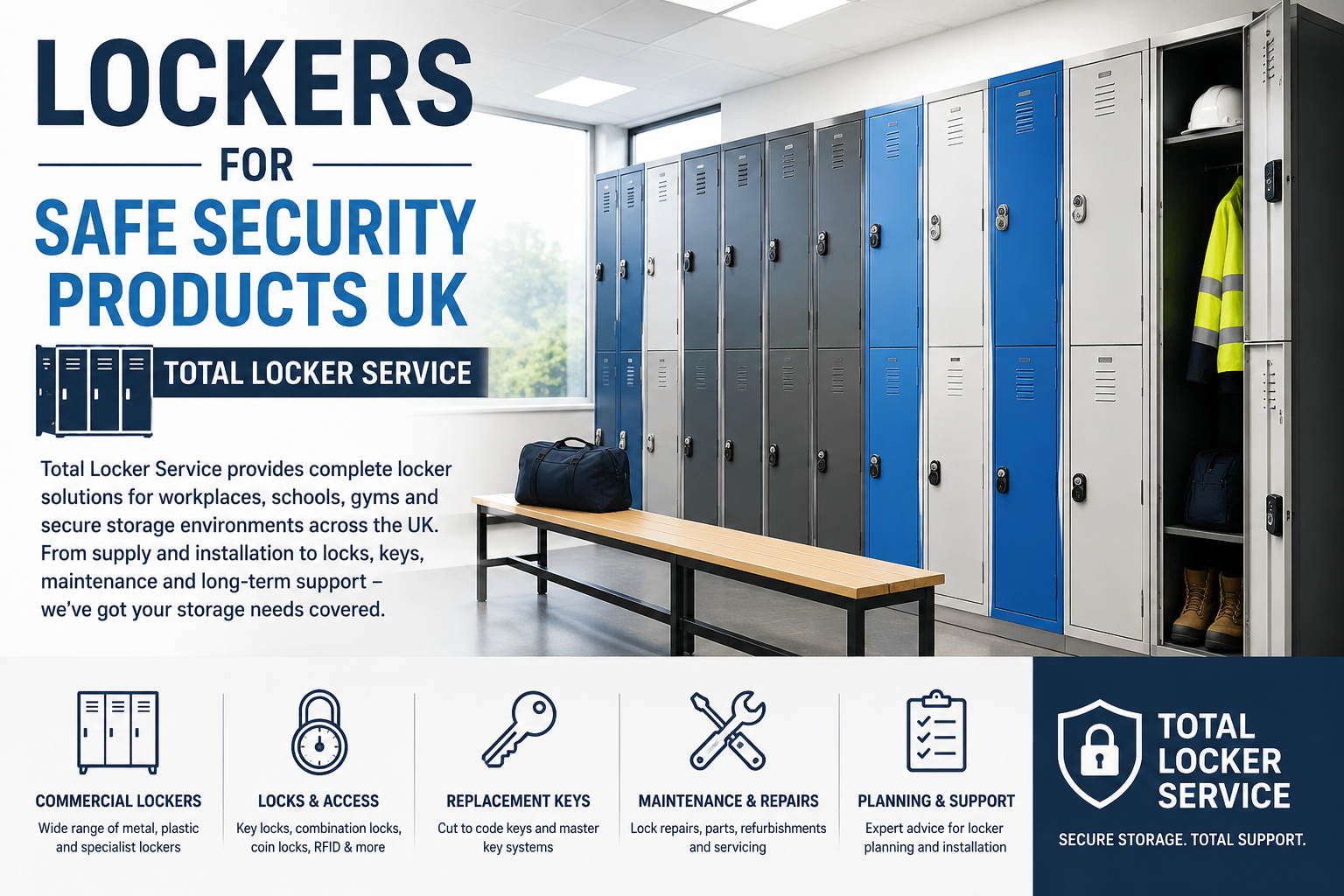
Total Locker Service supplies commercial lockers, secure storage systems, locker locks, replacement keys, locker parts, locker maintenance and locker planning support for UK workplaces, schools, leisure centres, industrial sites, offices and public buildings.
For organisations using https://safe-security-products.co.uk/ as a secure product route, lockers are an important part of the wider security and storage picture. A safe protects documents, valuables or cash. A cabinet controls tools, keys or hazardous items. A locker controls daily personal storage, staff belongings, uniforms, devices, PPE and shared workplace equipment.
Total Locker Service provides a practical locker offering that supports both product supply and long-term operational control. This includes standard commercial lockers, workplace lockers, school lockers, wet area lockers, staff lockers, PPE lockers, garment lockers, plastic lockers, metal lockers, bespoke lockers, locker stands, locker seat stands, locker locks, key replacement, lock conversion, spare parts, refurbishment and installation support.
This guide explains how Total Locker Service fits into a complete secure storage strategy. It also links into the main locker planning, locker management, locker access and locker key canisters from the Total Locker Service blog, so buyers can move from product selection into specification, layout, maintenance and lifecycle control.
Lockers are often treated as a simple furniture purchase. In practice, they are part of the daily security system of a building. They decide where people store personal items, how staff manage workwear, how pupils move through corridors, how gym members use changing rooms, how contractors protect belongings and how facilities teams control access across a busy site.
A good locker system reduces clutter, protects belongings and supports better movement through a building. It can also reduce lost property, improve hygiene, support welfare provision and give managers a clearer process for issuing, auditing and maintaining storage.
Total Locker Service is useful because its locker offer is not limited to one product type. The range covers everyday steel lockers, workplace lockers, school lockers, wet specification lockers, plastic lockers, PPE lockers, garment management lockers, mini lockers, laptop storage, electronic lockers, locker stands and locker accessories.
This makes the company suitable for organisations that need more than one storage product. A workplace may need staff lockers, PPE lockers, key cabinets and safes. A school may need corridor lockers, changing room lockers, replacement keys and master key control. A leisure centre may need wet area lockers, coin locks, combination locks and locker maintenance. An industrial site may need heavy duty lockers, clean/dirty zoning, garment collection and secure storage for equipment.
Quick answer: what does Total Locker Service offer?
Total Locker Service supplies lockers and secure storage solutions for UK workplaces, schools, leisure facilities, offices, public buildings and commercial environments. The offer includes locker supply, locker specification, locking options, replacement locker keys, lock replacement, locker parts, maintenance, refurbishment and installation support.
Maintenance, refurbishment, lock conversion, spare parts
Facilities teams and estates teams
Commercial lockers for workplaces, schools and leisure facilities
The main locker range from Total Locker Service is suitable for commercial environments where storage must be durable, practical and easy to manage. These environments include schools, offices, leisure centres, warehouses, healthcare sites, factories, staff changing rooms and public facilities.
Commercial lockers need to do more than hold belongings. They must fit the building layout, allow safe access, avoid blocking circulation, support cleaning, use suitable locks and match the number of people using the space. A poorly specified locker system can create congestion, lost keys, damaged locks, unused compartments and awkward maintenance problems.
That is why the strongest locker projects start with planning. Before choosing a locker colour or lock type, the buyer should define the users, the environment, the available space, the required compartment size, the access method, the maintenance process and the replacement plan.
For deeper planning guidance, use the Locker Planning UK canister. This helps connect locker supply with layout, spacing, door clearance, aisle widths, accessibility and installation planning.
Workplace lockers
Workplace lockers support staff welfare, security and daily organisation. They are commonly used in offices, warehouses, factories, distribution centres, hospitals, schools, councils and shared commercial buildings. Staff may use lockers for bags, coats, uniforms, personal items, work devices, PPE or temporary storage during a shift.
Workplace locker planning should consider shift patterns, staff turnover, hybrid working, part-time workers, contractors, visitors and departmental zoning. A fixed locker for every employee may be suitable for some sites. Other workplaces may need shared-use lockers, hot lockers, day-use compartments or smart access systems.
Total Locker Service can support this by supplying suitable locker products and by linking the buyer to operational planning content. The Workplace Locker Operations UK canister is especially useful for facilities managers who need to think beyond the initial purchase.
A strong workplace locker system should answer these questions:
Who is allowed to use each locker?
Are lockers assigned, shared or temporary?
How are keys, PINs or credentials issued?
What happens when an employee leaves?
How are abandoned lockers checked?
Who manages master keys or override access?
How are damaged locks replaced?
How often are lockers cleaned, audited and reviewed?
School lockers
School lockers have different demands from workplace lockers. They must handle high-volume daily use, movement between lessons, break-time peaks, supervision needs, student key losses, corridor congestion and safeguarding considerations.
The best school locker system is not just strong. It is positioned correctly. Locker banks should be planned to avoid crowding at narrow corridor points. They should support year group zoning, easy supervision and safe movement. Locks should match the age group and management capacity of the school.
School buyers should think about locker height, compartment count, corridor width, door swing, supervision sightlines, student age, locking preference and key recovery. Replacement key planning is especially important because student lockers often generate repeated key loss requests during the academic year.
Leisure centre, gym and wet area lockers
Leisure centres and gyms need lockers that can handle high turnover, moisture, shared use and heavy daily handling. Wet changing rooms, swimming pools, spas and sports facilities need materials and locks that suit damp conditions.
In these settings, the lock choice is as important as the locker body. Coin locks may suit public changing rooms. Combination locks may reduce key handling. Hasp locks may suit padlock-based systems. RFID or electronic systems may suit managed leisure facilities with membership cards or smart access.
Total Locker Service offers multiple locking options across suitable locker ranges. Buyers should match the lock to the site’s operating model. A school gym, private health club, public leisure centre and workplace changing room may all need different systems.
For lock selection, the Locker Locks UK canister is the natural supporting hub.
Industrial lockers and PPE storage
Industrial sites often need lockers for more than personal belongings. They may need storage for PPE, uniforms, boots, clean clothing, dirty clothing, tools, helmets, gloves and site-specific equipment.
Locker planning in industrial environments should consider dirt, moisture, ventilation, cleaning, shift handovers, security, garment collection and welfare requirements. Some sites benefit from separate clean and dirty zones. Others need laundry collection lockers or garment dispenser lockers to support managed workwear processes.
Total Locker Service supplies garment storage lockers and laundry locker systems that support workwear management. These are useful for factories, healthcare environments, food production, laboratories and industrial workplaces where clothing control matters.
Locker stands and seat stands can also improve cleaning access and changing room usability. Raised lockers help keep the floor area accessible for cleaning, while seat stands combine storage with seating where space is limited.
Bespoke and made-to-order lockers
Not every site can use standard lockers. Some buildings need unusual dimensions, special lock options, colour matching, specific compartment arrangements, wet area suitability or a layout that works around existing walls, benches, columns or services.
Total Locker Service provides bespoke made-to-order locker options. This is useful when the buyer needs a locker system that fits the operation rather than forcing the operation to fit a standard product.
Bespoke planning should still be controlled carefully. The buyer should define door clearance, aisle width, fixing requirements, lock type, user capacity, ventilation needs, cleaning access and future replacement access before ordering.
The Locker Specification Planning UK canister supports this process. It helps buyers turn operational requirements into a clear specification before committing to a product.
Locker locks and access options
Locking is one of the most important decisions in any locker project. The wrong lock can create daily frustration, lost key costs, user confusion or weak access control. The right lock makes the system easier to manage.
Total Locker Service can support several common locking options, including key locks, hasp locks, coin return locks, combination locks, keypad locks and RFID locks. Each option has a different use case.
Lock type
Best suited to
Main benefit
Key lock
Assigned lockers
Simple personal access
Hasp lock
Padlock systems
User supplies padlock
Coin lock
Public changing rooms
Shared-use control
Combination lock
Schools, offices, gyms
Reduces physical key handling
Keypad lock
Managed workplaces
Code-based access
RFID lock
Smart or integrated sites
Credential-based control
For a full access strategy, use the Locker Access Control Systems UK canister. This connects physical keys, master keys, PIN systems, RFID systems, smart credentials and hybrid locker estates.
Replacement locker keys and key control
Replacement locker keys are a major part of long-term locker management. A locker system can be well designed and well installed, but if key records are poor, the system becomes difficult to manage over time.
Total Locker Service provides support for replacement locker keys and locker key systems. Many locker keys can be cut to code when the correct key number or lock number is available. This can reduce the need to replace full locks when a key is lost.
A proper locker key system should include locker numbering, key code records, user records, master key control, issue logs, return logs, lost key procedures, duplicate key control and periodic audits.
Locker management systems
A locker management system is the operational layer behind the physical locker. It includes allocation, access control, occupancy tracking, audits, maintenance, cleaning, key control, permissions, reporting and replacement planning.
This is where Total Locker Service becomes more than a supplier of locker units. A buyer can use the product range for supply, then use the blog canisters to build a complete management process around the lockers.
The main supporting hub is Locker Management Systems UK. This should be linked from any page that discusses locker operations, locker allocation, locker audits, locker occupancy or long-term facilities control.
Locker management matters most on larger estates. A small office may only need a simple staff locker bank. A school, hospital, warehouse, university, leisure group or council estate may need hundreds or thousands of compartments across multiple buildings. At that scale, locker management becomes an infrastructure issue.
Occupancy and shared-use lockers
Occupancy planning helps organisations understand whether lockers are being used properly. Some sites have too many unused lockers in one area and too few lockers in another. A number of lockers remain abandoned. Some are used for long-term storage when they were intended for daily use.
Shared-use lockers, hot lockers and hybrid workplace lockers make occupancy planning more important. Flexible workers, shift workers and rotating teams do not always need a permanent locker. They may need reliable access to temporary storage when they are on site.
The Locker Occupancy Management Systems UK canister supports this topic. It is useful for workplaces, schools, leisure centres and estates teams that need to reduce unused locker capacity and improve storage efficiency.
Maintenance, refurbishment and lifecycle control
Lockers should be managed across their full lifecycle. A good locker system needs inspection, cleaning, lock replacement, door adjustment, hinge checks, numbering checks, corrosion checks, fixing checks and periodic review.
Total Locker Service provides locker repair, maintenance, refurbishment, spare parts and lock conversion support. This is important for organisations that want to extend the life of existing lockers rather than replacing everything at once.
Lifecycle planning is especially useful for schools, healthcare sites, factories, leisure centres and large workplaces. It helps the buyer decide which lockers should be repaired, refurbished, relocated, expanded or replaced.
How lockers connect with safes and wider security products
The title of this article refers to https://safe-security-products.co.uk/. That creates a useful bridge between lockers and wider secure storage. Lockers do not replace safes. Safes do not replace lockers. They solve different storage problems.
A safe is usually chosen for higher-value items, sensitive documents, cash, data media or fire protection. A locker is usually chosen for controlled day-to-day access to personal belongings, clothing, workwear, equipment or temporary storage. A key cabinet manages access to keys. A medical cabinet manages medicines or first aid items. A COSHH cabinet manages hazardous substances. A storage system brings these products together into one operational plan.
This is why the Storage Management Systems UK canister is useful. It positions lockers as part of a broader storage management framework rather than a standalone purchase.
Recommended internal link structure
This article should act as a commercial bridge page. It should link to product pages for conversion and to blog canisters for topical authority.
The right locker system depends on the site, the users and the management process. Buyers should avoid choosing purely by price or appearance. A locker that looks suitable may fail operationally if the lock type is wrong, the compartment size is too small, the aisle is too narrow or the key process is weak.
Before ordering lockers, answer these practical questions:
Will lockers be used by staff, pupils, members, visitors, contractors or the public?
Will use be assigned, shared, temporary or mixed?
Are the lockers for dry areas, wet areas, industrial areas or public spaces?
What will users store inside?
Are bags, coats, PPE, boots, devices or uniforms involved?
How many compartments are needed now?
How much future expansion is likely?
What lock type is easiest to manage?
Who controls master keys or override access?
How will lost keys, damaged locks and abandoned lockers be handled?
How will cleaning and maintenance teams access the locker area?
Total Locker Service is well placed for this type of buying process because it combines product range, lock options, replacement support and service knowledge. That combination matters when the buyer needs a system that can be maintained over time.
Total Locker Service is a strong fit for buyers who need practical locker supply backed by knowledge of real site use. The company supplies lockers for commercial and public environments, but also supports the surrounding issues that make lockers work properly.
Those surrounding issues include lock choice, replacement keys, master key management, locker maintenance, refurbishment, spare parts, lock conversion, installation support and product selection. This is important because lockers are used every day. A weak support route can turn a simple storage system into a recurring facilities problem.
A buyer using Total Locker Service can start with a standard product need, such as workplace lockers or school lockers, then expand into a full locker management approach. That approach can include planning, access control, key management, lifecycle management and estate audits.
Suggested call to action
If you need lockers for a workplace, school, gym, industrial site, healthcare environment or public building, start by defining the users, the environment and the access method. Then choose a locker system that can be maintained, audited and expanded over time.
Total Locker Service can help with locker supply, locker locks, replacement keys, parts, maintenance, refurbishment and practical storage planning for UK sites.
Does Total Locker Service supply lockers for workplaces?
Yes. Total Locker Service supplies workplace lockers for offices, factories, warehouses, staff changing areas, public buildings and commercial environments.
Does Total Locker Service supply school lockers?
Yes. School lockers are a key part of the Total Locker Service offering. The company can also support schools with replacement keys, lock options and locker planning guidance.
Can Total Locker Service help with replacement locker keys?
Yes. Total Locker Service supports replacement locker keys and key control. Where the lock or key code is available, replacement locker keys may often be cut to code.
What lock types are available for lockers?
Common locker lock options include key locks, hasp locks, coin return locks, combination locks, keypad locks and RFID locks. The best option depends on whether the lockers are assigned, shared, public, wet-area or staff-only.
Can lockers be repaired or refurbished?
Yes. Total Locker Service provides locker repair, maintenance, spare parts, refurbishment and lock conversion support. This can help organisations extend the useful life of existing lockers.
How do lockers fit with safe and security products?
Lockers support daily personal and operational storage. Safes protect higher-value items, documents, cash or sensitive contents. Both can form part of a wider secure storage system.
Commercial lockers represent a significant investment for any organisation. Moreover, proper maintenance ensures these assets deliver value for years to come. Furthermore, neglected lockers create safety hazards, reduce employee satisfaction, and increase replacement costs dramatically.
This comprehensive locker maintenance guide UK explores proven strategies for organisations across the country. Additionally, we examine cost-effective approaches to repairs and lifecycle management. Subsequently, you’ll discover how preventive maintenance protects your investment whilst ensuring compliance with workplace regulations.
British businesses spend millions annually on locker replacements. However, many premature failures result from inadequate maintenance rather than inherent product deficiencies. Therefore, understanding proper care techniques saves substantial amounts over time.
Understanding Locker Lifecycle and Maintenance Needs
The Three Phases of Locker Life
Every locker system progresses through distinct lifecycle phases. Initially, new installations require minimal intervention beyond basic cleaning. Subsequently, regular wear necessitates increased attention and minor repairs. Eventually, strategic replacement becomes more economical than continued maintenance.
Early Life (Years 0-3)
New lockers typically perform flawlessly during this period. Nevertheless, establishing maintenance routines now prevents future problems. Furthermore, early intervention addresses manufacturing defects before warranty expiration.
Basic cleaning schedules prevent dirt accumulation that accelerates wear. Additionally, user education reduces misuse and accidental damage. Moreover, documenting initial condition provides valuable baseline information for future assessments.
Mid Life (Years 4-10)
This phase sees increased maintenance requirements as components age. Specifically, locks begin requiring adjustment or replacement. Moreover, hinges may develop play or squeaking. Additionally, surface coatings can show wear in high-traffic areas.
Preventive maintenance becomes increasingly cost-effective during this period. Furthermore, addressing minor issues prevents escalation into major failures. Subsequently, planned maintenance costs significantly less than emergency repairs.
Late Life (Years 11+)
Eventually, cumulative wear makes replacement more economical than continued maintenance. However, well-maintained lockers often exceed expected lifespans considerably. Moreover, strategic upgrades can extend functionality beyond original specifications.
Assessment criteria should include repair frequency, parts availability, and current condition. Additionally, consider whether modern smart locker solutions offer significant operational advantages justifying earlier replacement. Therefore, lifecycle analysis guides optimal replacement timing.
Common Locker Problems and Their Causes
Understanding typical failure modes helps prevent recurring issues. Moreover, recognising warning signs enables early intervention before complete failure.
Locking Mechanism Failures
Locks represent the most frequently failing locker component. Specifically, mechanical locks suffer from key wear, cylinder corrosion, and internal mechanism degradation. Furthermore, electronic locks face battery depletion and software glitches.
Many lock problems stem from environmental factors rather than inherent defects. Additionally, user abuse accelerates wear significantly. Moreover, inadequate lubrication causes premature failure in mechanical systems.
Structural Damage
Dents, scratches, and deformation compromise both function and appearance. Furthermore, severe impacts can misalign doors and compromise security. Additionally, rust development threatens structural integrity over time.
Sagging doors indicate hinge wear or improper installation. Additionally, squeaking announces inadequate lubrication. Furthermore, binding suggests misalignment or warped components.
Regular inspection identifies hinge problems before they affect functionality. Moreover, prompt adjustment prevents accelerated wear on related components. Therefore, hinge maintenance forms a critical element of overall care programmes.
Developing an Effective Maintenance Programme
Creating Your Maintenance Schedule
Systematic approaches deliver superior results compared to reactive maintenance strategies. Moreover, scheduled inspections catch problems early when repairs remain simple. Furthermore, documented programmes demonstrate due diligence for compliance purposes.
Daily Tasks
Quick visual inspections identify obvious problems requiring immediate attention. Specifically, check for hanging doors, damaged locks, and visible vandalism. Moreover, ensure cleaning staff report any issues discovered during routine work.
These rapid checks take minimal time yet provide substantial benefits. Additionally, early detection prevents minor issues escalating overnight. Therefore, incorporating locker checks into existing rounds maximises efficiency.
Weekly Tasks
More thorough inspections examine components not visible during daily checks. Furthermore, test random lock functionality across different locker banks. Additionally, verify cleaning effectiveness and identify areas needing extra attention.
Weekly schedules should rotate through different sections systematically. Moreover, this approach ensures comprehensive coverage without overwhelming staff. Subsequently, patterns of recurring problems become apparent through consistent documentation.
Monthly Tasks
Comprehensive examinations assess overall system condition and identify developing trends. Specifically, detailed lock testing reveals deteriorating mechanisms before complete failure. Moreover, structural assessments catch rust development in early stages.
Monthly reviews should include parts inventory checks ensuring adequate stock levels. Additionally, review maintenance logs identifying recurring issues requiring systemic solutions. Furthermore, schedule any identified repairs promptly to prevent problem accumulation.
Quarterly Tasks
In-depth assessments examine components typically overlooked in routine checks. Moreover, professional inspections can identify issues requiring specialised expertise. Additionally, deep cleaning removes accumulated grime from hidden areas.
Quarterly reviews provide opportunities to assess maintenance programme effectiveness. Furthermore, adjust schedules based on actual experience rather than theoretical requirements. Subsequently, continuous improvement maintains optimal resource allocation.
Annual Tasks
Comprehensive system audits evaluate overall condition and remaining service life. Specifically, assess whether continued maintenance remains economically justified. Moreover, plan capital replacements based on lifecycle analysis.
Annual reviews should coincide with budget planning cycles. Additionally, multi-year maintenance plans help predict future expenditure accurately. Therefore, strategic planning prevents unexpected capital outlays.
Proper cleaning extends locker life whilst maintaining professional appearance. However, incorrect products or techniques can cause damage exceeding the benefits gained.
Interior cleaning requires similar care with attention to ventilation slots. Furthermore, remove debris accumulation that can harbour pests or create odours. Subsequently, quarterly deep cleaning maintains hygienic conditions.
Powder-coated surfaces tolerate gentle cleaning but resist abrasive methods poorly. Moreover, stainless steel requires specific products preventing streaking and corrosion. Therefore, understanding material-specific requirements protects finish quality.
Lock testing should verify smooth operation without excessive force requirements. Additionally, check that locks engage fully without partial deployment. Furthermore, confirm keys turn freely without binding or sticking.
Electronic lock maintenance focuses on battery replacement and connection integrity. Moreover, software updates address security vulnerabilities and functional improvements. Subsequently, manufacturer guidance ensures warranty compliance.
Hinge Care
Well-maintained hinges operate silently whilst supporting doors properly throughout their range. However, neglected hinges develop squeaks, sagging, and eventual failure.
Lubrication should use appropriate products avoiding attracting dirt accumulation. Moreover, petroleum-based lubricants often worsen problems in dusty environments. Therefore, dry lubricants frequently provide superior long-term results.
Hinge adjustment compensates for settling and wear over time. Additionally, proper alignment prevents uneven stress distribution accelerating failure. Furthermore, replacing worn hinge pins restores original functionality economically.
Surface Protection
Preventive measures protect finishes from damage requiring expensive restoration. Moreover, strategic placement of protective elements reduces wear in vulnerable areas.
Anti-graffiti coatings enable easy removal of marker and paint vandalism. Additionally, these products protect underlying finishes from chemical damage. Furthermore, regular reapplication maintains protective effectiveness.
Touch-up paint addresses minor scratches before rust development begins. Moreover, prompt treatment prevents small problems expanding into major corrosion. Subsequently, maintaining finish integrity preserves structural protection.
Repair Strategies and Parts Management
When to Repair Versus Replace
Economic analysis should guide repair-versus-replace decisions rather than arbitrary rules. Moreover, consider downtime costs alongside direct repair expenses. Furthermore, factor in remaining service life when evaluating repair investments.
Minor Repairs
Simple fixes costing under 20% of replacement value typically warrant immediate execution. Moreover, these repairs often prevent cascading failures affecting adjacent components. Additionally, prompt action demonstrates responsive facility management.
Examples include lock cylinder replacement, hinge adjustment, and minor dent repair. Furthermore, these interventions typically require minimal time and expertise. Therefore, maintaining in-house capability for common repairs improves response times.
Major Repairs
Significant interventions costing 50% or more of replacement value require careful justification. Specifically, consider whether repairs address root causes or merely symptoms. Moreover, evaluate whether repaired units will provide adequate remaining service life.
Door replacement, extensive rust remediation, and complete lock system overhauls represent major repairs. Additionally, these interventions may require professional expertise beyond in-house capabilities. Subsequently, obtaining competitive quotations ensures cost-effectiveness.
Strategic Replacement
Sometimes replacement proves more economical despite apparently reparable conditions. Moreover, modern alternatives may offer substantial operational improvements justifying earlier replacement. Furthermore, standardising on current models simplifies future maintenance.
Maintaining adequate parts inventory enables rapid repairs
Building an Effective Parts Inventory
Strategic parts stocking enables rapid repairs without excessive capital tie-up. Moreover, focusing on high-failure items provides maximum benefit. Additionally, establishing supplier relationships ensures rapid access to unusual components.
Essential Stock Items
Common locks, keys, hinges, and fasteners should remain readily available. Moreover, these components fail frequently enough to justify inventory investment. Additionally, their relatively low cost minimises carrying expenses.
Reliable suppliers provide crucial support for unusual or emergency requirements. Moreover, established relationships often enable preferential pricing and priority service. Additionally, supplier expertise supplements in-house knowledge.
Total Locker Service maintains comprehensive parts inventories supporting various locker systems. Furthermore, their technical expertise helps identify correct components rapidly. Subsequently, partnering with experienced suppliers streamlines maintenance operations.
Specialised Maintenance Considerations
School Locker Maintenance
Educational environments present unique maintenance challenges requiring tailored approaches. Specifically, concentrated usage during term times accelerates wear patterns. Moreover, younger users may lack care experience found in workplace settings.
Well-maintained school lockers create positive learning environments
High-Traffic Management
School lockers endure intensive daily use creating accelerated wear. Additionally, rushed students may abuse equipment unintentionally. Furthermore, social dynamics sometimes result in deliberate vandalism.
Increased inspection frequency during term times catches problems early. Moreover, holiday periods provide opportunities for comprehensive maintenance without disrupting users. Subsequently, aligning major work with school calendars minimises impact.
Vandalism Prevention and Response
Anti-vandalism measures reduce damage frequency whilst maintaining functionality. Moreover, rapid repair of damage discourages further incidents. Additionally, visible maintenance demonstrates institutional care deterring casual vandalism.
Understanding the psychology of school environments helps develop effective prevention strategies. Furthermore, engaging students in locker care promotes ownership and responsibility.
Gym and Leisure Facility Lockers
Humid environments and frequent use characterise leisure facility requirements. Moreover, constant exposure to moisture demands corrosion-resistant materials and enhanced maintenance.
Commercial environments require professional appearance alongside functionality. Moreover, Health and Safety Executive regulations mandate adequate maintenance. Furthermore, duty of care obligations require demonstrable maintenance programmes.
Compliance Documentation
Recorded maintenance demonstrates regulatory compliance and due diligence. Additionally, documentation supports insurance claims and legal proceedings. Moreover, systematic records identify recurring problems requiring permanent solutions.
Digital maintenance management systems streamline record-keeping whilst ensuring completeness. Furthermore, automated reminders prevent missed inspections or services. Subsequently, technology-enabled approaches improve consistency and compliance.
Professional Appearance
Workplace lockers reflect organisational professionalism and care standards. Moreover, well-maintained facilities improve employee satisfaction and retention. Additionally, visitors form impressions based partly on facility conditions.
Preventive Maintenance Best Practices
User Education and Engagement
Proper locker use significantly extends equipment life whilst reducing maintenance costs. Moreover, educated users report problems promptly enabling early intervention. Furthermore, stakeholder buy-in improves programme effectiveness.
Training Programmes
Comprehensive user orientation covers proper operation and care expectations. Additionally, emphasis on gentle use prevents abuse-related damage. Moreover, explaining maintenance benefits encourages cooperative behaviour.
Regular reminders maintain awareness as user populations change. Furthermore, visual guides near locker areas reinforce proper procedures. Subsequently, continuous education maximises user cooperation.
Reporting Systems
Simple reporting mechanisms encourage users to identify problems promptly. Moreover, accessible channels reduce barriers to communication. Additionally, responsive resolution demonstrates that reports receive serious attention.
Digital reporting via apps or web forms streamlines information collection. Furthermore, automated routing ensures appropriate personnel receive notifications. Subsequently, technology-enabled systems improve responsiveness whilst maintaining records.
Environmental Controls
Controlling environmental conditions dramatically affects locker longevity. Specifically, humidity, temperature, and air quality significantly impact degradation rates. Moreover, strategic placement reduces exposure to damaging conditions.
Climate Management
Maintaining stable temperature and humidity prevents accelerated corrosion and material degradation. Additionally, adequate ventilation prevents moisture accumulation in enclosed spaces. Furthermore, climate control protects locker contents alongside the units themselves.
Dehumidification may prove necessary in naturally humid locations. Moreover, heating prevents condensation during cold periods. Subsequently, environmental management forms part of comprehensive maintenance strategies.
Strategic Placement
Avoiding locations exposed to water spray or extreme conditions extends equipment life. Additionally, adequate clearance around installations facilitates maintenance access. Moreover, grouping similar use-intensity areas simplifies tailored maintenance approaches.
Consider traffic flow patterns when planning locker installations to minimise accidental damage. Furthermore, proper lighting improves visibility reducing user-induced damage.
Cost-Benefit Analysis of Maintenance Programmes
Calculating Maintenance ROI
Justifying maintenance expenditure requires demonstrating financial benefits exceeding costs. Moreover, comprehensive analysis includes both direct and indirect benefits. Additionally, long-term perspective reveals advantages invisible in annual budgets.
Direct Cost Savings
Preventive maintenance reduces emergency repair frequency and associated premium costs. Moreover, extended equipment life defers capital replacement expenditure. Additionally, reduced downtime minimises operational disruption expenses.
Studies demonstrate that preventive maintenance typically costs 25-40% less than reactive approaches. Furthermore, planned maintenance enables competitive tendering unavailable for emergency work. Subsequently, financial analysis strongly favours systematic programmes.
Indirect Benefits
Well-maintained facilities improve user satisfaction affecting retention and reputation. Moreover, demonstrated care fulfils duty of care obligations reducing liability exposure. Additionally, professional appearance influences stakeholder perceptions positively.
Employee satisfaction surveys correlate facility conditions with overall workplace satisfaction. Furthermore, maintenance quality affects organisational reputation among prospective employees. Therefore, indirect benefits often exceed direct cost savings.
Annual maintenance costs typically range from 2-5% of replacement value. However, actual requirements vary based on age, environment, and usage intensity. Subsequently, historical data provides the most accurate budget forecasting.
Working with Professional Maintenance Providers
Selecting Service Partners
Professional maintenance services supplement in-house capabilities for specialised requirements. Moreover, outsourcing can prove more economical than developing internal expertise. Additionally, experienced providers bring industry knowledge and proven techniques.
Evaluation Criteria
Provider assessment should consider technical expertise, response times, and pricing structure. Moreover, verify relevant certifications and insurance coverage. Additionally, request references from comparable organisations.
Total Locker Service offers comprehensive maintenance packages tailored to specific requirements. Furthermore, their experienced technicians address issues efficiently using quality replacement parts. Subsequently, partnering with established providers ensures reliable service delivery.
Contract Structures
Maintenance agreements should clearly define service scope, response times, and pricing. Moreover, performance metrics enable objective quality assessment. Additionally, escalation procedures ensure critical issues receive appropriate priority.
Fixed-price contracts provide budget certainty whilst incentivising efficient service delivery. However, flexible arrangements may better suit unpredictable requirements. Therefore, contract structure should align with organisational preferences and risk tolerance.
Maintaining Productive Relationships
Successful partnerships require clear communication and mutual respect. Moreover, providing feedback enables continuous service improvement. Additionally, collaborative problem-solving addresses challenges more effectively than adversarial approaches.
Regular review meetings assess performance and identify improvement opportunities. Furthermore, open discussion of challenges enables proactive solutions. Subsequently, strong relationships deliver superior long-term outcomes.
Future-Proofing Your Locker Investment
Emerging Maintenance Technologies
Technological advances create new maintenance opportunities alongside challenges. Moreover, IoT-enabled lockers provide real-time monitoring capabilities. Additionally, predictive analytics identify potential failures before occurrence.
Smart locker systems generate usage data informing maintenance scheduling. Furthermore, automated alerts notify staff of developing problems immediately. Subsequently, technology integration optimises maintenance efficiency and effectiveness.
Organisations exploring IoT-enabled storage solutions should consider maintenance implications during specification. Moreover, ensure compatibility with existing facility management systems.
Sustainability Considerations
Environmental responsibility increasingly influences maintenance decisions. Moreover, extending equipment life reduces waste and manufacturing impacts. Additionally, sustainable practices align with corporate social responsibility objectives.
Eco-friendly cleaning products and lubricants reduce environmental impact. Furthermore, parts recycling and responsible disposal demonstrate environmental commitment. Subsequently, sustainable maintenance practices support broader organisational goals.
The BIFMA sustainability standards provide guidance for environmentally responsible facility management. Moreover, documenting sustainable practices enhances corporate reputation.
Regular maintenance dramatically extends locker lifespan and appearance
Conclusion: Protecting Your Locker Investment
Effective locker maintenance delivers substantial financial and operational benefits. Moreover, systematic approaches prevent problems before they impact users. Furthermore, professional maintenance demonstrates organisational competence and care.
Successful programmes balance preventive activities with responsive repair capabilities. Additionally, appropriate resource allocation ensures sustainability without excessive expenditure. Moreover, continuous improvement maintains optimal effectiveness as conditions change.
The investment in proper maintenance protects capital assets whilst ensuring regulatory compliance. Furthermore, well-maintained facilities improve user satisfaction and organisational reputation. Subsequently, comprehensive maintenance programmes serve multiple strategic objectives simultaneously.
Organisations seeking expert maintenance support should consider established providers like Total Locker Service. Their comprehensive maintenance packages, experienced technicians, and extensive parts inventory ensure reliable long-term support. Moreover, their industry expertise helps optimise maintenance strategies for maximum effectiveness.
Proper locker maintenance represents sound business practice protecting investments whilst serving user needs effectively. Therefore, implementing systematic maintenance programmes should constitute a strategic priority for any organisation relying on locker systems.
Need Professional Locker Maintenance?
Contact Total Locker Service today for expert maintenance solutions tailored to your facility’s needs. Our team provides comprehensive inspections, repairs, and preventive maintenance programmes across the UK.
Commercial lockers UK. Finding the right commercial lockers for your facility transforms how you manage storage and security. Moreover, proper locker selection enhances employee satisfaction and protects valuable belongings. Consequently, investing time in understanding your options delivers long-term benefits for your organisation.
This comprehensive guide explores everything you need to know about commercial locker solutions in the UK. Additionally, we cover legal requirements, pricing considerations and maintenance best practices. Therefore, you can make informed decisions that serve your facility for years to come.
Whether you manage a school, workplace, gym or healthcare facility, this guide provides expert insights. Furthermore, we examine different locker types and their specific applications. Subsequently, you’ll understand which solution best meets your unique requirements.
Commercial lockers UK. Understanding Your Commercial Locker Needs by Industry
Different industries require distinct locker solutions tailored to their specific environments. Moreover, understanding these requirements ensures compliance and user satisfaction. Therefore, let’s explore the key sectors and their unique storage needs.
Education Sector Locker Requirements
Schools and universities need durable lockers that withstand daily student use. Additionally, these facilities require various sizes to accommodate different age groups. Furthermore, educational institutions benefit from lockers with ventilation to prevent odour build-up.
Primary schools typically need smaller compartments with bright, engaging colours. Conversely, secondary schools and universities require full-height lockers for coats and bags. Moreover, charging lockers have become increasingly popular for storing tablets and laptops safely.
Safety represents a critical consideration in educational environments. Therefore, rounded edges and anti-trap mechanisms protect young users effectively. Additionally, schools must consider UK workplace locker laws regarding student privacy and security.
Workplace and Office Storage Solutions
Modern workplaces demand flexible storage solutions that support agile working practices. Furthermore, hot-desking environments require lockers with easy access and short-term rental capabilities. Consequently, smart lockers with digital access have grown tremendously popular in corporate settings.
Manufacturing facilities need heavy-duty lockers for PPE and work equipment storage. Moreover, clean-dirty separation becomes essential in industrial environments. Therefore, two-compartment lockers allow workers to keep contaminated items separate from personal belongings.
Office environments benefit from sleek, professional-looking lockers that complement interior design. Additionally, these spaces often require lockers for laptop storage and charging. Subsequently, RFID-enabled lockers provide convenient, keyless access for busy professionals.
Gym and Leisure Facility Requirements
Gyms and leisure centres face unique challenges with moisture and heavy usage patterns. Moreover, these facilities require lockers resistant to corrosion and water damage. Therefore, plastic or treated metal lockers perform best in these demanding environments.
Swimming pools and spa facilities need completely waterproof locker solutions. Additionally, proper ventilation prevents mould growth and unpleasant odours. Furthermore, coin-return mechanisms suit day-use scenarios in public leisure facilities.
Boutique fitness studios often prefer aesthetically pleasing lockers that match their brand identity. Conversely, large commercial gyms prioritise durability and cost-effectiveness. Subsequently, suppliers like Total Locker Service offer customisation options for both scenarios.
Healthcare Facility Storage Needs
Hospitals and clinics require hygienic lockers that support infection control protocols. Moreover, these facilities need easy-to-clean surfaces that resist bacterial growth. Therefore, stainless steel or antimicrobial-coated lockers serve healthcare settings best.
Staff lockers in healthcare facilities must provide secure storage for personal items and valuables. Additionally, these environments require separate storage for uniforms and outdoor clothing. Furthermore, adequate ventilation prevents the spread of contaminants between areas.
Medical facilities must comply with strict regulatory standards for staff welfare. Consequently, proper locker provision forms part of health and safety obligations. Moreover, secure storage protects sensitive items like identification badges and access cards.
Commercial lockers UK. Types of Commercial Lockers Available in the UK
Selecting the right locker type significantly impacts functionality, durability and user satisfaction. Moreover, understanding material differences helps you make cost-effective decisions. Therefore, let’s examine the main locker categories and their specific applications.
Metal Lockers: The Traditional Choice
Metal lockers remain the most popular choice for commercial installations across the UK. Additionally, they offer excellent durability and security at competitive price points. Furthermore, steel construction provides robust protection for valuable items and equipment.
Standard metal lockers feature powder-coated finishes that resist scratches and impacts. Moreover, this coating comes in various colours to match your facility’s branding. Consequently, you can create cohesive, professional-looking storage areas throughout your premises.
These lockers suit most indoor environments where moisture levels remain moderate. However, coastal locations or high-humidity areas require additional corrosion protection. Therefore, consider treated or stainless steel options for these challenging environments.
Plastic Lockers: Ideal for Wet Environments
Plastic lockers excel in swimming pools, spas and other moisture-rich environments. Moreover, they completely resist rust and corrosion regardless of water exposure. Additionally, plastic construction eliminates the cold-to-touch sensation of metal in changing rooms.
These lockers require minimal maintenance compared to metal alternatives. Furthermore, graffiti and stickers remove easily from smooth plastic surfaces. Subsequently, facilities save time and money on cleaning and upkeep over the locker’s lifetime.
Modern plastic lockers offer surprising strength despite their lightweight construction. Moreover, UV-stabilised materials prevent colour fading in areas with natural light. Therefore, plastic lockers maintain their appearance for many years without deterioration.
Laminate and Wooden Lockers: Premium Aesthetics
Laminate and wooden lockers provide upscale aesthetics for premium facilities. Additionally, these materials create warm, welcoming environments in executive areas and private clubs. Furthermore, wood grain finishes complement traditional architecture beautifully.
High-pressure laminate (HPL) offers excellent durability whilst maintaining elegant appearance. Moreover, this material resists impacts, scratches and moisture better than natural wood. Consequently, HPL lockers combine aesthetic appeal with practical performance.
These premium lockers suit golf clubs, boutique gyms and executive office spaces particularly well. However, they typically cost more than metal or plastic alternatives. Therefore, budget considerations must balance against desired aesthetic outcomes.
Smart Lockers: The Future of Storage
Smart lockers represent the cutting edge of commercial storage technology. Moreover, they offer digital access control, usage tracking and remote management capabilities. Consequently, facilities gain unprecedented insight into locker utilisation and security.
Electronic locks eliminate key management headaches entirely. Additionally, temporary access codes suit hot-desking and visitor scenarios perfectly. Furthermore, audit trails provide detailed records of locker access for security purposes.
Integration with existing access control systems streamlines facility management significantly. Moreover, smartphone apps enable users to book and access lockers conveniently. Subsequently, smart lockers enhance user experience whilst improving operational efficiency.
Commercial lockers UK. Understanding Lock Types for Commercial Lockers
Lock selection dramatically affects security levels, convenience and ongoing maintenance requirements. Moreover, different environments demand specific locking mechanisms for optimal performance. Therefore, understanding your options ensures you choose the most appropriate solution.
Mechanical Combination Locks
Mechanical combination locks eliminate key management entirely through simple dial mechanisms. Additionally, users set their own personal codes for convenient, secure access. Furthermore, these locks require no batteries or electrical connections whatsoever.
These locks suit educational environments where students share lockers between terms. Moreover, facilities can easily reset combinations when users change. Consequently, mechanical locks offer long-term cost savings through minimal maintenance requirements.
However, combination locks may pose challenges for younger children or elderly users. Additionally, some users struggle to remember number sequences reliably. Therefore, consider your user demographic carefully when selecting this option.
Key Locks: Traditional and Reliable
Traditional key locks provide straightforward, familiar operation for all user groups. Moreover, cam locks offer adequate security for most commercial applications. Additionally, master key systems enable facility managers to access lockers when necessary.
Key management represents the primary challenge with this locking system. Furthermore, lost keys create security risks and replacement costs. Subsequently, facilities must implement robust key control procedures and tracking systems.
Despite these challenges, key locks remain popular for their simplicity and reliability. Moreover, they require no user training or technical support. Therefore, key locks suit facilities with stable, long-term locker assignments particularly well.
Electronic and RFID Locks
Electronic locks provide advanced access control with audit trail capabilities. Additionally, RFID systems integrate seamlessly with existing security cards and badges. Furthermore, battery-powered locks eliminate expensive electrical installation requirements.
These systems excel in corporate environments with existing access control infrastructure. Moreover, lost cards deactivate instantly without physical lock changes. Consequently, security remains tight whilst administrative burden decreases significantly.
Battery maintenance represents the primary ongoing cost consideration. However, modern electronic locks offer multi-year battery life. Therefore, maintenance requirements remain manageable across typical facility sizes.
Coin-Return and Coin-Retain Systems
Coin-operated locks suit leisure facilities with day-use requirements perfectly. Moreover, coin-return systems encourage locker turnover in busy facilities. Additionally, these mechanisms generate modest revenue whilst deterring locker hoarding.
Users appreciate coin-return systems because they eventually recover their deposit. Furthermore, the mechanism provides adequate security for short-term storage scenarios. Subsequently, gyms, swimming pools and visitor centres employ these systems extensively.
Coin-retain mechanisms suit revenue-generating scenarios where usage fees apply. However, cashless payment trends reduce the practicality of coin-operated systems. Therefore, some facilities now prefer app-based payment alternatives instead.
Understanding legal obligations protects your organisation from liability whilst respecting employee rights. Moreover, compliance demonstrates your commitment to staff welfare and security. Therefore, familiarising yourself with relevant legislation proves essential before installation.
Employment Rights and Privacy Considerations
The Employment Rights Act 1996 establishes fundamental principles regarding workplace storage. Additionally, employees possess reasonable privacy expectations in designated personal storage areas. Furthermore, employers must balance these rights against legitimate business interests carefully.
Clear policies outlining locker access procedures protect both employers and employees. Moreover, documented procedures demonstrate compliance during disputes or investigations. Consequently, comprehensive locker policies form essential elements of employee handbooks.
Search procedures require specific justification and proper documentation for legal protection. Additionally, witnesses should attend searches to ensure procedural fairness. Therefore, training managers on proper search protocols prevents costly legal challenges.
Electronic locker systems that track usage create personal data requiring GDPR compliance. Moreover, access logs constitute personal information subject to data protection principles. Additionally, employees possess rights to access data held about their locker usage.
Privacy impact assessments may prove necessary before implementing smart locker systems. Furthermore, data retention policies must define how long access records remain stored. Subsequently, regular audits ensure ongoing compliance with data protection regulations.
Surveillance cameras monitoring locker areas require careful consideration under GDPR rules. Moreover, proportionality principles limit surveillance to genuine security requirements. Therefore, legal advice ensures your monitoring practices comply with privacy legislation.
Health and Safety Obligations
The Workplace Health, Safety and Welfare Regulations 1992 mandate suitable storage facilities. Moreover, Regulation 23 specifically requires secure storage for employee clothing and belongings. Additionally, facilities must remain accessible to employees throughout working hours.
Risk assessments must evaluate security risks and potential hazards around locker areas. Furthermore, inadequate storage can create trip hazards or emergency exit obstructions. Subsequently, proper planning ensures locker placement supports overall workplace safety.
Regular inspections identify maintenance issues before they compromise safety or security. Moreover, documented maintenance schedules demonstrate ongoing compliance with health and safety duties. Therefore, proactive maintenance protects against liability claims effectively.
Fire Safety and Emergency Access
Fire safety regulations affect locker placement and emergency access procedures. Moreover, locker banks must not obstruct escape routes or emergency equipment. Additionally, master key systems enable emergency services to access lockers during incidents.
Combustible materials stored in lockers require consideration during fire risk assessments. Furthermore, proper ventilation reduces fire risks from battery-powered devices or flammable substances. Subsequently, clear policies about prohibited items protect against avoidable hazards.
Emergency procedures should address locker access during evacuations and incidents. Moreover, staff training ensures everyone understands emergency protocols thoroughly. Therefore, incorporating lockers into emergency plans maintains comprehensive safety coverage.
Essential Features in Commercial Locker Selection
Specific features significantly impact locker performance, longevity and user satisfaction. Moreover, understanding these elements helps prioritise your investment appropriately. Therefore, evaluating features systematically ensures you select the optimal solution.
Durability and Construction
Construction quality determines how well lockers withstand years of intensive use. Moreover, gauge thickness in metal lockers directly affects strength and longevity. Additionally, reinforced doors and frames provide enhanced security for high-value storage.
Ventilation Systems
Proper ventilation prevents odour build-up and protects stored items from moisture damage. Moreover, perforated doors and vented tops promote healthy air circulation. Additionally, ventilation becomes particularly crucial in gym and leisure environments.
Security Levels and Locking Options
Security requirements vary dramatically depending on stored items and facility type. Moreover, high-value storage demands reinforced construction and advanced locking mechanisms. Additionally, institutional environments may require master key or override capabilities.
Anti-tamper features deter unauthorised access attempts effectively
Concealed hinges prevent door removal by determined intruders
Insurance compliance may mandate specific security standards
Customisation and Branding Options
Custom colours enable lockers to complement your facility’s interior design scheme. Moreover, branded lockers reinforce corporate identity throughout your premises. Additionally, colour-coding different locker banks aids wayfinding and organisation.
Numbering and labelling systems require consideration during specification. Furthermore, digital printing enables custom graphics and branding applications. Subsequently, professional-looking lockers enhance overall facility presentation significantly.
Size customisation ensures optimal space utilisation in your specific facility. Moreover, bespoke dimensions accommodate awkward spaces or unusual requirements. Therefore, specialist suppliers can tailor solutions to your exact needs.
Accessibility and Inclusive Design
Accessibility regulations require consideration of users with disabilities. Moreover, lower-height lockers enable wheelchair users to access storage independently. Additionally, contrasting colours assist visually impaired users in locating their lockers.
Handle designs should accommodate users with limited dexterity or grip strength. Furthermore, clear signage and numbering help users with cognitive disabilities. Subsequently, inclusive design benefits all users whilst ensuring legal compliance.
Commercial Locker Installation Best Practices
Proper installation ensures lockers function correctly and remain secure throughout their lifetime. Moreover, professional installation prevents structural issues and warranty complications. Therefore, understanding installation requirements helps you plan projects effectively.
Space Planning and Layout Design
Effective space planning maximises storage capacity whilst maintaining comfortable circulation space. Moreover, adequate clearance allows users to access lockers without congestion. Additionally, proper layout prevents bottlenecks during peak usage times.
Measure your space carefully before specifying locker quantities and configurations. Furthermore, allow for door swing clearance when lockers open fully. Subsequently, detailed floor plans prevent costly modifications after installation begins.
Professional Installation vs DIY
Professional installation guarantees correct assembly and proper fixing techniques. Moreover, experienced installers complete projects faster with minimal disruption. Additionally, professional installation typically includes warranty coverage for workmanship.
DIY installation may seem cost-effective initially but carries significant risks. Furthermore, incorrect assembly can void manufacturer warranties entirely.
Complex installations involving electrical components definitely require professional expertise. Moreover, specialist installers understand building regulations and safety requirements thoroughly. Therefore, professional installation delivers peace of mind and guaranteed results.
Commercial lockers UK. Maintaining Your Commercial Locker Investment
Regular maintenance extends locker life and maintains optimal performance throughout their service period. Moreover, preventative care costs significantly less than reactive repairs. Therefore, establishing maintenance schedules protects your investment effectively.
Maintenance Task
Frequency
Benefit
Visual Inspection
Monthly
Identify issues early
Lock Lubrication
Quarterly
Smooth operation
Deep Cleaning
Annually
Hygiene & appearance
Hinge Adjustment
As needed
Prevent door sagging
Common Repairs and Replacement Parts
Lock replacements represent the most common repair requirement in commercial installations. Moreover, standardised lock types simplify sourcing replacement components. Additionally, stocking common spare parts enables quick repairs minimising downtime.
Extending Locker Lifespan
Proper user education reduces damage from misuse and careless handling. Moreover, clear usage guidelines prevent common problems effectively. Additionally, visible signage reminds users about proper care procedures.
Environmental controls protect lockers from moisture and temperature extremes. Furthermore, adequate ventilation prevents corrosion in humid environments. Subsequently, controlling environmental factors maximises material longevity.
Locker pricing varies significantly based on materials, features and quantities. Moreover, understanding cost factors enables realistic budget planning. Therefore, comprehensive cost analysis ensures appropriate allocation of resources.
Price Ranges by Locker Type
Standard Metal
£80-£150 per unit
Most economical option for general use
Plastic Lockers
£120-£200 per unit
Ideal for wet environments
Smart Lockers
£250-£500 per unit
Advanced digital access control
Bulk Ordering and Volume Discounts
Large quantity purchases typically qualify for tiered pricing discounts. Moreover, single large orders prove more economical than multiple small purchases. Additionally, consistent specifications across orders simplify procurement and maintenance.
Total Locker Service brings decades of expertise to commercial locker solutions across the UK. Moreover, comprehensive product ranges suit every sector and application imaginable. Additionally, complete project management from specification through installation ensures seamless delivery.
Competitive Pricing: Exceptional quality delivering outstanding value
Nationwide Service: Consistent support regardless of location
Ongoing Support: Maintenance protecting your investment
Commercial lockers UK. Frequently Asked Questions
How many lockers do I need for my facility?
Calculate locker requirements based on peak occupancy rather than total capacity. Moreover, consider shift patterns and part-time staff when determining quantities. Additionally, allow 10-20% spare capacity for growth and maintenance rotation.
What’s the best locker type for wet environments?
Plastic lockers perform best in swimming pools, spas and shower areas. Moreover, they completely resist corrosion regardless of continuous moisture exposure. Additionally, plastic materials don’t feel cold against skin in changing environments.
How long do commercial lockers typically last?
Quality metal lockers in moderate environments last 15-25 years with proper maintenance. Moreover, plastic lockers in wet areas often exceed 20 years’ service life. Additionally, harsh environments or heavy usage may reduce longevity somewhat.
Are smart lockers worth the extra investment?
Smart lockers deliver significant benefits in dynamic environments with changing users. Moreover, eliminating key management alone justifies premium pricing in many scenarios. Additionally, usage analytics enable data-driven space optimisation decisions.
Commercial lockers UK. Making Your Commercial Locker Decision
Selecting appropriate commercial lockers significantly impacts facility functionality and user satisfaction. Moreover, proper specification ensures compliance whilst protecting your investment long-term. Therefore, taking time to evaluate options thoroughly delivers superior outcomes.
This comprehensive guide has explored every aspect of commercial locker solutions. Additionally, you now understand material types, legal requirements and cost considerations. Furthermore, real-world examples demonstrate successful implementations across various sectors.
Quality suppliers like Total Locker Service provide expertise guiding optimal decisions. Moreover, professional installation and ongoing support protect your investment throughout its lifecycle. Subsequently, partnering with experienced suppliers ensures project success.
Parcel lockers UKare transforming how deliveries are handled across homes and workplaces. With growing demand for convenience, security, and flexibility, both residential developers and business owners are looking at smart locker systems as a future-proof solution. But are they right for your site?
What Are Parcel Lockers?
Parcel lockers are secure, self-service storage units that allow users to receive or send parcels 24/7. They’re commonly used in apartment complexes, office buildings, universities, and retail spaces. Each locker is fitted with smart technology, allowing contactless collection through PIN codes or QR scans.
Why Businesses Are Turning to Parcel Lockers
Businesses benefit greatly from parcel lockers UK as they streamline internal logistics, eliminate lost parcels, and increase delivery efficiency. Staff members can pick up or drop off packages at their convenience. This also reduces admin burden and enhances accountability.
For residential sites, parcel lockers UK offer security, convenience, and contactless delivery—critical in the age of e-commerce. Property managers report fewer missed deliveries, happier tenants, and reduced front desk congestion.
They can even serve as a selling point in listings, especially in urban areas.
How Parcel Lockers Work
The process is simple. Couriers deposit parcels into the locker. The recipient gets a code via email or SMS. Then they collect at any time, using a touchscreen or app. This system works whether the delivery is personal or for business.
Case Studies
Across the UK, we’ve seen success stories such as:
Mixed-use developments with dedicated parcel lockers UK in the lobby
Schools and universities using smart lockers for documents and electronics
Always follow UK guidelines on locker usage, privacy, and safety regulations. Make sure any smart system used complies with GDPR, especially for residential buildings.
Sustainability matters more than ever. Choose parcel lockers UK that are built with recyclable materials or have modular parts for longevity.
Pair them with other green products such as Industrial Cupboards, which also offer long-term value.
Security and Monitoring
Security is top priority. Lockers should be equipped with CCTV, encrypted software, and audit trails. For added peace of mind, combine them with Key Security Cabinets to safeguard physical keys and access tokens.
Common Misconceptions
It’s a myth that parcel lockers UK are only for large corporations. Today’s systems are modular, affordable, and scalable for small flats, schools, and remote workplaces. You don’t need to overhaul your building to benefit from them.
Are Parcel Lockers Worth It?
Absolutely. Whether you’re reducing costs, improving delivery management, or modernising your facility—parcel lockers UK deliver real ROI. They support remote work, enhance tenant satisfaction, and reduce parcel theft.
Conclusion
Whether you’re running a busy office or managing a residential block, parcel lockers UK might be your next smart upgrade. With flexible options, strong security, and user-friendly design, they solve modern delivery problems while adding long-term value.
Ready to explore your parcel locker options? Contact us at Total Locker Service for tailored advice.
Postage Lockers: Large facilities face a growing challenge. Post volumes continue to increase. Traditional mail rooms struggle to cope. However, postage lockers offer an innovative solution that transforms how organisations handle their mail and parcels.
Management Challenge
Today’s large facilities receive unprecedented amounts of post. Corporate headquarters, universities, hospitals, and residential complexes all experience this surge. Moreover, the rise of online shopping has dramatically increased parcel deliveries.
Traditional post rooms create bottlenecks. Staff spend hours sorting mail manually. Recipients wait in long queues. Furthermore, security concerns mount as valuable packages accumulate in unsecured areas.
Consequently, facility managers seek smarter alternatives. Postage lockers emerge as the perfect solution. They streamline operations whilst enhancing security and convenience.
What Are Postage Lockers?
Postage lockers are automated storage systems designed for mail and parcel management. These secure, intelligent units feature multiple compartments of varying sizes. Additionally, they incorporate advanced technology to automate the entire post collection process.
Each locker connects to a central management system. Recipients receive notifications when items arrive. Subsequently, they can collect their post at any time using secure access codes or key cards.
The system works seamlessly. Postal workers deposit items into appropriate compartments. The system then sends automatic notifications to recipients. Finally, recipients collect their items using personalised access methods.
Key Benefits of Postage Lockers in Large Facilities
Enhanced Security
Security represents the primary advantage of postage lockers. Each compartment locks automatically after deposit. Only authorised recipients can access their items. Therefore, the risk of theft or loss reduces dramatically.
Furthermore, the system maintains detailed audit trails. Every access gets recorded with timestamps and user identification. This transparency provides valuable accountability for valuable items.
Improved Efficiency
Postage lockers eliminate traditional mail room bottlenecks. Staff no longer need to sort post manually. Recipients collect items independently. Consequently, administrative overhead decreases significantly.
The 24/7 availability proves particularly valuable. Recipients access their post outside normal office hours. This flexibility reduces disruption to daily operations.
Cost Reduction
Initially, postage lockers require investment. However, they deliver substantial long-term savings. Reduced staffing requirements lower operational costs. Additionally, decreased theft and loss prevent financial losses.
Space utilisation improves dramatically. Compact locker systems require less floor space than traditional mail rooms. Therefore, facilities can repurpose valuable real estate for other uses.
Better User Experience
Recipients appreciate the convenience postage lockers provide. No more queuing during busy periods. No more missed deliveries due to absence. Instead, they enjoy 24/7 access to their post.
The automated notification system keeps everyone informed. SMS messages, emails, or app notifications alert recipients immediately. Thus, important items never go unnoticed.
Types of Postage Lockers for Different Facilities
Corporate Office Lockers
Corporate environments benefit enormously from postage lockers. These systems handle everything from letters to large parcels. Integration with employee ID systems ensures seamless access.
Smart features enhance the corporate experience. Analytics provide insights into post volumes and collection patterns. Additionally, integration with building management systems improves overall security.
University Campus Lockers
Universities face unique post management challenges. Student accommodation, academic departments, and administrative offices all require different solutions. Postage lockers adapt to these diverse needs perfectly.
Student-focused features prove particularly valuable. Mobile app integration appeals to tech-savvy users. Furthermore, flexible sizing accommodates everything from textbooks to care packages from home.
Healthcare Facility Lockers
Hospitals and medical centres handle sensitive materials regularly. Postage lockers provide the security these items demand. Temperature-controlled options protect pharmaceutical deliveries.
Integration with hospital systems ensures compliance with healthcare regulations. Audit trails support governance requirements. Moreover, 24/7 access accommodates shift work patterns common in healthcare.
Residential Complex Lockers
Apartment buildings and housing developments increasingly adopt postage lockers. These systems eliminate the need for concierge services. Residents enjoy unprecedented convenience and security.
Visitor management features add extra value. Temporary access codes allow secure delivery to guests. This flexibility enhances the overall residential experience.
Implementation Strategies for Large Facilities
Assessment and Planning
Successful implementation begins with thorough assessment. Facility managers must evaluate current post volumes and patterns. This analysis informs system sizing and configuration decisions.
Location planning proves equally important. High-traffic areas ensure easy access. However, security considerations may favour more controlled locations. Therefore, balancing accessibility with security becomes crucial.
Technology Integration
Modern postage lockers integrate with existing facility systems seamlessly. Access control systems connect with employee databases. Building management systems share security protocols.
Furthermore, integration with delivery companies streamlines operations. Major carriers increasingly support direct locker delivery. This collaboration reduces handling requirements and improves efficiency.
Staff Training and Change Management
Implementation success depends heavily on user adoption. Comprehensive training programmes ensure staff understand new procedures. Clear communication helps users embrace the change positively.
Gradual rollout often works better than immediate full implementation. Pilot programmes allow refinement of processes. Subsequently, lessons learned inform broader deployment strategies.
Advanced Features of Modern Postage Lockers
Smart Notifications
Contemporary postage lockers employ sophisticated notification systems. Multi-channel alerts ensure recipients never miss deliveries. SMS, email, and mobile app notifications provide comprehensive coverage.
Customisation options enhance user experience. Recipients choose preferred notification methods. Additionally, reminder systems prompt collection of items approaching storage limits.
Analytics and Reporting
Data analytics transform post management from reactive to proactive. Usage patterns reveal peak delivery times. Capacity utilisation data informs expansion decisions.
Furthermore, security analytics identify unusual access patterns. This intelligence supports facility security protocols. Regular reporting keeps management informed of system performance.
Temperature Control
Specialised postage lockers offer temperature control features. Pharmaceutical deliveries require specific storage conditions. Fresh food deliveries benefit from refrigerated compartments.
These advanced features expand the scope of items suitable for locker storage. Consequently, facilities can handle a broader range of deliveries automatically.
Integration Capabilities
Modern systems connect with various external platforms. Delivery company APIs enable direct deposit notifications. Building management systems share access control data.
Moreover, integration with productivity suites improves workflow efficiency. Calendar systems can schedule delivery appointments. Communication platforms distribute system updates automatically.
Security Features and Compliance
Multi-Layer Authentication
Security remains paramount in postage locker design. Multi-factor authentication prevents unauthorised access. PIN codes, access cards, and biometric options provide flexible security levels.
Time-limited access codes enhance security further. Temporary codes expire automatically. This feature proves particularly valuable for visitor deliveries or temporary staff access.
Compliance Standards
Postage lockers meet various regulatory requirements. Data protection regulations govern notification systems. Physical security standards ensure appropriate protection levels.
Healthcare facilities require specific compliance features. HIPAA compliance protects sensitive medical deliveries. Audit trails support regulatory reporting requirements.
Surveillance Integration
CCTV integration provides comprehensive security coverage. Camera systems monitor locker areas continuously. Recording capabilities support incident investigation when necessary.
Furthermore, motion detection triggers automated alerts. Security teams receive immediate notification of unusual activity. This proactive approach prevents potential security breaches.
Cost Considerations and ROI
Initial Investment
Postage locker systems require substantial initial investment. Hardware costs vary based on system size and features. Installation and integration add to upfront expenses.
However, financing options make implementation more accessible. Leasing arrangements spread costs over time. Service packages include maintenance and support, simplifying budget planning.
Operational Savings
Long-term operational savings justify initial investment. Reduced staffing requirements lower ongoing costs. Decreased theft and loss prevent financial losses.
Space optimisation provides additional value. Repurposed mail room space can generate revenue. Alternative uses include meeting rooms, storage, or retail opportunities.
Return on Investment Calculations
ROI calculations should consider all cost factors. Staff time savings accumulate significantly over time. Security improvements prevent costly losses.
Furthermore, user satisfaction improvements have value. Reduced complaints decrease administrative burden. Improved employee experience supports retention efforts.
Smart routing algorithms improve delivery efficiency. AI systems learn usage patterns and adjust accordingly. This intelligence continuously improves system performance.
Sustainability Features
Environmental considerations drive innovation in postage lockers. Solar power options reduce energy consumption. Sustainable materials minimise environmental impact.
Furthermore, reduced vehicle movements support sustainability goals. Consolidated deliveries decrease carbon emissions. Electronic notifications eliminate paper waste.
Mobile Integration
Smartphone integration becomes increasingly sophisticated. Mobile apps provide comprehensive locker management. QR code access eliminates the need for physical cards.
Location services guide users to appropriate lockers. Push notifications provide real-time updates. Mobile payment options support premium services.
Choosing the Right Postage Locker System
Capacity Planning
Accurate capacity planning ensures system effectiveness. Historical post volume data informs sizing decisions. Growth projections guide future expansion planning.
Peak period analysis reveals maximum capacity requirements. Holiday seasons and promotional periods create temporary surges. Systems must accommodate these variations effectively.
Feature Selection
Feature selection should align with facility requirements. Basic systems suit simple post management needs. Advanced features support complex operational requirements.
Budget constraints influence feature choices. However, future upgrade capabilities protect investment value. Modular systems allow gradual feature expansion.
Vendor Evaluation
Vendor selection significantly impacts implementation success. Experience with similar facilities indicates capability. Reference sites provide valuable insights into performance.
Support services become crucial after installation. 24/7 technical support ensures system reliability. Training services facilitate user adoption.
Effective communication drives user adoption. Early announcements prepare users for change. Regular updates maintain engagement throughout implementation.
Multi-channel communication reaches all users effectively. Notice boards, emails, and meetings provide comprehensive coverage. Feedback mechanisms support continuous improvement.
User feedback provides valuable insights. Regular surveys capture user satisfaction levels. Suggestion systems facilitate continuous improvement.
Conclusion
Postage lockers represent the future of mail management in large facilities. They address security, efficiency, and convenience challenges simultaneously. Furthermore, they provide excellent return on investment through operational savings.
The technology continues evolving rapidly. New features expand functionality regularly. Additionally, integration capabilities improve continuously.
Successful implementation requires careful planning and execution. However, the benefits justify the effort involved. Postage lockers transform mail management from burden to advantage.
Facilities considering postage lockers should act promptly. Early adoption provides competitive advantages. Moreover, staff and users quickly appreciate the improvements these systems deliver.
The choice becomes clear for facility managers seeking operational excellence. Postage lockers offer the perfect solution for managing large amounts of post efficiently and securely. Investment in these systems pays dividends for years to come.
Pure storage solutions: The storage industry has experienced significant transformation over recent years. Furthermore, organisations increasingly demand solutions that combine durability, security, and environmental responsibility. Moreover, the Pure range of storage solutions has emerged as a market leader, offering innovative products that meet these evolving needs.
Revolutionising Secure Storage Across Industries
Understanding the Pure Range Excellence
The Pure range represents cutting-edge storage technology manufactured to exceptional standards. Additionally, these solutions cater to diverse environments including schools, healthcare facilities, leisure centres, and corporate offices. Moreover, Total Locker Service proudly supplies these premium products, ensuring customers receive top-quality storage solutions with reliable support.
Core Product Features
Pure storage solutions incorporate several distinguishing features that set them apart from competitors. Firstly, they utilise high-quality British-manufactured steel construction. Secondly, the manufacturing process employs Carbon Zero technology, making these lockers environmentally sustainable. Furthermore, each product undergoes rigorous quality control testing to ensure exceptional build standards.
The Pure steel locker range forms the foundation of the product portfolio. These lockers are available in multiple configurations ranging from single-door units to six-door systems. Additionally, customers can select from various width and depth options to suit specific storage requirements.
Configuration Options
Single-door lockers provide full-length hanging space for garments and larger items. Meanwhile, multi-door configurations maximise storage capacity within compact footprints. Furthermore, vertical compartments allow multiple users to access individual storage spaces efficiently.
Dimensions and Specifications
Standard heights typically measure 1800mm, providing ample storage capacity. Additionally, widths range from 300mm to 900mm depending on configuration. Moreover, depths vary between 300mm and 500mm to accommodate different storage needs.
Aluminium Lockers
The Pure aluminium range offers exceptional durability for demanding environments. These lockers feature laminate doors that provide both aesthetic appeal and practical benefits. Additionally, they are specifically designed for municipal leisure environments where longevity is crucial.
Laminate Door Options
Customers can choose from an extensive selection of laminate finishes. These finishes complement facility design whilst maintaining functionality. Furthermore, the laminate construction offers superior resistance to moisture and wear compared to traditional materials.
Specialist Applications
Heated lockers within the aluminium range serve specific purposes. These units are ideal for drying garments worn by outdoor workers, freezer operatives, and cyclists. Additionally, they promote garment hygiene whilst ensuring user comfort.
Plastic Storage Solutions
The Pure plastic range offers completely rust-proof storage options. These products excel in wet environments such as swimming pools and changing rooms. Moreover, they require minimal maintenance whilst providing long-term reliability.
Environmental Resistance
Plastic lockers resist corrosion completely, making them perfect for humid conditions. Additionally, they withstand chlorinated environments found in pool areas. Furthermore, these units maintain their appearance despite exposure to challenging conditions.
Pure steel lockers utilise high-grade British steel that undergoes specialised treatment processes. The powder-coating finish provides excellent protection against corrosion and wear. Additionally, anti-bacterial coatings help maintain hygienic conditions in sensitive environments.
Carbon Zero Manufacturing
The Carbon Zero manufacturing process represents a significant environmental achievement. This process eliminates carbon emissions during production, supporting sustainability goals. Furthermore, it demonstrates Pure’s commitment to environmental responsibility.
Aluminium Benefits
Aluminium construction offers several advantages over traditional materials. Firstly, it provides excellent corrosion resistance in challenging environments. Secondly, the material maintains structural integrity over extended periods. Additionally, aluminium lockers offer superior strength-to-weight ratios.
Plastic Advantages
High-grade plastic materials offer unique benefits for specific applications. They provide complete moisture resistance in wet environments. Additionally, plastic construction eliminates rust concerns entirely. Furthermore, these materials require minimal ongoing maintenance.
Mastered cam locks serve as the standard locking mechanism for many Pure lockers. These locks offer 4000 serial combinations, ensuring unique access for each user. Additionally, they include two keys per lock for convenience. Furthermore, master keys provide management control over entire lock series.
Combination Locks
Premium mechanical combination locks offer keyless convenience. These locks are available in private or public mode configurations. Additionally, they feature hardened ABS construction for enhanced durability. Moreover, they eliminate key management concerns completely.
Electronic Locking Systems
Digital Combination Locks
Digital keypad locks represent the ultimate solution for modern environments. These systems allow easy access code setting and management. Additionally, they feature ten-year battery life, minimising maintenance requirements. Furthermore, service codes and master override functions provide emergency access capabilities.
RFID Technology
Radio Frequency Identification locks offer sophisticated access control. These systems work with assigned RFID cards for each user. Additionally, they provide audit trails for security monitoring. Furthermore, both vertical and circular RFID lock options accommodate different installation preferences.
Coin-Operated Systems
Coin Return Mechanisms
Coin return locks encourage responsible locker usage in public facilities. Users insert coins to access lockers, receiving them back upon completion. Additionally, these systems require no ongoing management or maintenance. Furthermore, they promote efficient locker turnover in high-traffic areas.
Coin Deposit Options
Coin deposit systems provide additional security through financial incentives. Users must deposit money to secure lockers, encouraging prompt vacation. Additionally, these systems generate revenue whilst ensuring efficient usage. Moreover, they suit environments where locker demand exceeds supply.
Pure lockers excel in educational settings where durability matters most. School environments demand robust solutions that withstand heavy daily usage. Additionally, these lockers provide secure storage for students’ personal belongings. Furthermore, various configurations accommodate different age groups effectively.
Primary Education
Lower-height lockers suit younger students’ needs perfectly. These units provide accessible storage without compromising security. Additionally, bright colour options create appealing environments. Furthermore, simple locking mechanisms ensure easy operation.
Secondary Education
Full-height lockers accommodate older students’ requirements effectively. These units provide hanging space for uniforms and equipment. Additionally, multiple compartment options maximise storage efficiency. Moreover, advanced locking systems offer enhanced security.
Healthcare Facilities
Healthcare environments require specialised storage solutions that meet stringent hygiene standards. Pure lockers incorporate anti-bacterial coatings that resist harmful microorganisms. Additionally, these features help maintain sterile environments effectively. Furthermore, easy-clean surfaces support infection control protocols.
Staff Storage
Healthcare workers need secure storage for personal items and uniforms. Pure lockers provide dedicated spaces for clean and dirty clothing separation. Additionally, they offer compartments for valuable items like keys and phones. Furthermore, robust construction withstands constant usage.
Patient Areas
Patient storage requires different considerations than staff facilities. Lockers must provide easy access whilst maintaining security. Additionally, they need to complement medical environments aesthetically. Moreover, hygienic construction supports overall facility cleanliness.
Leisure facilities face unique storage challenges that Pure lockers address effectively. These environments experience high usage volumes and moisture exposure. Additionally, they require solutions that maintain appearance despite challenging conditions. Furthermore, various user groups need different storage configurations.
Changing Rooms
Changing room lockers must withstand humid conditions whilst providing secure storage. Pure’s moisture-resistant construction excels in these environments. Additionally, various sizes accommodate different user needs. Furthermore, advanced locking systems ensure belongings remain secure.
Pool Areas
Swimming pool environments present extreme challenges for storage equipment. Pure lockers resist chlorinated atmospheres and constant moisture exposure. Additionally, they maintain structural integrity despite these conditions. Moreover, easy-clean surfaces support hygiene requirements.
Corporate Environments
Modern workplaces increasingly recognise the importance of employee storage solutions. Pure lockers provide secure spaces for personal belongings and work equipment. Additionally, they support hot-desking and flexible working arrangements. Furthermore, professional aesthetics complement contemporary office designs.
Open Plan Offices
Open plan environments benefit from strategic locker placement. These units provide personal storage without compromising space efficiency. Additionally, they support clean desk policies effectively. Furthermore, various configurations accommodate different workspace layouts.
Industrial Settings
Industrial environments require robust storage solutions that withstand challenging conditions. Pure lockers offer exceptional durability and security. Additionally, they provide safe storage for valuable tools and equipment. Moreover, various locking options suit different security requirements.
Pure lockers are designed for straightforward installation procedures. They arrive flat-packed to reduce transportation costs and storage requirements. Additionally, clear instructions guide installation teams through setup processes. Furthermore, minimal tools are required for assembly.
Assembly Requirements
Basic installation requires standard tools like screwdrivers and drills. Additionally, levelling equipment ensures proper alignment. Moreover, installation teams can complete setup efficiently. Furthermore, modular designs allow flexible configuration changes.
Maintenance Considerations
Pure lockers require minimal ongoing maintenance due to quality construction. Regular cleaning maintains appearance and hygiene standards. Additionally, periodic lock maintenance ensures continued operation. Furthermore, replacement parts are readily available when needed.
Cleaning Protocols
Simple cleaning procedures maintain locker appearance and functionality. Mild detergents and standard cleaning equipment suffice for routine maintenance. Additionally, anti-bacterial coatings support hygiene requirements. Moreover, smooth surfaces facilitate easy cleaning.
Pure lockers offer extensive colour choices to complement facility aesthetics. Standard options include neutral tones and vibrant colours. Additionally, custom colours can be specified for specific requirements. Furthermore, different door and carcass colour combinations create unique appearances.
Design Integration
Colour coordination helps integrate lockers seamlessly into existing environments. Professional designers can advise on optimal colour selections. Additionally, sample colours allow accurate pre-purchase assessment. Furthermore, consistent colour schemes enhance overall facility appearance.
Size Variations
Multiple size options ensure optimal space utilisation in any environment. Standard configurations suit most applications effectively. Additionally, custom dimensions accommodate specific space constraints. Furthermore, modular designs allow flexible installation arrangements.
Space Planning
Professional space planning services help optimise locker placement. These services consider user flow patterns and accessibility requirements. Additionally, they ensure compliance with relevant regulations. Moreover, efficient layouts maximise storage capacity.
Pure lockers incorporate multiple security features to protect stored items. Robust construction deters unauthorised access attempts. Additionally, reinforced doors and frames provide enhanced protection. Furthermore, concealed hinges prevent tampering.
Access Control
Advanced locking systems provide precise access control capabilities. Electronic options offer detailed usage tracking and monitoring. Additionally, master override functions ensure emergency access when required. Furthermore, audit trails support security investigations.
Compliance Standards
Pure lockers meet or exceed relevant security standards for their intended applications. Educational environments benefit from enhanced child safety features. Additionally, healthcare facilities require specific hygiene compliance. Furthermore, corporate environments demand sophisticated access control.
Electronic locking systems offer sophisticated technology integration capabilities. These systems can connect to facility management networks. Additionally, they provide usage data for operational optimisation. Furthermore, remote monitoring capabilities enhance security management.
Data Analytics
Usage data helps optimise locker allocation and management. This information supports evidence-based decision making. Additionally, it identifies usage patterns and trends. Furthermore, analytics drive continuous improvement initiatives.
Future Developments
Ongoing technology development ensures Pure lockers remain at the forefront of innovation. New features regularly enhance functionality and user experience. Additionally, emerging technologies integrate seamlessly with existing systems. Furthermore, forward-thinking design accommodates future upgrades.
Total Locker Service provides expert guidance throughout the selection process. Experienced professionals understand diverse industry requirements. Additionally, they offer tailored recommendations based on specific needs. Furthermore, ongoing support ensures optimal product performance.
Site Surveys
Comprehensive site surveys ensure accurate product specification and installation planning. These surveys identify potential challenges and opportunities. Additionally, they support precise quotation and delivery scheduling. Furthermore, professional surveys minimise installation complications.
After-Sales Support
Comprehensive after-sales support includes maintenance, repairs, and parts replacement. This support ensures continued product performance throughout lifecycle. Additionally, rapid response times minimise operational disruption. Furthermore, skilled technicians provide quality service.
Warranty Protection
Pure lockers include comprehensive warranty coverage for peace of mind. This protection covers manufacturing defects and premature wear. Additionally, warranty terms reflect confidence in product quality. Furthermore, straightforward claims processes ensure rapid resolution.
Pure lockers provide excellent value through combination of quality, durability, and functionality. Initial investment delivers long-term returns through extended lifecycle. Additionally, minimal maintenance requirements reduce ongoing costs. Furthermore, energy-efficient manufacturing supports sustainable procurement goals.
Total Cost of Ownership
Comprehensive cost analysis considers initial purchase, installation, maintenance, and replacement costs. Pure lockers demonstrate superior total cost of ownership compared to alternatives. Additionally, extended warranties reduce unexpected expenditure. Furthermore, reliable performance minimises operational disruption costs.
Investment Returns
Quality storage solutions support operational efficiency and user satisfaction. These benefits translate into measurable returns on investment. Additionally, enhanced security reduces loss and theft risks. Furthermore, improved organisation supports productivity gains.Future-Proofing Storage Solutions
Adaptability Features
Pure lockers incorporate design features that accommodate changing requirements. Modular construction allows configuration changes without complete replacement. Additionally, universal mounting systems support relocation needs. Furthermore, technology integration capabilities enable future upgrades.
Scalability Options
Modular designs enable easy expansion as requirements grow. Additional units integrate seamlessly with existing installations. Additionally, consistent aesthetics maintain professional appearance. Furthermore, standardised components simplify maintenance and parts management.
Innovation Commitment
Ongoing development ensures Pure lockers remain industry leaders. Regular product enhancements incorporate latest technologies and user feedback. Additionally, emerging trends influence design evolution. Furthermore, partnership with Total Locker Service ensures access to latest innovations.
The Pure range of storage solutions represents the pinnacle of modern locker technology. These products combine exceptional build quality, innovative features, and environmental responsibility. Additionally, comprehensive customisation options ensure optimal fit for any application. Furthermore, professional support from Total Locker Service guarantees successful implementation.
Whether serving educational institutions, healthcare facilities, leisure centres, or corporate environments, Pure lockers deliver unmatched performance. Their robust construction, advanced locking systems, and sustainable manufacturing make them ideal for organisations seeking long-term storage solutions. Moreover, the comprehensive product range ensures suitable options for any requirement.
Investment in Pure storage solutions provides immediate benefits through enhanced security, improved organisation, and user satisfaction. Additionally, long-term value delivery through durability and minimal maintenance requirements supports sustainable procurement strategies. Furthermore, ongoing innovation ensures continued relevance in evolving market conditions.
For organisations seeking premium storage solutions that combine functionality, security, and environmental responsibility, the Pure range offers compelling advantages. Contact Total Locker Service today to explore how these exceptional products can transform your storage capabilities whilst supporting your operational and sustainability objectives.
For more information about the Pure range of storage solutions, visit Total Locker Service at https://total-locker-service.com or contact their expert team for personalised guidance and recommendations.
Postal Lockers: Modern institutional environments demand sophisticated postal management solutions that prioritise health, security, and operational excellence. Universities, hospitals, corporate headquarters, and public sector buildings process enormous volumes of correspondence daily. Consequently, traditional mail handling methods create significant bottlenecks and health risks. Progressive institutions are therefore adopting intelligent locker-based systems to transform their postal operations.
A Strategic Approach to Secure Mail Distribution
Postal Lockers: Recent global health challenges have accelerated the adoption of contactless delivery mechanisms. Simultaneously, rising security concerns necessitate robust tracking and access control systems. These converging factors have established automated postal lockers as the gold standard for institutional mail management. Furthermore, antimicrobial surface treatments provide additional protection against pathogen transmission.
This detailed analysis examines three key components. Strategic locker deployment, security integration, and hygienic design principles combine to create exceptional postal management systems. Additionally, we explore the financial and operational advantages that justify significant investment in these advanced solutions.
Transforming Traditional Mail Distribution Challenges
Postal Lockers: Conventional postal rooms generate substantial operational inefficiencies in large-scale facilities. Recipients congregate in confined spaces, creating crowded conditions that impede social distancing. Traditional sorting processes increase error rates and security vulnerabilities. Moreover, manual distribution systems require extensive staffing during peak delivery periods.
Health considerations have become paramount in postal management decisions. Shared contact surfaces represent potential disease transmission vectors. Therefore, institutions must implement systems that eliminate unnecessary human interaction. Automated distribution mechanisms address these concerns whilst enhancing operational reliability.
Package volume growth continues accelerating across all institutional sectors. E-commerce deliveries now constitute a significant portion of total postal volume. Consequently, facilities require adaptable systems that accommodate diverse package dimensions and delivery frequencies. Contemporary locker solutions provide the flexibility needed for evolving postal requirements.
Postal Lockers Comprehensive Locker Classification for Institutional Applications
Conventional Postal Storage Units
Postal Lockers: Conventional postal storage units provide foundational infrastructure for institutional mail management. These systems typically feature dimensions ranging from 250mm to 650mm in width. Height specifications vary between 180mm and 850mm to accommodate different item categories. Standard depth measurements extend to 450mm, ensuring adequate space for typical deliveries.
Construction utilises heavy-duty steel with protective surface treatments. Modular configurations enable seamless expansion as institutional requirements evolve. Furthermore, standardised mounting systems facilitate rapid installation and reconfiguration. These units effectively handle routine correspondence and moderate-sized package deliveries.
Climate-controlled variants protect temperature-sensitive items from environmental fluctuations. Integrated ventilation systems prevent condensation whilst maintaining security integrity. Additionally, monitoring capabilities track internal conditions continuously. These specialised units prove essential for medical facilities handling pharmaceutical deliveries.
Postal Lockers Intelligent Automated Postal Systems
Intelligent automated postal systems represent the pinnacle of contemporary mail management technology. These platforms eliminate manual key distribution through digital authentication methods. Recipients receive secure access credentials via multiple communication channels. Real-time tracking provides comprehensive visibility into postal flow patterns.
Advanced integration capabilities connect these systems with existing institutional infrastructure. Centralised management platforms monitor performance metrics and generate detailed analytics. Subsequently, administrators can optimise operations based on empirical data. Automated reporting functions reduce administrative overhead significantly.
Redundant power systems ensure uninterrupted operation during electrical disruptions. Renewable energy options provide sustainable power solutions for remote installations. Furthermore, wireless connectivity enables remote diagnostics and maintenance scheduling. These features make intelligent systems ideal for mission-critical applications.
Postal Lockers Temperature-Controlled Distribution Systems
Temperature-controlled distribution systems serve institutions requiring precise environmental management. Research facilities, medical centres, and pharmaceutical operations depend on these specialised units. Advanced monitoring systems maintain exact temperature parameters continuously. Immediate alert mechanisms notify personnel of any environmental deviations.
Enhanced insulation and efficient cooling technologies ensure optimal performance. Dual-seal door systems prevent thermal losses during access operations. Moreover, backup cooling systems activate automatically during primary system failures. Multiple temperature sensors provide redundant monitoring for critical applications.
Compliance documentation systems record detailed environmental histories automatically. Regulatory frameworks often mandate comprehensive temperature records for medical deliveries. Therefore, integrated logging capabilities simplify regulatory compliance processes. Automated report generation reduces administrative burden whilst ensuring accuracy.
Postal Lockers All-Weather Exterior Installations
Exterior installations require specialised construction to withstand harsh environmental conditions. These units resist extreme temperatures, precipitation, and ultraviolet radiation exposure. Marine-grade materials provide superior corrosion resistance in challenging climates. Sophisticated sealing systems prevent moisture penetration that could compromise contents.
Effective drainage mechanisms remove accumulated water from internal compartments. Controlled ventilation prevents condensation whilst maintaining security standards. Additionally, reinforced security features resist environmental damage and tampering attempts. These robust designs ensure reliable operation in demanding conditions.
Integrated heating systems prevent freezing in sub-zero temperatures. Anti-condensation treatments reduce humidity-related complications in tropical environments. Furthermore, ultraviolet-resistant finishes maintain structural integrity and appearance. These protective features extend operational lifespan whilst minimising maintenance requirements.
Postal Lockers Next-Generation Security Systems for Enhanced Protection
Digital Authentication Platforms
Digital authentication platforms provide secure, traceable access management through unique identification codes. Users receive personalised credentials via SMS, email, or dedicated mobile applications. These codes expire automatically after predetermined periods, enhancing security protocols. Multiple authentication failures trigger automatic lockout sequences.
Centralised administrative interfaces enable remote credential management and monitoring. Comprehensive audit trails document all access attempts with precise timestamps. Therefore, security personnel can analyse usage patterns and investigate potential breaches effectively. Integration with existing security infrastructure streamlines access control procedures.
Emergency power systems maintain continuous operation during electrical outages. Battery systems typically provide several months of standby operation. Additionally, low-power alerts notify maintenance teams before system failures occur. These reliability features ensure consistent security in critical applications.
Contactless Card Technology
Contactless card technology enables hygienic locker access through proximity-based authentication. Users activate compartments by presenting cards or key fobs near reading devices. This methodology eliminates physical contact with potentially contaminated surfaces. Consequently, contactless systems significantly reduce pathogen transmission risks.
Advanced programming capabilities allow multiple locker assignments per individual user. Time-based access restrictions can limit availability to specific periods. Furthermore, lost credentials are rapidly deactivated and replaced without system compromise. This operational flexibility proves invaluable in dynamic institutional environments.
Seamless integration with existing identification systems streamlines implementation processes. Employees utilise identical credentials for facility access, services, and postal operations. Therefore, institutions avoid issuing additional identification whilst maintaining security standards. This consolidated approach reduces administrative complexity significantly.
Biometric recognition systems deliver maximum security through physiological identification methods. Fingerprint and facial recognition technologies eliminate risks associated with lost credentials. Additionally, biometric data cannot be easily duplicated or transferred between unauthorised users. This technology ensures exclusive access to designated compartments.
Contemporary biometric readers complete authentication processes within seconds of user interaction. Anti-spoofing technologies detect fraudulent attempts using artificial replicas. Furthermore, encrypted storage systems protect biometric data from unauthorised access. These security measures make biometric systems suitable for high-security environments.
Secondary authentication methods ensure access during equipment malfunctions or maintenance periods. Administrative override capabilities prevent complete system lockouts. Additionally, regular software updates maintain compatibility with evolving security standards. These backup systems provide operational continuity in mission-critical applications.
Postal Lockers Smartphone Integration Solutions
Smartphone integration solutions provide convenient, secure access through encrypted digital credentials. Users install institutional applications containing secure authentication tokens. These tokens communicate with locker systems via short-range wireless protocols. Subsequently, users unlock compartments through simple phone interactions.
Real-time notifications alert users immediately when deliveries arrive in assigned compartments. Live status updates display compartment availability and usage statistics. Furthermore, integrated messaging systems enable communication between postal staff and recipients. This connectivity improves service quality whilst reducing administrative overhead.
Multi-layered authentication enhances mobile security through biometric verification requirements. Users must authenticate through fingerprint or facial recognition before accessing controls. Additionally, device registration prevents unauthorised application usage on stolen devices. These security layers protect user privacy and institutional assets simultaneously.
Postal Lockers Strategic Sizing Approaches for Diverse Institutional Needs
Academic Institution Requirements
Academic institutions require versatile locker configurations accommodating diverse student populations. Compact compartments handle standard correspondence and documents up to A3 dimensions. Medium-sized units accommodate textbooks, supplies, and typical package deliveries. Large compartments suit sports equipment, art materials, and bulk educational supplies.
Residential facility integration reduces centralised mail room congestion significantly. Distributed locker systems enable round-the-clock access without staffing requirements. Additionally, proximity to living areas improves student convenience and satisfaction. This decentralised approach reduces operational costs whilst improving service quality.
Seasonal demand fluctuations require flexible capacity management strategies. Academic year commencement generates substantial package volumes requiring temporary expansion. Therefore, portable locker units supplement permanent installations during peak periods. This scalable approach ensures adequate capacity without excessive capital investment.
Medical Facility Specifications
Medical facilities demand specialised configurations serving multiple user categories simultaneously. Staff lockers accommodate personal correspondence and small package deliveries securely. Patient postal systems require appropriate sizing for cards, correspondence, and small gift items. Additionally, departmental systems handle inter-unit communications and supply distributions.
Pharmaceutical distribution requires temperature-controlled compartments with precise environmental monitoring. These specialised units maintain cold chain integrity for sensitive medications. Furthermore, segregated storage prevents cross-contamination between different pharmaceutical categories. Comprehensive documentation ensures regulatory compliance consistently.
Emergency override capabilities enable authorised personnel to bypass normal security protocols. Medical emergencies may require immediate access to critical supplies or medications. Therefore, administrative functions enable rapid response whilst maintaining complete audit trails. These features balance security requirements with operational necessities effectively.
Commercial Office Environments
Commercial environments benefit from standardised sizing optimised for business correspondence patterns. Document-focused compartments efficiently handle letters, contracts, and small packages. Medium units accommodate promotional materials, samples, and employee personal purchases. Large compartments suit bulk deliveries and office supply distributions.
Executive areas may require premium finishes harmonising with surrounding architectural elements. Stainless steel or custom-painted options provide aesthetic integration capabilities. Additionally, whisper-quiet operation prevents noise disruption in professional environments. These refinements enhance user experience whilst maintaining corporate image standards.
Multi-tenant facilities require segregated systems preventing cross-organisation access whilst sharing infrastructure costs. Sophisticated access control systems maintain security boundaries between different tenants. Furthermore, proportional billing systems allocate operational costs fairly among users. This shared infrastructure approach reduces individual organisation expenses substantially.
Government Facility Considerations
Government institutions require enhanced security features for sensitive document management. Classified postal systems need additional authentication layers and comprehensive audit capabilities. Tamper-evident indicators reveal unauthorised access attempts immediately. Furthermore, surveillance integration provides continuous visual monitoring of postal areas.
Inter-departmental communication systems facilitate secure document exchange within facilities. Different security classifications may require physically segregated locker installations. Additionally, time-based access restrictions limit availability to authorised operational periods. These controls ensure compliance with government security protocols consistently.
Public interface areas may require citizen correspondence systems accommodating diverse user populations. These installations need robust construction withstanding intensive daily usage. Furthermore, multilingual interfaces accommodate demographically diverse communities. Clear signage and intuitive operation reduce confusion and support requirements.
Postal Lockers Revolutionary Antimicrobial Surface Technologies
Antimicrobial Science Fundamentals
Antimicrobial surface treatments incorporate active compounds that eliminate harmful microorganisms upon contact. Silver nanoparticles, copper-based compounds, and zinc-based formulations provide scientifically proven antimicrobial effectiveness. These materials disrupt bacterial cellular structures and deactivate viral proteins. Subsequently, treated surfaces maintain hygienic conditions for extended periods.
Electrostatic application techniques ensure comprehensive coverage on complex geometries. This methodology reaches recessed areas and internal mechanisms effectively. Additionally, proper surface preparation enhances treatment adhesion and durability. Professional application typically provides five to ten years of antimicrobial protection.
Standardised testing protocols verify antimicrobial performance against specific pathogens. International testing standards measure effectiveness under controlled laboratory conditions. Furthermore, field testing confirms real-world performance in operational environments. These validation procedures ensure reliable protection in institutional applications.
Antimicrobial Coating Categories
Integrated powder coating systems incorporate antimicrobial additives during manufacturing processes. These comprehensive solutions provide uniform protection throughout coating thickness. Thermal bonding creates exceptionally durable finishes resistant to mechanical damage. Subsequently, antimicrobial properties remain effective even after surface wear occurs.
Retrofit liquid treatments offer antimicrobial protection for existing installations. These coatings apply directly over existing finishes following proper surface preparation. Multiple application layers build protective barrier thickness progressively. Furthermore, colour-matching capabilities ensure aesthetic consistency with existing infrastructure.
Nanotechnology antimicrobial treatments provide invisible protection without altering surface characteristics. These ultra-thin coatings maintain original textures and visual appearances. Photocatalytic formulations activate under standard lighting conditions. Additionally, these treatments provide self-cleaning properties through organic contaminant oxidation.
Professional Application Standards
Comprehensive surface preparation ensures optimal treatment adhesion and long-term performance. Degreasing procedures remove contaminants that could compromise bonding effectiveness. Abrasive preparation creates mechanical bonding surfaces for enhanced adhesion. Furthermore, primer applications improve treatment compatibility with substrate materials.
Controlled environmental conditions during application prevent contamination and ensure proper curing. Temperature and humidity parameters significantly affect treatment flow and bonding characteristics. Dust-free environments prevent particle inclusion in wet treatments. Additionally, proper ventilation removes potentially harmful vapours safely.
Regular cleaning protocols maintain antimicrobial effectiveness without compromising protective properties. pH-neutral cleaning solutions preserve treatment integrity whilst removing surface contaminants. Abrasive cleaning methodologies should be avoided to prevent protective layer damage. Therefore, microfibre materials and gentle detergents provide optimal cleaning results.
Periodic effectiveness assessments ensure continued antimicrobial performance throughout operational life. Microbiological sampling methods detect bacterial contamination on treated surfaces. Laboratory analysis quantifies antimicrobial activity levels precisely. Subsequently, maintenance schedules can be optimised based on empirical performance data.
Localised repair procedures restore protection in high-wear areas showing treatment degradation. Targeted surface preparation prepares damaged areas for retreatment. Colour-matched repair materials ensure aesthetic consistency throughout installations. Furthermore, blending techniques create seamless repairs maintaining overall visual quality.
Postal Lockers Installation Excellence and Spatial Optimisation
Strategic Space Planning
Effective locker positioning considers natural pedestrian circulation patterns within institutional facilities. High-traffic locations provide convenient access but may create congestion during peak usage. Therefore, strategic positioning near major corridors whilst avoiding bottlenecks proves optimal. Thoughtful placement reduces walking distances whilst maintaining smooth traffic flow.
Service clustering improves user convenience and operational efficiency simultaneously. Postal lockers positioned near reception areas enable staff oversight and user assistance. Additionally, proximity to security stations enhances monitoring capabilities. Information kiosks and help stations should accompany locker installations for user guidance.
Universal accessibility requirements mandate wheelchair-accessible positioning and height specifications. Lower compartments must remain reachable from seated positions. Furthermore, clear floor space requirements ensure comfortable access for mobility device users. These considerations ensure inclusive design meeting regulatory compliance standards.
Infrastructure Requirements
Electronic systems require dependable electrical supplies and robust network connectivity. Dedicated electrical circuits prevent interference from other facility equipment. Uninterruptible power supplies maintain operation during electrical disruptions. Additionally, surge protection devices safeguard sensitive electronic components from voltage fluctuations.
Network infrastructure enables remote monitoring, software updates, and comprehensive usage reporting. Hardwired connections provide maximum reliability for communication links. Wireless alternatives offer installation flexibility in challenging locations. Furthermore, redundant connectivity options ensure continued operation during network disruptions.
Professional cable management systems protect wiring from damage whilst maintaining clean appearances. Concealed routing prevents accidental disconnection and potential vandalism. Additionally, service loops accommodate future modifications and maintenance access. Comprehensive documentation facilitates troubleshooting and system upgrades.
Security Integration Strategies
Closed-circuit television monitoring enhances area security through comprehensive visual surveillance. Camera positioning should cover all access points without compromising user privacy. Additionally, recording systems maintain evidence for security investigations. Motion-activated recording conserves storage capacity whilst capturing relevant events.
Lighting design ensures adequate illumination for safe operation and effective surveillance. LED technology provides energy-efficient, long-lasting illumination solutions. Motion sensors reduce energy consumption whilst ensuring availability when required. Furthermore, emergency lighting maintains visibility during power outages.
Access control integration synchronises permissions with facility security systems. Visitor management platforms can provide temporary access for authorised guests. Additionally, time-based restrictions align with facility operational schedules. These integrations streamline security management whilst enhancing user convenience.
Postal Lockers Quantifiable Benefits and Investment Returns
Operational Efficiency Gains
Automated systems dramatically reduce manual postal handling requirements. Staff can focus on value-added activities rather than routine distribution tasks. Furthermore, electronic notifications eliminate physical presence checking requirements. These efficiency improvements translate directly into cost savings and enhanced service quality.
Reduced sorting errors minimise lost mail incidents and associated administrative costs. Automated tracking systems monitor packages from delivery through collection accurately. Additionally, digital records provide comprehensive audit trails for investigating discrepancies. These capabilities improve service reliability whilst reducing liability exposure.
Peak period management becomes significantly more efficient through automated distribution. Staff workload balancing prevents overtime requirements during high-volume periods. Furthermore, extended access availability reduces pressure on traditional office-hour operations. These benefits improve cost control and employee satisfaction simultaneously.
User Experience Enhancement
Contactless systems enhance user confidence in postal security and hygiene standards. Research consistently demonstrates preference for automated systems over traditional manual methods. Additionally, twenty-four-hour access availability significantly improves convenience. These satisfaction improvements enhance institutional reputation and user retention rates.
Delivery confirmation provides users with confidence regarding package security. Real-time notifications eliminate uncertainty about delivery status. Furthermore, collection reminders prevent items from remaining unclaimed indefinitely. These communication features improve user experience whilst reducing administrative follow-up requirements.
Reduced waiting times improve satisfaction during peak collection periods. Traditional postal rooms often experience queuing during lunch periods and end-of-day rushes. Automated systems eliminate these bottlenecks through distributed access points. Subsequently, user productivity increases through reduced time investment in postal collection.
Postal Lockers Risk Mitigation Advantages
Comprehensive access records provide detailed audit trails for security investigations. Electronic logs capture user identification, access times, and compartment contents automatically. These records prove invaluable for investigating theft claims or security incidents. Furthermore, insurance providers often offer reduced premiums for facilities with comprehensive tracking systems.
Theft incidents decrease substantially due to individual accountability and secure storage methods. Traditional postal rooms with open access create opportunities for unauthorised item removal. Personalised access eliminates these vulnerabilities significantly. Additionally, surveillance integration provides additional deterrent effects.
Liability reduction occurs through improved package security and delivery confirmation systems. Lost postal claims decrease substantially with automated tracking and secure storage. Furthermore, documented delivery confirmations protect institutions from fraudulent claims. These risk mitigation benefits justify system investments through reduced legal and insurance costs.
Emerging Technologies and Future Developments
Artificial Intelligence Integration
AI-powered analytics examine usage patterns to optimise allocation and capacity planning strategies. Machine learning algorithms predict peak usage periods and recommend staffing adjustments. Furthermore, predictive maintenance identifies potential system failures before they impact operations. These capabilities improve efficiency whilst reducing unexpected downtime.
Intelligent routing systems optimise delivery sequences based on recipient schedules and preferences. Calendar system integration enables precise delivery timing coordination. Additionally, preference learning algorithms improve service customisation over time. These personalisation features enhance satisfaction whilst improving operational efficiency.
Anomaly detection systems identify unusual access patterns indicating potential security threats. Behavioural analysis algorithms flag possible theft attempts or unauthorised access. Furthermore, integration with facility security systems enables coordinated response protocols. These advanced capabilities provide proactive security management.
Internet of Things Connectivity
Comprehensive IoT integration enables advanced facility management capabilities. Environmental sensors monitor temperature, humidity, and air quality around installations. This data optimises facility operations whilst protecting sensitive deliveries. Additionally, occupancy sensors provide valuable space utilisation insights.
Building management system integration enables coordinated responses to facility events. Fire alarm activation can trigger automatic emergency unlocking procedures. Furthermore, maintenance scheduling coordinates with facility cleaning and servicing routines. These integrations improve safety and operational efficiency simultaneously.
Energy management systems optimise power consumption based on usage patterns and facility requirements. Intelligent charging systems for battery components reduce energy costs. Additionally, renewable energy integration provides sustainable power solutions for remote installations. These technologies align with institutional sustainability objectives.
Environmental Sustainability
Renewable energy integration reduces operational costs whilst supporting environmental objectives. Solar panel systems can power remote installations independently. Furthermore, battery storage systems enable operation during low-light conditions. These sustainable solutions appeal to environmentally conscious institutions.
Recyclable construction materials support circular economy principles effectively. Modular designs enable component reuse and system reconfiguration. Additionally, end-of-life recycling programmes ensure responsible disposal practices. These considerations support institutional sustainability commitments whilst reducing lifecycle costs.
Carbon footprint reduction occurs through optimised delivery routes and reduced vehicle emissions. Consolidated delivery points enable efficient courier operations. Furthermore, reduced delivery attempt rates decrease transportation environmental impacts. These benefits align with institutional corporate responsibility objectives.
Strategic Implementation Conclusion
Postal management in large institutions requires comprehensive solutions addressing security, hygiene, efficiency, and user satisfaction simultaneously. Intelligent locker systems provide the technological foundation for contemporary postal management. Furthermore, appropriate component selection ensures optimal performance in specific institutional environments.
Antimicrobial surface treatments represent crucial innovations for modern postal handling requirements. These technologies provide ongoing protection against pathogen transmission risks. Additionally, professional application and maintenance ensure sustained effectiveness. Investment in protective measures demonstrates institutional commitment to user safety.
Integration of advanced security mechanisms, optimised sizing strategies, and intelligent management systems creates comprehensive postal control solutions. Professional providers such as Total Locker Service offer expertise in system design, installation, and ongoing maintenance. Their comprehensive approach ensures institutions receive solutions tailored to specific operational requirements.
Future developments in artificial intelligence, IoT connectivity, and sustainable technologies will continue advancing postal management capabilities. Institutions investing in contemporary locker systems position themselves advantageously for emerging opportunities. Subsequently, early adoption provides competitive advantages whilst ensuring scalability for future requirements.
Successful implementation requires careful planning, professional installation, and ongoing maintenance commitment. Return on investment extends beyond immediate cost savings to include improved security, enhanced user satisfaction, and reduced operational risks. These comprehensive benefits justify investment in professional postal management solutions for modern institutional environments.
The Best Hospital Lockers: Hospitals are complex spaces. They need solutions that protect people and support hygiene. One often-overlooked feature? Lockers.
Infection Control, Security and Staff Needs
In a hospital, lockers are touched by many hands. They must be secure. They must also be hygienic. From staff changing rooms to patient areas, lockers play a vital role. This blog explains how to select the right lockers for hospitals. We look at types, locking methods, sizes, paint finishes, and how to prevent infection. All recommendations align with UK healthcare needs and NHS standards.
Why Hospital Lockers Must Be Chosen Carefully
Hospital environments require high standards. Surfaces must be easy to clean. Pathogens such as MRSA or viruses like norovirus can survive for hours or even days on steel or plastic. Lockers are high-contact points. If poorly selected, they can become vectors of disease.
But with the right choices, lockers become part of your infection-control strategy. They offer clean, secure storage and support daily routines for staff and patients.
Key Locker Types for Hospital Use
Total Locker Service offers a full range of lockers for healthcare. Here are the most relevant categories:
1. Staff Uniform Lockers
Used in changing areas. Must be large, secure, and easy to clean. Look for lockers with sloping tops and internal ventilation.
2. Charging Lockers
Used for phones, tablets or medical devices. Ideal for staff rest areas and nurse stations. Choose units with secure electrical access and internal USB or plug sockets.
3. Visitor and Patient Lockers
These are temporary-use units. PIN-code or coin-return locks are ideal. They reduce key-sharing and simplify infection protocols.
Designed for first-aid, pharmaceuticals or specialist kits. These require enhanced security and simple wipe-down interiors.
Locking Options and Hygiene Considerations
Choosing the right lock reduces contamination risk:
Key locks are simple but increase hand-to-surface contact.
PIN locks avoid key handling but require regular disinfection.
RFID locks offer touchless access. Wristbands or cards minimise shared contact points.
Bluetooth smart locks work via phone apps. Ideal for advanced NHS facilities with mobile infrastructure.
In high-risk areas, contactless options are preferred. They offer both hygiene and convenience.
Sizes and Compartments: Bigger Isn’t Always Better
Lockers must match their user. A staff nurse needs more space than a patient storing valuables.
Standard sizes from Total Locker Service include:
1800 mm height
300–450 mm depth
Single or multi-compartment formats
For flexibility, opt for adjustable shelves and label holders. Perforated doors allow airflow and visibility.
The Role of Paint: Introducing NetZero Antibacterial Coating
One of the most critical surfaces in any locker is its paint finish. Traditional powder-coating can hold bacteria. But NetZero antibacterial paint, developed for healthcare environments, actively kills pathogens on contact.
Why NetZero Paint Matters:
Kills over 99.9% of common bacteria and viruses.
Effective against MRSA, E. coli, and COVID‑19 strains.
Long-lasting antimicrobial effect embedded in the surface.
Reduces need for constant deep cleaning.
Total Locker Service applies NetZero paint to lockers during manufacture. This makes them ideal for staff changing rooms, high-traffic clinical areas, and pharmacy spaces. The coating is https://safe-security-products.co.uk/fire-resistant-safe/safe, eco-friendly, and does not wear off easily, unlike sprays or stickers.
Surface Materials: Steel, Plastic, and More
Here’s how materials compare:
Material
Benefit
Powder-coated Steel
Strong, durable, and compatible with NetZero.
Phenolic Core Plastic
Non-porous, water-resistant, easy to clean.
Stainless Steel
Industrial strength, but can harbour bacteria.
Copper Alloy Fittings
Naturally antimicrobial, kills microbes quickly.
In humid areas, choose wet‑room plastic lockers. These resist water, mould, and odour. Total Locker Service offers a wide wet‑area range suited to NHS standards.
Ventilation and Sloping Tops: Better Design for Better Hygiene
Bacteria love stagnant air and dust. Locker design can fight that:
Ventilated doors reduce odours and moisture.
Sloping tops prevent clutter and simplify cleaning.
Raised stands let cleaning staff reach underneath.
These features are now standard in many Total Locker Service healthcare models.
Total Locker Service has years of experience in NHS and healthcare installations. Their lockers are:
Built with infection control in mind
Available in NetZero antimicrobial finishes
Delivered quickly across the UK
Customisable for different hospital zones
Backed by maintenance and support services
They offer flexible design, safe locking options, and hygiene-focused finishes. Their lockers are suited for healthcare teams, from acute care to community hospitals.
Conclusion: Safety Starts with Smart Locker Choices
Hospital lockers are more than storage. They are tools for infection control, security, and staff wellbeing. Choosing wisely improves safety. Antimicrobial finishes like NetZero, touchless access systems, and thoughtful layout design all help.
As NHS infection control pressures rise, the humble locker becomes a powerful ally. Choose lockers that fight infection, secure belongings, and support your staff.
Visit Total Locker Service to browse healthcare lockers with antibacterial coatings, smart locking, and layout planning.
Introduction: The Demand for Secure, Rapid Storage
Fast Delivery Lockers: The pace of modern life demands swift solutions. Businesses, public sector organisations, and educational institutions are under pressure to deliver secure, user-friendly storage systems. The rise of click-and-collect, shared workspaces, and rapid service models has changed expectations. People now look for quick, secure, and convenient storage that works seamlessly.
Total Locker Service responds to these needs. Their Fast Delivery Lockers offer a reliable answer. These lockers combine robust construction, sleek design, and rapid supply to deliver immediate results. The following sections will examine the features, applications, and benefits of these storage solutions, helping you make an informed choice.
What Makes Fast Delivery Lockers Unique?
Fast Delivery Lockers deliver more than just storage. They prioritise efficiency, as each unit arrives quickly, allowing you to address urgent needs with minimal delay. When projects have tight deadlines, choosing these lockers ensures you remain on schedule.
Unlike lockers intended for parcels or mail, these units focus entirely on secure, personal storage. You can count on them to simplify your storage management while avoiding complications.
Quality Construction: Built to Last
Total Locker Service selects robust materials for every Fast Delivery Locker. Typically, each locker features mild steel construction, offering strength and durability. A powder-coated finish not only resists corrosion but also enhances visual appeal. As a result, these lockers remain attractive and functional over time.
You can choose from several vibrant door colours, letting you match your branding or environment. Additionally, you will benefit from a variety of compartment sizes and configurations, ensuring the lockers suit your specific requirements.
Security remains a top priority. Every locker comes with a standard cam lock, and you may request other lock types, such as hasp and staple or coin return. This flexibility allows you to align the locker features with your operational needs.
Fast Delivery Lockers Speedy Delivery Every Time
Many organisations face time constraints when upgrading their facilities. If you need lockers fast, you will appreciate the rapid despatch offered by Total Locker Service. Most orders leave the warehouse within just a few working days. By maintaining an extensive stock of popular models and colours, the company ensures quick supply even for large or urgent projects.
This approach not only saves time but also supports your planning. When you cannot afford delays, choosing Fast Delivery Lockers helps you meet your deadlines with confidence.
Fast Delivery Lockers Flexible Applications for Every Sector
Fast Delivery Lockers can adapt to nearly any environment. Schools and colleges often install them to secure students’ belongings with minimal disruption. Meanwhile, offices, factories, and distribution centres deploy these lockers to provide safe storage for staff.
Leisure centres, gyms, and sports clubs frequently rely on these solutions to protect users’ possessions. Furthermore, hospitals and clinics enhance security for personal items by installing lockers in staff areas. In public sector buildings, lockers contribute to better organisation for both employees and visitors.
By offering such versatility, these lockers suit a wide range of modern needs.
Tailored Features and Optional Upgrades
Although fast supply remains a central feature, you also receive considerable customisation options. You may specify the dimensions, colours, and locks that work best for your site. As you tailor each order, the lockers will align with your workflow and branding.
Additional options include:
Numbering: You may request sequential door numbering for easier management.
Master Keys: Supervisors can benefit from master keys, enabling emergency access.
Sloping Tops: These prevent items being left on top and simplify cleaning.
Bench Seats: Integrated benches support users in changing rooms, providing comfort and convenience.
The Total Locker Service team stands ready to help you choose the perfect features, ensuring the installation meets all your needs.
Reliable Security for Peace of Mind
When users store personal items, they expect complete security. Fast Delivery Lockers excel in this area. Each unit combines a tough powder coating, concealed hinges, and strong locks to minimise tampering and theft.
If you require higher security, you may opt for advanced locking systems or additional reinforcements. Replacement keys are always available, reducing the impact of lost keys. Furthermore, every locker undergoes rigorous quality checks before shipping, so you can trust the reliability and longevity of your investment.
Simple Cleaning and Low Maintenance
Hygiene has never been more important. You will find these lockers easy to clean due to their smooth surfaces and hidden hinges. You can request anti-bacterial coatings for added protection, especially useful in healthcare and food industry environments.
Routine maintenance stays minimal because the locks and hinges withstand heavy use. Should you need replacement parts, you will find them readily available. This approach keeps your storage operational and reduces disruptions.
Maximising Space: Smart, Compact Designs
Space is always at a premium in modern buildings. Fast Delivery Lockers help you use every square metre efficiently. You may select from various compartment sizes and layouts, including single-door, multi-door, and stackable models.
When you need to install several lockers together, nesting options create seamless runs along walls or in corridors. By combining vertical and horizontal arrangements, you optimise your available space and increase overall storage capacity.
Fast Delivery Lockers Commitment to Sustainability
Sustainability matters to Total Locker Service and its clients. You can rest assured that each locker contains recyclable steel and environmentally responsible powder coatings. The company chooses suppliers with strong environmental credentials and manufactures as close to point-of-use as possible, minimising transport emissions.
Furthermore, recyclable packaging and durable construction reduce waste over the product’s lifetime. If you wish to enhance your organisation’s environmental credentials, these practices will align with your sustainability goals.
Fast Delivery Lockers Real Success: Case Studies
School Project Completed with Speed
Recently, a secondary school urgently needed two hundred lockers before the start of a new term. By selecting Fast Delivery Lockers, school managers avoided delays. The units arrived quickly and the installation finished during half-term, letting students use them immediately and reducing the burden on staff.
Office Upgrade Achieves Instant Results
A tech company relocating to new offices required secure staff storage. By working with Total Locker Service, the company received branded lockers in less than a week. Employees now enjoy tidy, secure storage and a boost in morale.
Leisure Centre Renovation Improves Customer Experience
A busy municipal leisure centre decided to upgrade its changing rooms. Management ordered Fast Delivery Lockers, which arrived promptly and were installed overnight. As a result, users found the facilities more accessible and convenient, and positive feedback increased.
Fast Delivery Lockers A Straightforward Ordering and Installation Process
Ordering from Total Locker Service proves simple and efficient. First, you choose your sizes, colours, and locking systems. Then, the sales team provides expert advice at every stage, ensuring you select the right configuration.
You can schedule delivery for your preferred date, and experienced fitters handle professional installation. If you prefer, you may opt for flat-packed delivery and assemble the lockers yourself, thanks to clear instructions.
Ongoing support is always available. Should you require extra keys, new lockers, or spare parts in the future, help is only a call away.
Prioritising Health and Safety
Health and safety guide every aspect of these lockers’ design. All units feature rounded edges and non-toxic finishes, complying with UK regulations. When used in public areas, anti-tip anchoring systems guarantee stability.
You can choose moisture-resistant finishes for wet areas such as swimming pools and changing rooms. This added protection prevents rust and ensures your lockers last longer.
Cost-Effective Solutions for Every Budget
Every organisation must control costs, and Fast Delivery Lockers help you do just that. Their competitive pricing allows you to invest in quality storage without overspending. Furthermore, the durable build means you won’t need frequent replacements.
Bulk discounts and transparent pricing ensure you always know what you’re paying for. Because you reduce maintenance costs and improve operational efficiency, you gain even more value from your investment.
Ready for the Future: Modular Flexibility
Workplaces and institutions continue to evolve, and your storage must keep pace. Thanks to modular designs, you can easily add more lockers or reconfigure layouts as your needs change.
Upgrades and additional features are straightforward, as Total Locker Service offers ongoing advice and support. This future-proofing lets your storage adapt alongside your organisation.
Putting User Experience First
Ultimately, user satisfaction drives locker design. Fast Delivery Lockers open smoothly, and door numbering makes management simple. Bright colours and modern aesthetics welcome users, whether they are students, staff, or visitors.
Customisation helps reduce confusion, as you can add names or specific numbers to each compartment. The result: a streamlined, positive user experience that everyone will appreciate.
Secure, Accessible Storage for All
Access security matters as much as lock strength. Administrators can use master keys for emergencies, while individuals enjoy privacy with their own keys or access codes.
Lost keys no longer present a significant problem, since replacements arrive quickly. If you need even greater control, you may specify electronic access using PINs or cards—ideal for busy, high-risk settings.
Dedicated Customer Service and Support
Total Locker Service is known for its dedication to customers. From the initial enquiry to ongoing aftercare, you receive prompt and professional assistance.
Spare parts and accessories are always in stock, which means you avoid unnecessary delays. Large sites may choose ongoing maintenance contracts for added peace of mind.
Comparing Fast Delivery Lockers with Other Solutions
Choosing the right storage system matters. Some lockers on the market suit parcels or mail, leading to wasted space when used for personal storage. Fast Delivery Lockers, however, specifically address the need for individual, secure storage.
Their immediate availability and sturdy construction set them apart from lighter, less durable options. You can avoid long lead times and inferior quality by choosing a solution designed for your needs.
Compliance and Accreditation
All Fast Delivery Lockers comply with current UK and European standards. Materials and finishes undergo rigorous testing for strength and safety. If you require certificates of conformity for public contracts or regulated sectors, you will receive them without delay.
Enhancing Image and Brand
Storage impacts first impressions. By selecting custom colours or adding branding, you reinforce your organisation’s identity. For public-facing spaces, appealing lockers create a welcoming atmosphere. In staff areas, thoughtful design increases productivity and morale.
Modular Solutions: Easy to Expand
Growth often leads to new storage needs. With Fast Delivery Lockers, you simply add new units as needed. Seamless integration with existing installations means you avoid waste and keep costs low.
The company offers site surveys and expert planning, ensuring you always maximise available space.
Fast Delivery Lockers Frequently Asked Questions
How quickly will lockers arrive?
In most cases, you will receive delivery within a few working days, based on stock and configuration. Express despatch remains available for urgent requirements.
Are these lockers suitable for outdoor locations?
You should use standard models indoors. However, you may request weatherproof versions for outdoor use.
Can you install lockers in wet areas?
Yes, with moisture-resistant finishes, the lockers perform well in changing rooms and poolside locations.
What locking systems can I choose?
A full range is available, including cam locks, hasp and staple, coin return, and advanced electronic locks.
Will I be able to obtain spare parts?
Yes, spare keys, locks, and other parts remain readily available for rapid dispatch.
Conclusion: Secure Storage Without Delay
Fast Delivery Lockers from Total Locker Service deliver speed, quality, and flexibility in a single package. You benefit from robust, secure, and adaptable storage, all supplied in record time. With rapid delivery, reliable construction, and wide-ranging options, these lockers meet the challenges of today’s dynamic organisations.
If you want secure, easy-to-use storage without the wait, these lockers offer an ideal choice. Comprehensive customer support and ongoing product development guarantee satisfaction for years to come.
For advice or to place an order, contact Total Locker Service today. Their expert staff will ensure you receive the best solution for your storage needs.
Secure Laptop: In today’s fast-paced, digital-first environments, keeping electronic devices charged and secure is no longer a luxury—it’s an essential part of daily operations across sectors. Whether you’re managing an educational institution, office building, healthcare facility, or leisure centre, ensuring your users, staff, or visitors can store and charge laptops, tablets, and mobile phones securely is vital.
Total Locker Service provides advanced locker solutions tailored to meet the growing demand for safe storage combined with reliable charging capabilities. Our products are designed and manufactured in the UK, ensuring high-quality construction, compliance with safety standards, and excellent customer service.
Modern Challenges Require Modern Storage Solutions, Secure Laptop
With the rise of remote learning, digital administration, and workplace mobility, the need for dependable charging lockers has surged. However, many organisations still struggle with providing a secure, user-friendly option for device storage and power management. At Total Locker Service, we address this gap by offering a range of charging lockers that integrate power sockets or USB ports into secure, compact compartments.
Our solutions minimise device downtime, improve security against theft, and allow your users to stay connected and productive. Whether you need to accommodate a fleet of tablets for classroom learning or ensure mobile phones are safely stored during sports sessions, we have the right configuration to suit your needs.
Our Product Range: Designed for Versatility and Performance
At the heart of Total Locker Service’s product line is a commitment to innovation and reliability. Below is an overview of the most popular locker solutions for charging and storing laptops, tablets, and mobile phones:
Our laptop charging lockers are available in single-door and multi-door configurations, making them ideal for schools, universities, and corporate offices. Each compartment comes fitted with a 3-pin UK plug socket, allowing users to charge their devices while securely storing them.
Options with 5 to 15 compartments per unit
Robust steel construction with reinforced doors
Integrated fan ventilation (optional)
Fully tested and PAT certified for electrical safety
Tablet Charging Lockers
As tablets become increasingly prevalent in both education and business, the demand for dedicated tablet lockers has soared. Our units are specially sized to fit standard tablets, with or without protective cases.
Secure doors with anti-pry reinforcements
USB or 3-pin power integration
Wall-mounted or freestanding models available
Perfect for 1:1 tablet schemes in schools
Mobile Phone Storage and Charging Lockers
With security and privacy concerns at an all-time high, our mobile phone lockers offer the ideal solution for venues where phone use must be restricted or monitored. From gyms to testing centres, these compact lockers are built to house and charge mobile phones efficiently.
Units available with up to 40 compartments
Individual USB or socket charging ports
Choice of locking systems: key, coin return, digital
Durable powder-coated finishes in a variety of colours
Secure Laptop Charging Options and Electrical Safety
Safety is paramount when it comes to integrating electricity into furniture. All Total Locker Service charging lockers come fully tested and compliant with relevant UK standards. We offer the following charging options:
13A UK Socket: Ideal for laptop use with standard chargers
USB Charging Ports: Compatible with most modern tablets and smartphones
Low-voltage charging: Available upon request for specific applications
All our lockers are equipped with circuit protection and are tested to the BS EN 60950-1 safety standard (or current equivalent). Certificates of conformity and PAT testing records are provided with every delivery.
Materials, Build Quality, and Finish Options
Constructed using heavy-gauge steel and finished with scratch-resistant powder coating, our lockers are built to withstand high-traffic use while maintaining their appearance and structural integrity. Customers can choose from a range of standard colours or opt for bespoke RAL finishes to match their interior design scheme.
Additional features include:
Perforated doors for ventilation
Master key override for emergency access
Sloping tops for hygiene compliance
Numbering systems and door nameplates
Secure Laptop Why Choose Total Locker Service?
Based in the UK and operating with over 30 years of experience, Total Locker Service is trusted by institutions ranging from NHS trusts to national leisure chains. Our clients rely on us for:
Custom-built locker configurations tailored to specific use-cases
Fast turnaround and UK-based customer support
Comprehensive maintenance and spare parts service
Design consultancy to optimise layout and locker integration
We believe in practical, high-quality solutions that combine safety, functionality, and style. Our charging lockers help keep your users connected while ensuring peace of mind.
Popular Use Cases Across Sectors
Our charging and storage lockers are used in a wide array of environments, including:
Education: Classrooms, staff rooms, student halls
Healthcare: Staff areas, secure medical zones
Leisure Centres: Changing rooms, staff-only areas
Offices: Hot-desking zones, meeting rooms
Retail: Employee lockers, back office storage
Every environment has its own set of requirements. That’s why we provide customisation, from locker size to door configuration, to ensure a seamless fit.
Get in Touch for a Custom Quote
Ready to upgrade your site with modern, secure, and compliant charging lockers for laptops, tablets, or mobile phones? Contact Total Locker Service today. Our expert team is ready to assist you with product selection, layout planning, and installation.
Contact us now to discuss your project or request a free quotation.
QMP Products: When it comes to providing robust, reliable, and versatile storage and organisational solutions, QMP (Quality Metal Products) stands out as a trusted brand. Total Locker Service, a leading supplier of high-quality storage systems, is proud to offer an extensive range of QMP products. From lockers and cupboards to bike shelters and more, these solutions are designed to meet the diverse needs of businesses, educational institutions, and public facilities. Let’s delve into the world of QMP products and explore how they can transform your space.
The Excellence of QMP: A Trusted Name in Storage Solutions
QMP has established itself as a leader in the storage industry, with a reputation built on quality, innovation, and durability. Their product range is designed to cater to the needs of various sectors, ensuring that every item is manufactured to the highest standards. Whether you need a secure place to store personal belongings, a tidy solution for tools and equipment, or a safe environment for bicycles, QMP has a product to suit your requirements.
Lockers: Secure Storage for Every Environment
Lockers are an essential feature of many facilities, offering a secure and organised way to store personal items. QMP lockers, available through Total Locker Service, provide durability and style in equal measure.
Key Features of QMP Lockers:
Durable Construction: Made from high-grade steel, QMP lockers are built to withstand heavy use in busy environments such as schools, gyms, and workplaces.
Wide Range of Sizes: From single-door units to multi-compartment lockers, there’s a solution for every space.
Customisable Options: Choose from a variety of colours, locking mechanisms, and configurations to meet your specific needs.
Ventilation and Hygiene: Features like perforated doors and anti-bacterial coatings ensure that lockers remain clean and odour-free.
Applications of QMP Lockers:
Educational Institutions: Secure storage for students and staff.
Gyms and Leisure Centres: Perfect for changing rooms and sports facilities.
Workplaces: Organised storage for personal belongings and equipment.
Cupboards: Organisation Meets Style
QMP cupboards provide a practical and stylish way to organise tools, documents, and other essentials. They’re ideal for offices, workshops, and retail environments.
Features and Benefits:
Sturdy Build: Manufactured from high-quality steel for maximum durability.
Adjustable Shelves: Flexibility to store items of various sizes.
Secure Locking: Keep sensitive items safe with advanced locking mechanisms.
Attractive Design: Powder-coated finishes in a variety of colours ensure a professional look.
Ideal Uses for QMP Cupboards:
Offices: Store documents, stationery, and supplies.
Workshops: Organise tools and materials efficiently.
Retail: Secure and tidy storage for inventory.
Bike Shelters: Encouraging Sustainable Transportation
As the world shifts towards eco-friendly practices, providing facilities that encourage sustainable transportation is more important than ever. QMP bike shelters, offered by Total Locker Service, are an excellent solution for safeguarding bicycles in schools, workplaces, and public areas.
Key Features:
Weather Protection: Sturdy structures shield bicycles from rain, wind, and sun.
Secure Design: Robust materials and locking options deter theft.
Customisable Styles: Choose from a range of sizes and designs to suit your space.
Benefits of Bike Shelters:
Promote cycling as a healthy and sustainable mode of transport.
Enhance the safety and convenience of parking bicycles.
Create a professional and welcoming environment for employees and visitors.
More QMP Products to Explore
In addition to lockers, cupboards, and bike shelters, QMP’s range includes:
Workbenches:
Designed for workshops and manufacturing facilities.
Customisable with additional storage options and accessories.
Hazardous Storage Cabinets:
Safe storage for chemicals and hazardous materials.
Compliant with safety regulations and standards.
Benches and Seating:
Ideal for changing rooms, corridors, and communal spaces.
Durable and easy to maintain.
Why Choose Total Locker Service for QMP Products?
Total Locker Service is more than just a supplier; we are your partner in creating functional and efficient spaces. When you choose QMP products from us, you benefit from:
Expert Advice: Our knowledgeable team helps you select the right products for your needs.
Customisation: Tailored solutions to match your specific requirements.
Quality Assurance: All products are manufactured to the highest standards.
Comprehensive Support: From selection to installation and after-sales service, we’re with you every step of the way.
Conclusion: Invest in Quality with QMP and Total Locker Service
QMP products, available through Total Locker Service, represent the pinnacle of storage and organisational solutions. Whether you need secure lockers, practical cupboards, or bike shelters to promote eco-friendly practices, QMP has you covered. With a focus on quality, durability, and customisation, these products are an investment in the efficiency and functionality of your space.
Contact Total Locker Service today to learn more about our range of QMP products and how we can help you create a safer, more organised, and sustainable environment. Together, we can make your space work better for you.