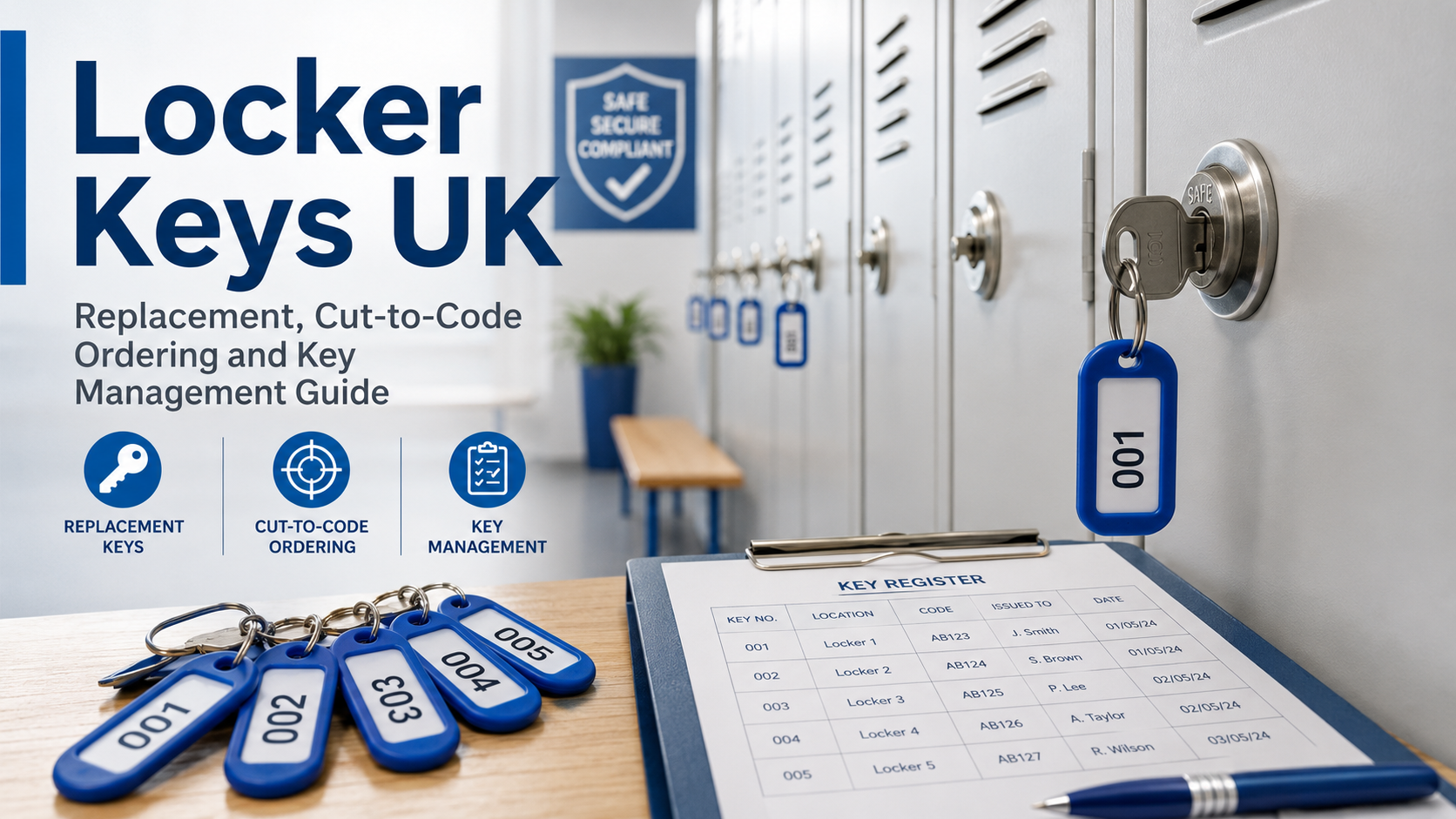
Locker keys for staff storage need clear control. In offices, factories, warehouses, hospitals, schools, leisure centres and commercial buildings, staff lockers are often used for clothing, bags, PPE, uniforms, tools and personal belongings. When a key is lost or not returned, it can disrupt shifts, delay staff and leave lockers out of use.
This guide explains how workplaces should manage staff locker keys, issue keys to employees, handle lost keys, manage leavers, control spare keys and order replacement locker keys when the lock still works.
This article supports our main Locker Keys UK replacement and key management guide. For direct ordering, use Total Locker Service for replacement locker keys cut to code.

Quick Answer: How Should Workplaces Manage Staff Locker Keys?
Workplaces should manage staff locker keys with a clear issue record, secure spare key storage, controlled master key access and a return process for staff who leave or change roles. Each staff locker should have a visible locker number, a recorded key code and an assigned user or department.
When a staff locker key is lost, check whether the locker is open or locked, confirm whether a spare key or master key is available, identify the key code and order a replacement key if the lock still works.
The locker door number is not always the same as the key code. The door number helps staff identify the locker. The key code is used to cut the replacement key.
For that distinction, read locker key numbers vs locker door numbers.
Why Staff Locker Key Control Matters
Staff lockers are part of everyday workplace storage. They may hold coats, bags, uniforms, PPE, safety boots, personal items, tools or work equipment. In some workplaces, staff cannot begin a shift until they can access their locker.
A missing key can therefore create more than a small admin problem. It can delay a shift, affect welfare provision, leave equipment inaccessible and increase pressure on supervisors or facilities teams.
Good locker key control helps workplaces keep lockers available, reduce unnecessary lock changes and support clear accountability. It also helps when employees move departments, change shifts or leave the organisation.
- Staff can access belongings, uniforms and PPE when needed.
- Facilities teams can identify key codes quickly.
- Replacement keys can be ordered without changing working locks.
- Spare keys and master keys stay secure.
- Leavers return keys before lockers are reassigned.
- Old records are updated when locks are changed.
Common Workplace Locker Key Problems
Most workplace locker key problems are caused by missing records, staff changes or heavy daily use. These issues are common in warehouses, factories, offices, healthcare sites, schools, gyms and public buildings.
- Staff lose locker keys during shifts.
- Keys are taken home and not returned.
- Leavers fail to hand keys back.
- Locker numbers are confused with key codes.
- Spare keys are stored in different places.
- Master key access is not controlled.
- Old records do not match current locks.
- Worn keys snap or stop turning smoothly.
- Locks are replaced without updating the register.
These problems are easier to manage when the workplace has one clear staff locker key register and a simple replacement process.
Issuing Staff Locker Keys
Staff locker keys should be issued with a record. The record should show who has the key, which locker it belongs to, when it was issued and what should happen if the key is lost or not returned.
Before issuing a locker, check that the lock works smoothly. The key should turn without force, the door should close properly and the locker number should match the workplace record.
Where lockers are assigned permanently, record the employee name, department, locker number, key code and issue date. Where lockers are assigned to departments or shifts, record the team or role rather than only the individual user.
Key tags should usually show the visible locker number. The actual key code should be held in the workplace register. This helps staff identify their locker without exposing unnecessary lock code information.
| Issue record field | Example | Why it matters |
|---|---|---|
| Employee or department | J Smith / Warehouse Team | Shows who is responsible for the key |
| Locker number | 126 | Identifies the visible locker door |
| Key code | B2187 | Used for replacement key ordering |
| Lock brand | Helmsman | Helps match the correct key range |
| Issue date | 03/09/24 | Shows when the key was issued |
| Return status | Returned / missing | Supports leaver and reassignment checks |
For a full register structure, read how to build a locker key register.
Staff Locker Key Register
A staff locker key register is the main control document. It should be easy to update and simple enough for facilities, HR, supervisors or site managers to use.
The most important rule is to keep the visible locker number and the actual key code in separate fields. They may match, but they should not be treated as the same thing unless confirmed.
- Visible locker number.
- Actual key number or lock code.
- Lock brand, where known.
- Locker location.
- Employee, department or shift group.
- Issue date.
- Return date.
- Spare key location.
- Master key group, if relevant.
- Notes for damaged locks, replaced locks or missing keys.
The register should be updated whenever a lock is changed. If the old key code remains in the register after a lock replacement, future replacement orders may be wrong.
For number confusion, read locker key numbers vs locker door numbers.
Where to Find the Key Code for a Staff Locker
The key code may be found on the original key, the lock face, the lock barrel, the staff locker register, a spare key tag, old invoices or previous replacement key orders.
If the key is available, check both sides. Many locker keys have a stamped or engraved code on the head of the key. If the original key is missing, check the lock face for numbers around the keyway.
If the locker door is open, inspect the lock barrel or rear of the lock. Some markings are only visible from inside the door. If the code is unclear, take clear photos before ordering.
- Original locker key.
- Lock face or keyway.
- Lock barrel.
- Spare key tag.
- Staff locker register.
- Old invoices or ordering records.
- Maintenance records.
For a step-by-step guide, read where to find a locker key number or lock code.
Lost Staff Locker Key Procedure
A lost staff locker key should follow a clear process. This helps the workplace restore access without damaging the locker or creating security issues.
First, check whether the locker is open or locked. If it is open, keep it open until a replacement key is arranged. If it is locked and the staff member needs access, check whether an authorised spare key or master key is available.
Second, confirm the key code. Check the staff locker register, lock face, spare key record or previous orders. Do not assume the door number is the key code.
Third, decide whether to order a replacement key or replace the lock. If the lock still works and the code is known, replacement key ordering is usually the simplest route. If the lock is damaged or the missing key creates a security risk, lock replacement may be better.
- Confirm which staff member or department uses the locker.
- Check whether the locker is open or locked.
- Use an authorised spare key or master key if urgent access is needed.
- Find the key number or lock code.
- Check whether the lock still works smoothly.
- Order a replacement key if the code is known.
- Replace the lock only when the lock is damaged, insecure or impossible to identify.
- Update the staff locker key register.
For a wider lost key process, read lost locker key: what schools, gyms and workplaces should do.
Replacement Staff Locker Keys
Replacement staff locker keys can often be cut to code. This means the replacement key is made from the key number or lock code rather than copied from the original key.
This is useful when the original key has been lost, taken home, broken or not returned by a leaver. If the lock still works and the correct code is known, the workplace may not need to replace the full lock.
Before ordering, confirm the key code, lock brand, visible locker number and quantity required. Include any letters, prefixes or leading zeros. A code such as AB012 may not be the same as AB12.
If the code is unclear, take photographs of the key, lock face, keyway and locker door. This helps avoid wrong replacement orders.
Total Locker Service supplies replacement locker keys cut to code for many common locker systems. For a process explanation, read replacement locker keys cut to code: what it means.
When Should a Workplace Replace the Lock Instead?
A replacement key is not always the correct solution. The full locker lock should be replaced when the lock is damaged, insecure, worn or impossible to identify.
Lock replacement may also be better when a key has been stolen with identifying details, when the locker contains sensitive items, or when the workplace needs to reset access before reassigning the locker.
- The lock barrel is loose.
- The keyway is worn, blocked or damaged.
- The lock does not turn smoothly.
- The cam does not secure the door properly.
- The key code cannot be found.
- The missing key creates a security risk.
- The locker is being reassigned after a staff issue.
- The lock is old, obsolete or inconsistent with the rest of the site.
For maintenance support, read worn locker keys and stiff locks: repair or replace? and broken locker key: what to do before replacing the lock.
Leavers and Staff Locker Key Returns
Staff leavers are one of the main points where locker key control can fail. If keys are not collected before an employee leaves, the workplace may lose track of the locker, the key code and the contents.
The key return process should be part of the leaver checklist. Before the employee leaves, confirm whether a locker was issued, collect the key, inspect the locker and update the register.
If the key is missing, decide whether to order a replacement key or change the lock. The decision depends on the risk. If the key is simply missing and the lock code is known, a replacement key may be enough. If the key could still give unauthorised access, lock replacement may be safer.
Leaver key return checklist
- Check whether the employee has an assigned locker.
- Collect the locker key before departure.
- Inspect the locker before reassignment.
- Confirm the key code in the register.
- Record whether the key was returned or missing.
- Order a replacement key if suitable.
- Replace the lock if security requires it.
- Update the locker register before reissuing the locker.
Spare Keys and Master Keys for Staff Lockers
Spare keys and master keys help workplaces resolve access issues without damaging lockers. However, they must be controlled carefully.
A spare key usually opens one locker. A master key may open many lockers in the same system. This makes master key control especially important. A lost master key can create a wider security issue than a lost user key.
Spare keys should be stored in a secure key cabinet or controlled office. They should not be left loose in drawers, staff rooms or open maintenance areas.
- Store spare keys securely.
- Keep master keys separate from everyday key sets.
- Restrict master key access to authorised staff.
- Record access where personal belongings are involved.
- Audit spare keys regularly.
- Replace missing spare keys before they are needed urgently.
For more guidance, read locker master keys explained and key cabinets for managing locker keys.
Staff Storage by Sector
Staff locker key control varies by workplace. The same basic process applies, but the risks and priorities change by sector.
| Workplace type | Common storage use | Key control priority |
|---|---|---|
| Office | Bags, coats, laptops and personal items | Clear issue and return process |
| Warehouse | Clothing, personal belongings and shift items | Fast access and durable keys |
| Factory | PPE, uniforms, boots and tools | Reliable access before shifts |
| Healthcare | Uniforms, personal effects and staff changing | Controlled spare key and master key access |
| School staff areas | Coats, bags and teaching materials | Accurate assignment records |
| Leisure staff areas | Uniforms, bags and personal items | Clear separation from member locker keys |
Where lockers contain work-critical equipment, the lost key process should be faster and more formal. Staff may need access before a shift can start.
Staff Locker Key Tags and Numbering
Key tags make staff locker keys easier to manage. The tag should usually show the visible locker number rather than the full key code. The actual key code should be kept in the register for replacement ordering.
Use durable tags that do not crack, fade or detach easily. In workplaces with heavy use, weak split rings or poor labels can lead to lost keys even when staff handle them responsibly.
Avoid adding unnecessary personal details to key tags. A locker number or internal reference is usually enough. Personal names on tags can create avoidable privacy and security concerns.
For accessories, read locker key tags, number discs and wrist straps explained.
Bulk Replacement Staff Locker Keys
Bulk replacement is useful when several staff locker keys are missing, worn or unrecorded. This can happen after a site move, refurbishment, department change or annual audit.
A bulk replacement list should include the visible locker number, actual key code, lock brand, quantity required and any uncertainty. Separate confirmed codes from unclear codes.
| Locker number | Key code | Lock brand | Quantity | Notes |
|---|---|---|---|---|
| 024 | E5023 | Lowe & Fletcher | 2 | Warehouse changing |
| 126 | B2187 | Helmsman | 1 | Staff room |
| 157 | D4055 | Ojmar | 2 | Code confirmed |
| 210 | AB124 | Probe | 1 | Leaver key missing |
For larger orders, read bulk replacement locker keys for schools and workplaces.
How to Reduce Lost Staff Locker Keys
Workplaces can reduce lost staff locker keys by making the system easy to follow. Most improvements are simple: clearer records, better tags, secure spare keys and consistent leaver checks.
- Record the key code before the key is lost.
- Use durable numbered key tags.
- Keep spare keys in a secure key cabinet.
- Limit master key access to authorised staff.
- Include locker keys in leaver checklists.
- Inspect lockers before reassignment.
- Replace worn keys before they snap.
- Update the register when locks are changed.
- Audit staff locker keys regularly.
- Train supervisors and facilities staff on the process.
For wider audit support, read the locker key audit checklist for facilities managers.
Staff Locker Key Control Table
| Situation | Best action | Useful guide |
|---|---|---|
| Staff member loses a locker key | Check the register, spare key and lock code before replacing the lock | Lost locker key guide |
| Employee leaves without returning a key | Review risk, order replacement key or replace the lock | Replacement keys cut to code |
| Door number and key code differ | Record both fields separately | Key number vs door number |
| Key code is unclear | Check key, lock face, barrel and old records | Find a key number |
| Master key is needed | Use authorised staff only and store the key securely | Master keys explained |
| Many keys are missing | Prepare a bulk replacement list | Bulk replacement keys |
Related Locker Key Guides
This article is part of the locker keys canister. Use these guides to support staff locker key replacement, lost key procedures, key identification and long-term key control.
- Locker Keys UK: Replacement, Cut-to-Code Ordering and Key Management Guide
- Replacement Locker Keys Cut to Code: What It Means
- Lost Locker Key? What Schools, Gyms and Workplaces Should Do
- Where to Find a Locker Key Number or Lock Code
- Locker Key Numbers vs Locker Door Numbers
- Are Locker Keys Universal? Why Key Codes and Brands Matter
- School Locker Keys: Replacement and Key Control Guide
- Gym Locker Keys: Replacement, Wrist Straps and Member Access
- How to Build a Locker Key Register
- Bulk Replacement Locker Keys for Schools and Workplaces
- Common Mistakes When Ordering Locker Keys
- Locker Master Keys Explained
- Key Cabinets for Managing Locker Keys
- Locker Key Audit Checklist for Facilities Managers
Ordering Replacement Staff Locker Keys
Staff locker keys are easier to replace when the key code is recorded before the key is lost. If the lock still works and the correct code is known, a replacement key can often be cut to code without changing the full lock.
Before ordering, confirm the key code, lock brand, locker number and quantity required. If the code is unclear, take clear photographs of the lock face, keyway, key and any markings.
For direct ordering, visit Total Locker Service: Locker Keys and Replacement Locker Keys.
Staff Locker Keys FAQs
How should workplaces manage staff locker keys?
Workplaces should manage staff locker keys with a clear key register, secure spare key storage, controlled master key access and a return process for staff who leave or change lockers.
Can staff locker keys be replaced without changing the lock?
Yes. Many staff locker keys can be replaced without changing the lock when the correct key number or lock code is known and the lock still works.
Where is the key code for a staff locker?
The key code may be stamped on the key, shown on the lock face, marked on the lock barrel, listed on a spare key tag or recorded in the staff locker key register.
Is the staff locker number the same as the key code?
Not always. The locker number identifies the visible locker door. The key code identifies the lock and is used to cut a replacement key.
What should a workplace do when an employee leaves without returning a locker key?
The workplace should inspect the locker, check the key code, assess the security risk and either order a replacement key or replace the lock before reassigning the locker.
When should a staff locker lock be replaced?
A staff locker lock should be replaced if it is damaged, stiff, insecure, impossible to identify or if a missing key creates a security risk.
How can workplaces reduce lost staff locker keys?
Workplaces can reduce lost staff locker keys by using durable tags, keeping accurate key records, storing spare keys securely, including key returns in leaver checks and auditing lockers regularly.